
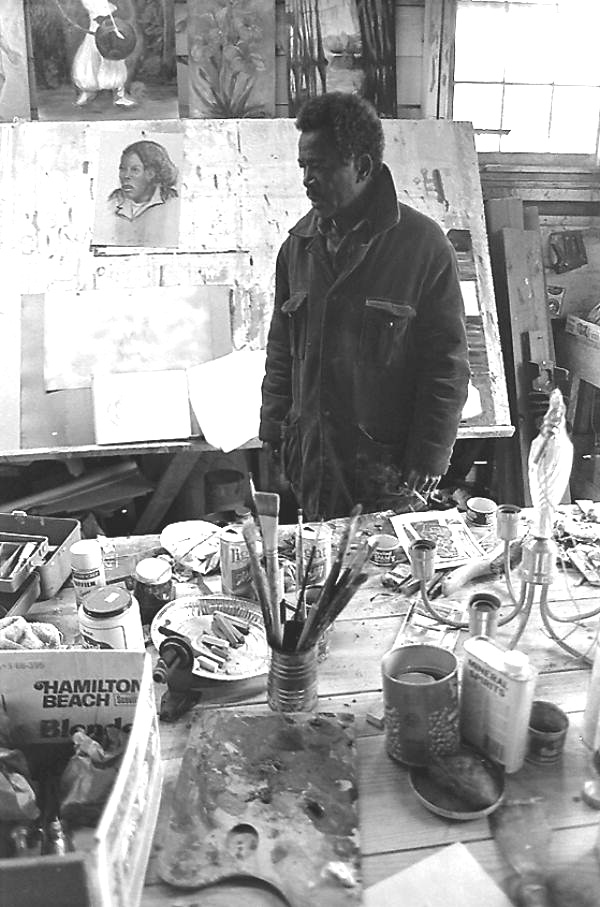
When asked how he might describe folk art, painter and sculptor Pharoah Baker responded that he though of folk art as a native thing.
“If it’s something people have been doing for generations and generations, that becomes folk art.”
– Pharoah Baker
January 12, 1984 interview
But unlike many of the other folk artists discussed over the course of the last few posts, Pharoah Baker did not learn his trade from previous generations of his family or neighbors. He was a rare self-taught folk artist from a young age.
Baker’s first foray into the art world was when he copied a church fan for his childhood preacher. When asked if he could paint a design of Sampson and a lion, young Baker took to his work with a 25-cent watercolor set and a 10-cent piece of cardboard. When finished, he returned to the church with his artwork and was awarded $10 for his first commission (roughly equivalent to $170 today). Reflecting back in later years, he admitted that the church had taken up a collection to pay him for the small art piece – a kind and much appreciated gesture for the young budding artist. He continued to draw, paint, and create art everywhere he went in his rural hometown of Sneads, Florida and, despite trying to learn about or focus on other means of expression, he always returned to painting and sculpture.
After serving in the U. S. Navy during World War II, Baker returned home with hopes of putting his G.I. Bill to good use studying art. Once at the VA, he found that his hopes might be dashed. After all, he hadn’t finished high school before joining up and he was told in no uncertain terms that he would need a high school education or some kind of equivalent to be able to use his benefits for school. After being sent to Bethune Cookman College for a comprehensive test, he returned with his GED and enrolled in art classes at Florida A&M University in Tallahassee from 1947 through 1949. While there, he studied both painting and sculpture. While at school, he took part in student art shows and gained some recognition among his classmates. Years later, he would continue to credit the constructive criticism and attention of his professors for his continued drive to improve.
“The day you think you’re good, is the day you die. Always strive.”
– Pharoah Baker
January 12, 1984 interview
He went on to earn a living as a professional sign painter in Lake City, but he continued to create his own paintings and sculpture on the side. When asked about selling his artwork, Baker responded that he may be hungry but that he wasn’t starving and that selling his work (especially in his later years) was something that he avoided.
For him, his work wasn’t about the monetary value of his artwork. Instead, he often referred to them as similar to children – even going so far as to compare himself to a pregnant woman with an undeniable need to birth his thoughts and emotions onto canvas or be left in pain and misery. Similarly, he likened the creative process to childrearing by describing the creation of his works as raising children and preparing them for life before letting them go and allowing them to stand on their own two feet as adults.

Although he didn’t consider himself a well-known artist, Baker was a respected painter and sculptor within the art community with many artists purchasing his pieces during the 1970s. He became well-respected and was among the first master folk artists to take part in the Folk Arts Apprenticeship Program in 1983 alongside his apprentice, Ellis Wright. The program, which began in 1983 and continued until 2003, provided an opportunity for master folk artists to share their technical skill and cultural knowledge with apprentices in an effort to keep folk art traditions alive. As some of the first participants, Baker taught Wright painting in his studio in Lake City where the two painted together – sharing materials, paints, and a burgeoning friendship.

When asked about the program and his work in training Wright, Baker stated that his goal was not to turn Wright into another Pharoah Baker. Instead, his purpose was to help Wright continue and grow in his own direction. In fact, throughout a January 1984 interview with Florida folklorists, Baker continued to remind his interviewers that his artwork was based upon his own experiences and feelings – things that Wright had not experienced and could not relate to in the same way. As a result, he insisted, the two were artists in their own right who got along well and could both create in their own way together.
“I paint the past and the future. I paint what I feel.”
– Pharoah Baker
January 12, 1984 interview
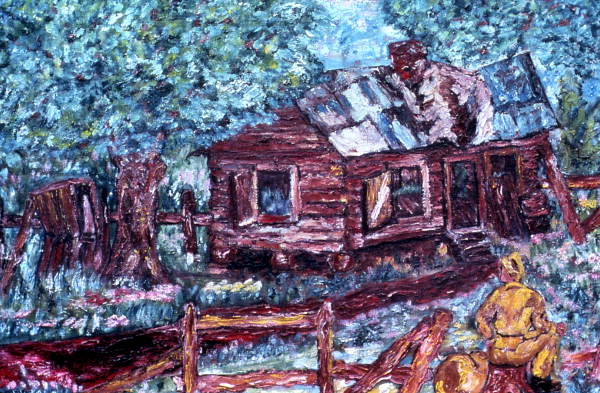
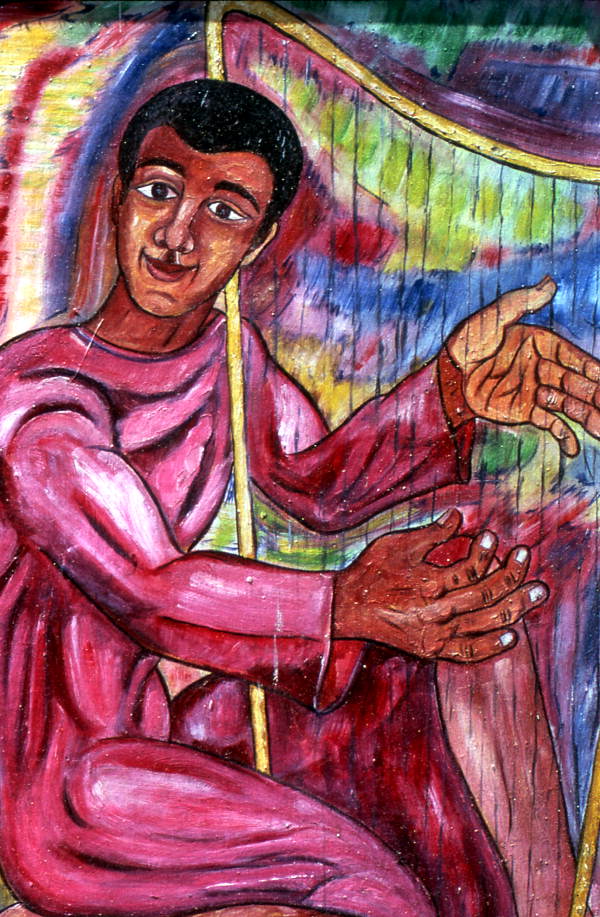
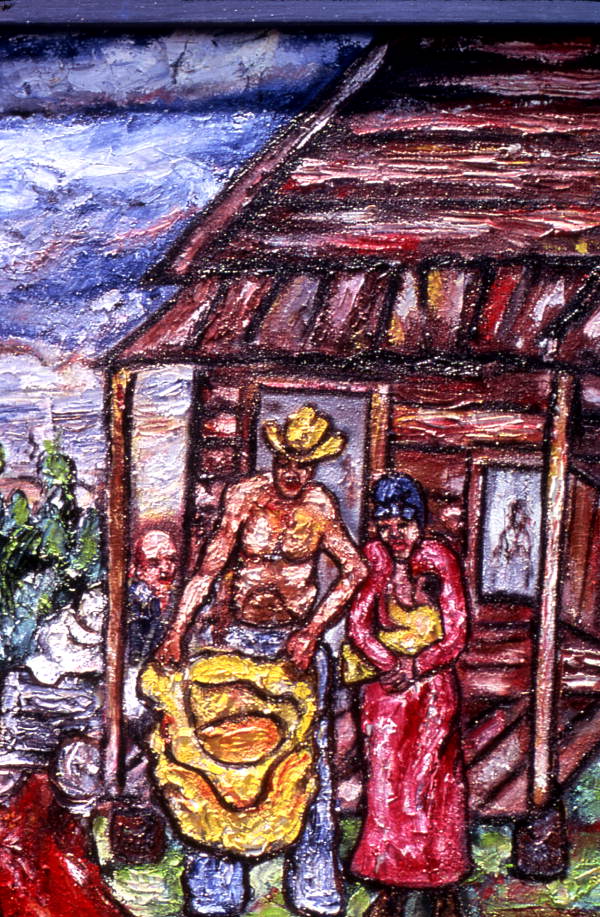
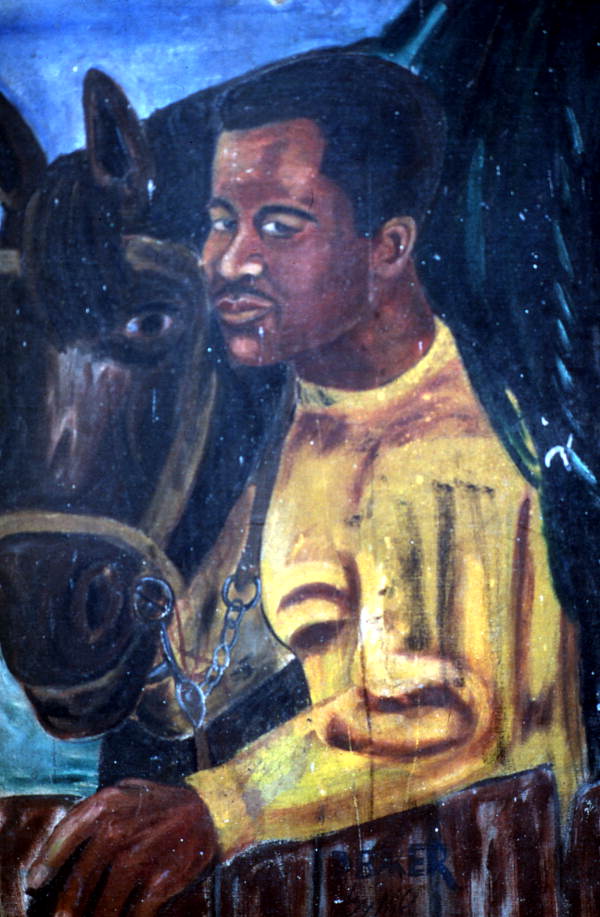
Taking inspiration from his daily life and his Christian faith, Pharoah Baker created paintings and sculptures that represented his upbringing in rural Florida during the 1930s and 1940s. Inspired by everything from local farmers to the murder of Emmett Till, Baker continued to create vibrant and colorful representations of life until his passing in 2002.
With his art referred to as ‘blues on canvas,’ his bright and dynamic artwork continues to represent the beauty and individuality of folk art.


Activity #1: Folk Artists Today
Learn about artists continuing to create folk art today. On social media, check out #folkart and #folkartist to see a wider variety of artists carrying on traditions today!
Interested in finding a present day painter? Artist Amy Sherald has become well-known not only for her portrait of former First Lady Michelle Obama, but also for painting noble and colorful portraits of Black Americans. Feel free to check out her work on Instagram @asherald !
Did you find any new artists this week? Did you discover more painters? There are countless similar stories of people who have left their mark on the folk art and broader art world who have passed on their skills to future generations. So, in honor of their work and craftsmanship, I invite you to celebrate Black History Month by remembering that Black History is Art History!
Share your activity results with us on social media by tagging History Becomes You and by using #historybecomesyou !
Check back this Thursday for the next of many peeks into history as we celebrate Black History Month!
 History Becomes You
Excellent article! We will be linking to this particularly great content on our site. Keep up the great writing.
LikeLike