
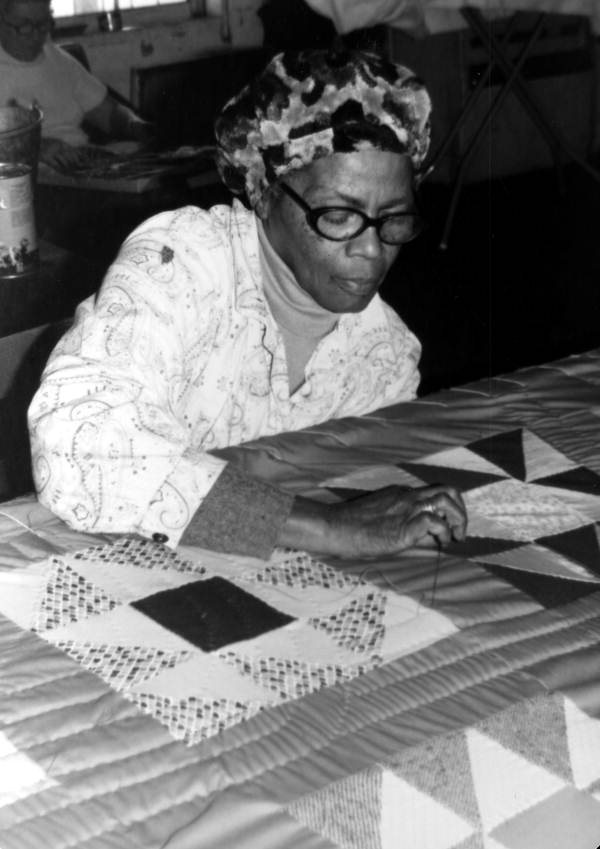

Quilting is a technique, pastime, and tradition that has existed amongst various cultures for CENTURIES. From the protection and warmth to the communal nature of early quilting, this practice and folk art represents a wide variety of lived experiences and cultural identities as well as the changes brought on by broader historical themes and events.
In the earliest days, quilted garments were afforded only by the wealthy of Europe, Asia, and the Middle East. However, as time passed, its accessibility to those with a lower economic status grew. For instance, throughout the pre-Revolutionary American colonies, access to precious fabrics became less of an issue as the European powers could provide textiles and different fabrics to its colonists overseas. In those cases, the practice centered less upon the supply of fabric and more upon local skillsets. Given that most clothing, bedding, and other textiles were constructed at home, quilting fit well into a society that already relied heavily upon the sewing skills which were often passed down from mother to daughter. For many women, given the heavy workload of caring for a home, family, and farm/business, quilting took on the role of a social activity as well as a useful practice to survive cold winter months. In many cases, women would gather in quilting circles and all put their combined talents to use in the creation of quilts for all of the members as well as other community members in need. These social groups were similar to many other early women’s work groups in that they gave women an opportunity to gather around a communal task and make light of the work through cooperation.
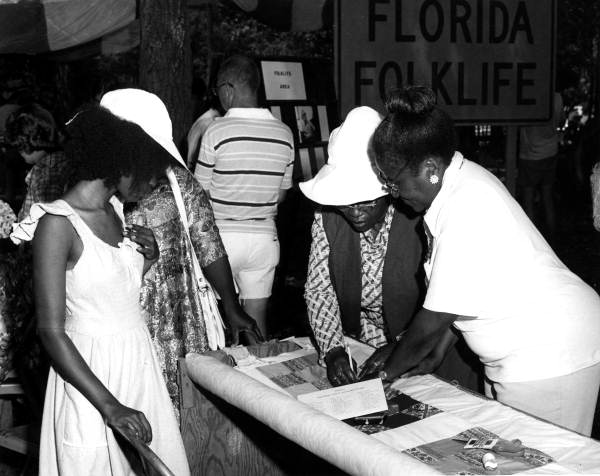
Similar to many other areas of folk art, quilting techniques and tools were passed down through the generations and, as the Industrial Revolution led to largescale production in the north, many women gained access to increasingly complex patterns and varieties of fabrics. So, it should come as little surprise that quilting continued to grow and represent not only the traditions of a given area and its residents, but also to become a way to express oneself and a person’s lived experiences. This can be clearly seen as quilts took on more ornate and consistent appearances and layouts during the 1800s and early 1900s.
Even in the face of the Great Depression, quilters forged on by creating “feedsack quilts” using cloth bags and fabric scraps to create quilts and quilted clothing for their families.
As in many areas of folk art, the 1970s represented a resurgence of traditional quilting. Due in part to a nostalgia surrounding traditional crafts brought up by the American Bicentennial, quilting saw a revival not only in homes across the United States, but also in the public eye. Quilts were included in large historical and artistic exhibitions as the concept of “art quilts” gained traction within the art world.
So, it should stand to reason that quilters are well-known and well-respected folk artists, right?
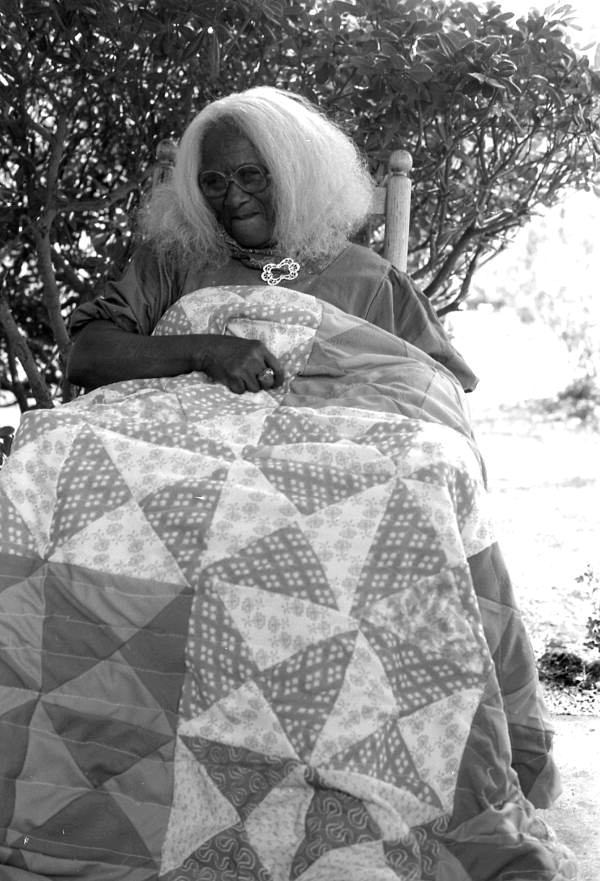
Unfortunately, given the communal nature of the activity, many of us today are left wondering who our area’s textile folk artists were and what their work meant to them. Although it may seem strange to think of quilts outlasting their creators, the truth is that a well-constructed quilt can be passed down over several generations within a family or among friends. And, as these pieces are handed down, for many of us, the story of their creators disappear.
Unlike last week, I cannot offer much in the way of personal experiences of historical quilters in my area. At best, I can locate a few names here and there from events and displays. But, for many of the people who dedicated their time to the craft of quilting, their names and experiences are missing from our historical narrative.

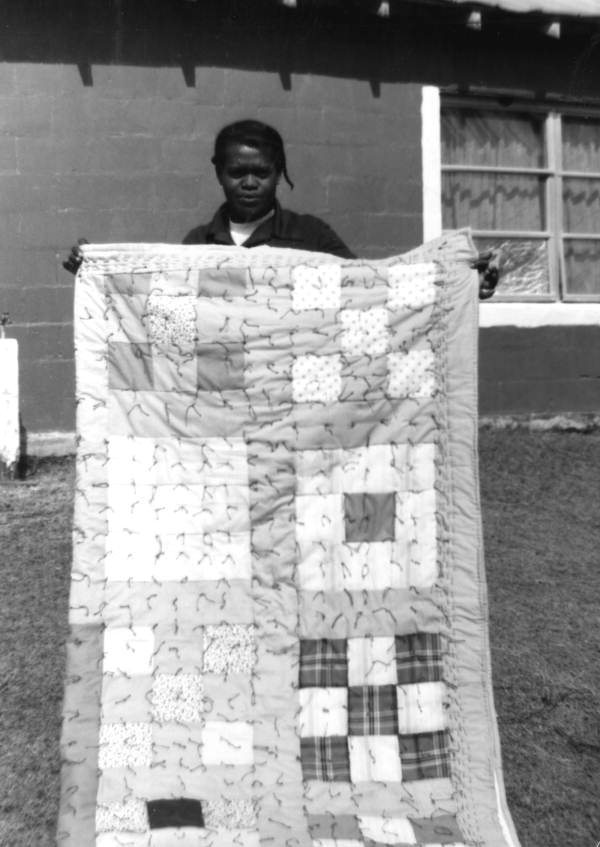
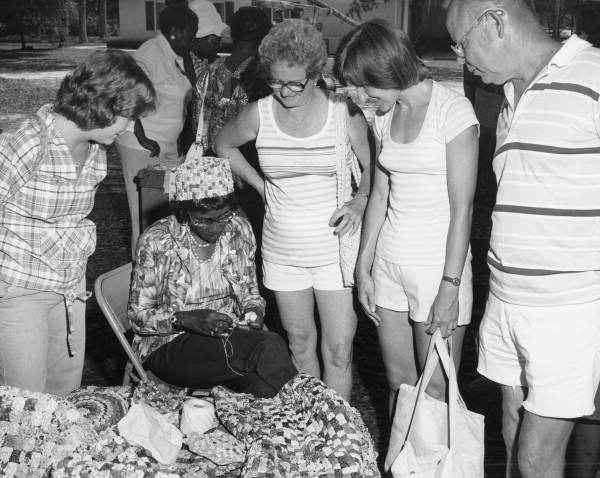
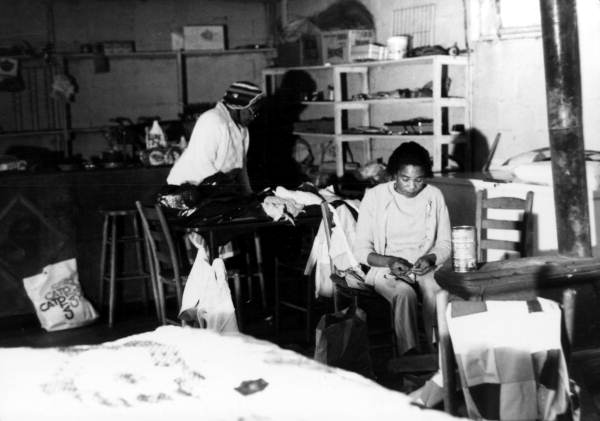
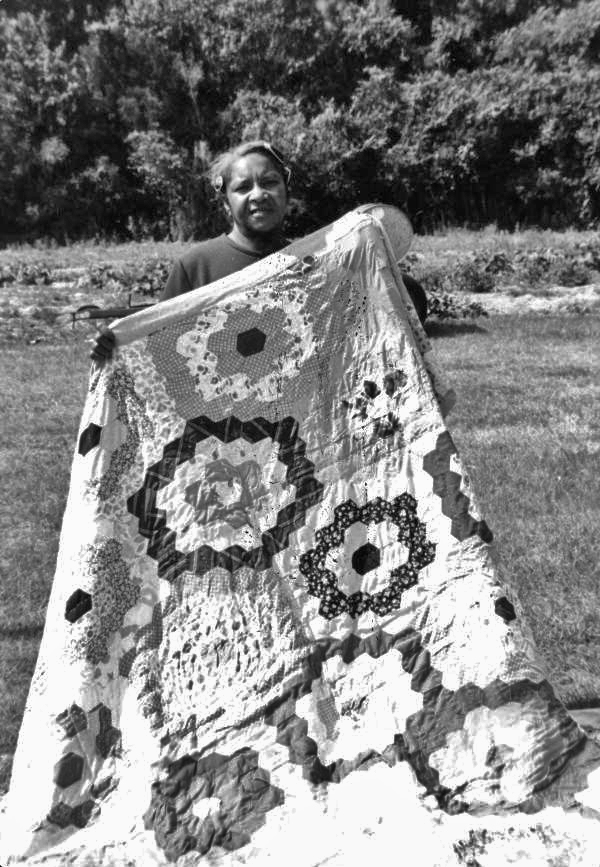
One such example is Betsy Webb (also known as Mrs. Denard Webb). A prime example of rural women taking on folk art as a way of providing for their family, Betsy Webb appears as Bessie Webb (born between 1915 and 1916) in the 1940 U.S. Census in Hamilton County, Florida living with her husband, Denard Webb, and their children. Just 25 years old at the time, Betsy (or Bessie) had already given birth to a son and two daughters and was listed as a housewife while her husband worked in the naval stores industry. She is listed as having a third grade education and yet she went on to create stunningly intricate quilts that she shared with her family – shown more than once standing beside her quilts alongside her grandchildren near White Springs, Florida.
Her story represents many women in similar places and times and reminds us of the importance of protecting their legacies for future generations.
Activity #1: Quilters in Your Area
Learn about any quilting groups in your area. Do they meet regularly? Do you have any quilters in your family or group of friends? Take a look at local museums and libraries to see if your area has a tradition of quilting.
Activity #2: Folk Artists Today
Learn about artists continuing to create folk art today. On social media, check out #folkart and #folkartist to see a wider variety of artists carrying on traditions today!
Interested in finding a present day quilter and textile artist? I have been a follower of Bisa Butler’s for some time after coming across her intricate and stunning quilts on social media. Her bold use of color and her beautiful treatment of historical figures sets her apart in the art world. Learning to sew and quilt from a young age, Butler’s art celebrates the experience of people of color throughout America’s history. Feel free to check out her work on Instagram @bisabutler !
Did you find any new artists this week? Did you discover more quilters? There are countless similar stories of people who have left their mark on the folk art and broader art world who have become mysteries to historians and community members alike. So, in honor of their work and craftsmanship, I invite you to celebrate Black History Month by remembering that Black History is Art History!
Share your activity results with us on social media by tagging History Becomes You and by using #historybecomesyou !
Check back next Thursday for the next of many peeks into history as we celebrate Black History Month!
 History Becomes You
Once again, this post is full of historical info I’ve never thought about! For example, the fact that only the wealthy could have access to certain fabrics and quilted clothes. The fact that women were once responsible for sewing so that their families would have clothes, blankets, etc. – scarey to a person like me who has no such skills! I do love the idea of women getting together quilt, providing social time as well as cooperation to get the work done. More of that in today’s world please! The pictures in your post are wonderful! The women displaying their quilts must have felt such a sense of accomplishment and pride! From necessity to artistic self-expression, quilts and quilting are amazing! Friends of mine who have run in many races have had their race t-shirts made into quilts. What a good way to put those shirts and memories to good use. Looking online, I found quilting bees, quilting guilds (more formal), and even the Florida Quilt Study Group that meets 4 times a year to share pre-1950’s quilts and their stories. Thank you for referring us to Bisa Butler. Her work is AMAZING! I didn’t learn about quilters, but I did discover Ruby Williams, who’s considered one of Florida’s top folk artists and has a very interesting story. Looking forward to your next post!
LikeLike
It is such a complex and fantastic history! My hope is that, as more people begin to see the value in folk art, more of these stories will be preserved. It would be wonderful for all of history’s lesser known artists to be recognized for their work and accomplishments!
LikeLiked by 1 person