
Florida’s capital city of Tallahassee is far from unknown. In fact, the city, the government offices, and the local colleges and universities get quite a bit of news coverage every year. However, like most historic cities and capitals throughout the United States, Tallahassee has also been the site of many historical, architectural, and political shenanigans.
Historically Humorous – An Unintended Capital
As it turns out, Tallahassee isn’t even Florida’s first capital and, although many people have heard about Florida’s five flags, few know the repercussions of Florida’s colonial periods.
FUN FACT: Florida has flown five flags over the course of its history. Not only has the state been a part of the United States since 1845, but it has also been under the control of the Confederacy, during the Civil War, and as a colony under the British, the French, and the Spanish.
While Florida was under Spanish control, the state was actually divided into two territories – East Florida and West Florida. These territories came complete with their own capitals – Pensacola in West Florida and St. Augustine in East Florida. However, when the region changed hands in 1821 and was acquired by the United States, these separate capitals began to pose a problem. Unified under the United States, the two territories became the Florida that we know today, but the question remained as to which capital would serve the soon-to-be state.
Florida’s answer? Why not use BOTH?
Rather than select either capital to serve unified Florida, the early 1820s saw the legislators transfer back and forth between St. Augustine and Pensacola. Although a trip that today would take less than six hours by car, the hazardous journey between capitals took more than 20 days by land and as much as two months by sea during the 1820s.
Some stories recount that, during one of these long and arduous journeys, one of the legislators died, while others point to exasperation at what some would term the worst commute in Florida (even by today’s standards) as the reason why the Council of the Territory of Florida ultimately decided to establish a new central capital for Florida. So, men set out from Pensacola and St. Augustine and located the midway point between the two storied cities – known today as Tallahassee.
For most states, this would be the end of the story and the end of the discussion – after all being a third attempt at a capital is strange enough – but not in Florida. It just so happened that the men charged with locating the site for the new capital might have been unflinchingly rigid in their adherence to their directive when they selected Tallahassee. Their rigidity, bordering on stubborn refusal to find a better option, became an issue because Tallahassee had been the site of successive indigenous settlements which had been burned by Andrew Jackson – an action not quickly forgotten or forgiven. So, rather than move the site several miles south (like arguably more logical people might have done), the selection of Tallahassee led to continued struggles between indigenous communities and the incoming settlers and legislators who remained determined to maintain the city as Florida’s official capital.
Architectural – How Many Tries Does it Take to Get to a Functional Capitol?
Despite the flawed decision that led to establish a new capital in the midst of an indigenous settlement, the Tallahassee began to grow and expand. Quick to provide a capitol in the area, work began on a log cabin that would serve as the territorial capitol building from 1824 until 1826. Recognizing the limitations of conducting government business in a small log cabin, work began on a two-story structure which became the new capitol in 1826. Originally planned to be the first part of a larger building, this capitol quickly became obsolete as well. After all, it only measured 40’ (12.2m) x 26’ (7.9m) which, at two stories tall, only allows for approximately 2,000 square feet of space.
In the continuous march onward, a new capitol was needed to facilitate the growing government as Florida prepared for statehood. In response to this need, Congress appropriated $20,000 in 1839 for the construction of a “suitable” state house for the Territorial Legislature. After tearing down the existing building and relocating government work into rented spaces, builders began work on the third capitol building. Completed in 1845 (the same year that Florida became a state), this third capitol remains the core of what is today known as the “Old Capitol.”
But, Florida didn’t stop there.
This third capitol remained largely unchanged for several decades – even throughout the Civil War during which it was the only Confederate capital east of the Mississippi to avoid capture by federal troops. It survived as it stood until the 1880s when, once again, a growing state needed a “suitable” state house. Facing a long list of desperately needed repairs, the building received cosmetic assistance in the 1890s and the addition of two wings on either side of the capitol’s core in 1902. These additions allowed Florida’s government to operate under the same roof for the last time as, by 1911, government services and departments began relocating to other buildings and locations.
The “Old Capitol” continued receiving additions and fresh coats of paint throughout the 1920s, 1930s, and 1940s until, in 1969, the Governor approved plans for the “New Capitol” and, in 1972, the Florida Legislature authorized money for a new Capitol Complex including a 22-story office building (completed in 1977).

Although I am a great lover of symmetry in design, even I pause to question the design of the complex which included the 22-story office building situated between two smaller structures to house the legislative offices (complete with domed rooftops). Nonetheless, work moved forward on what many consider the phallic new Capitol Complex while attention once again shifted back to the “Old Capitol.” Despite support from 1978 Governor Reubin Askew and House Speaker Donald Tucker to demolish the “Old Capitol,” the structure was saved and restored to its 1902 version. Today, it operates as a museum and reminds Floridians and visitors of the last time our state government functioned under one roof. After all – the third time must be the charm when it comes to building capitols here in Florida.
Political – Because We Could All Use Reminding that Politicians Can Be Funny Too
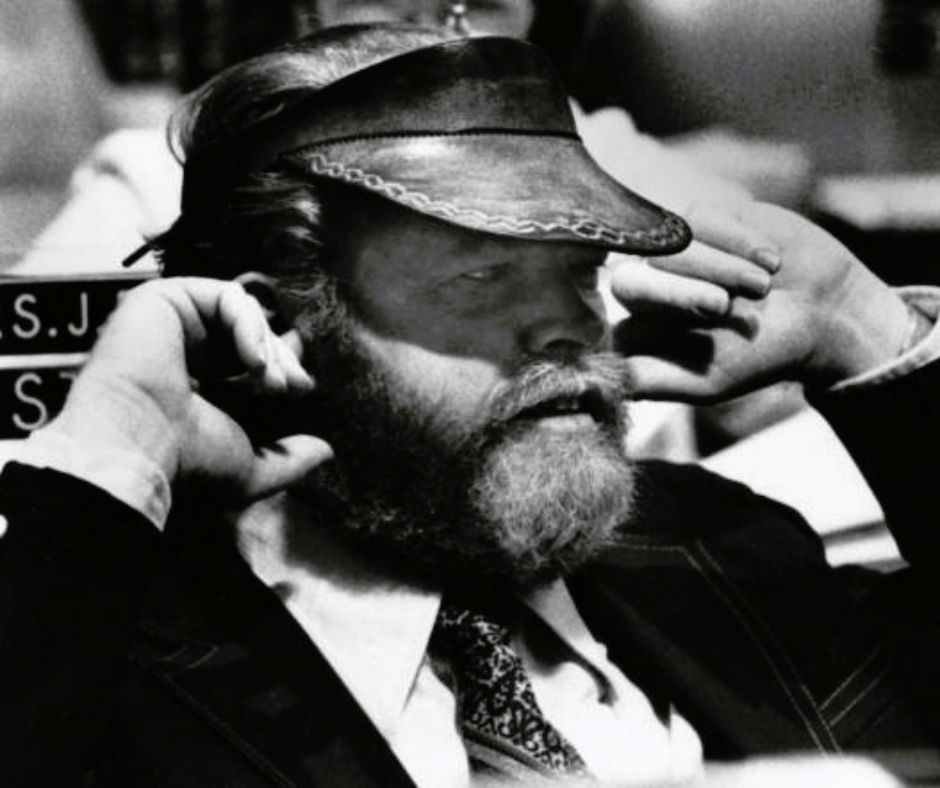
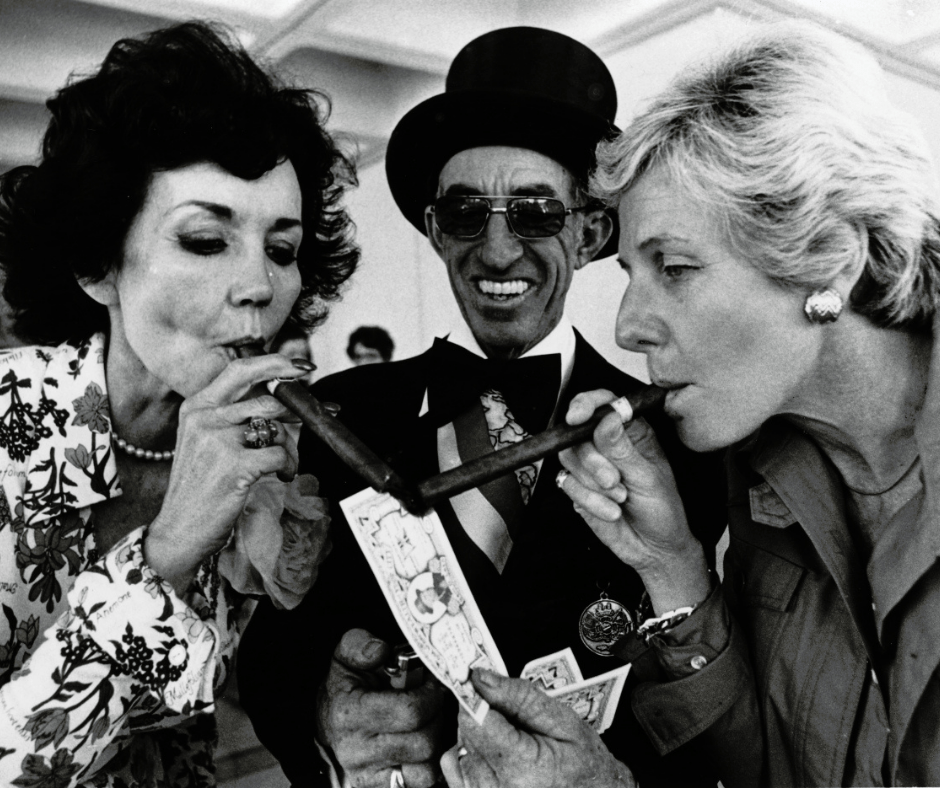
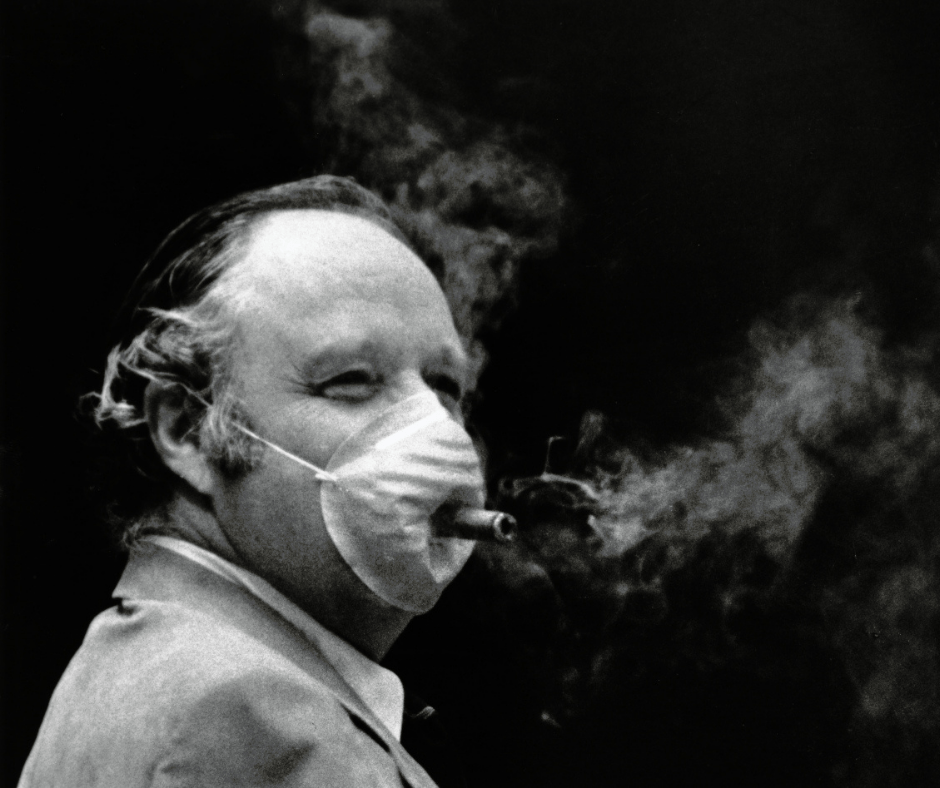
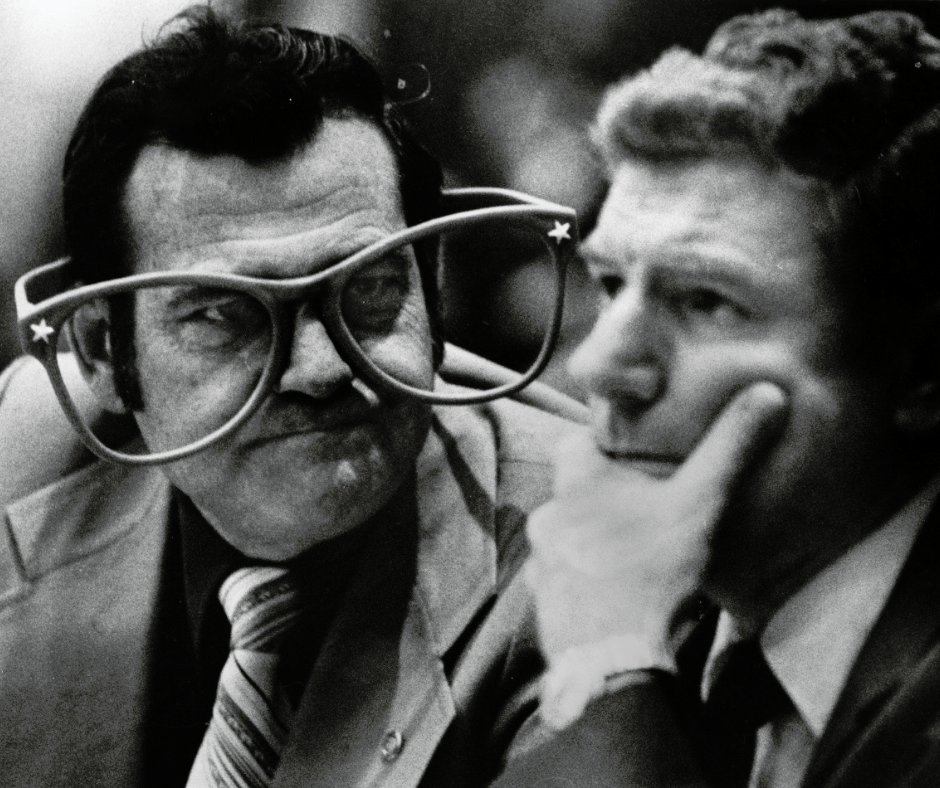
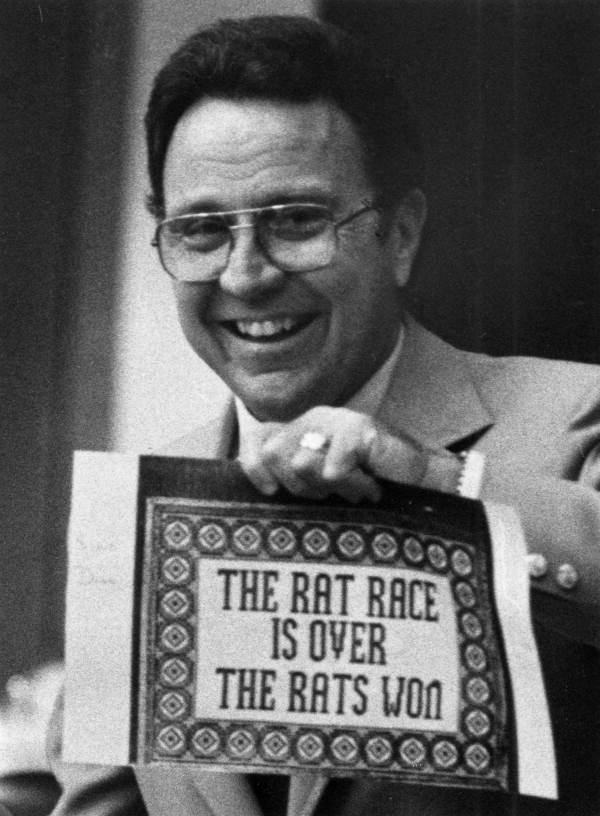
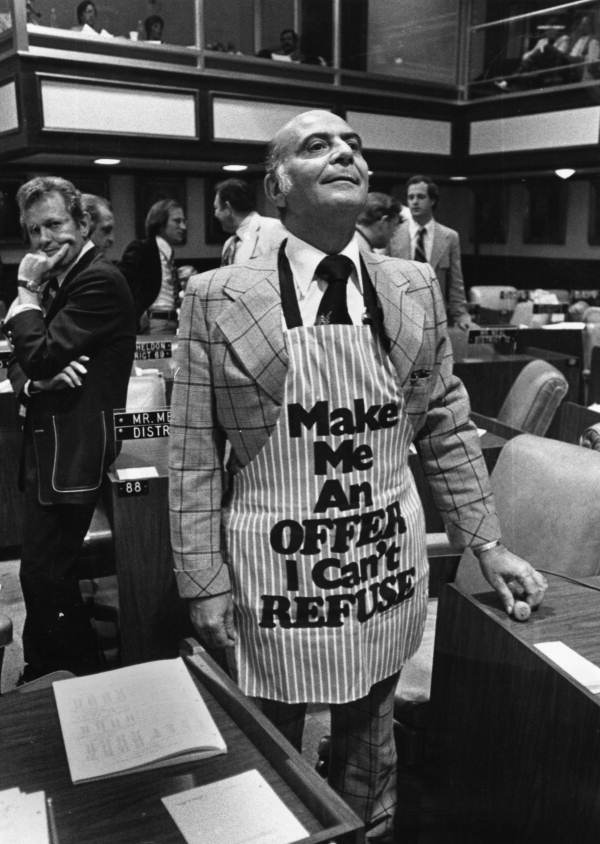
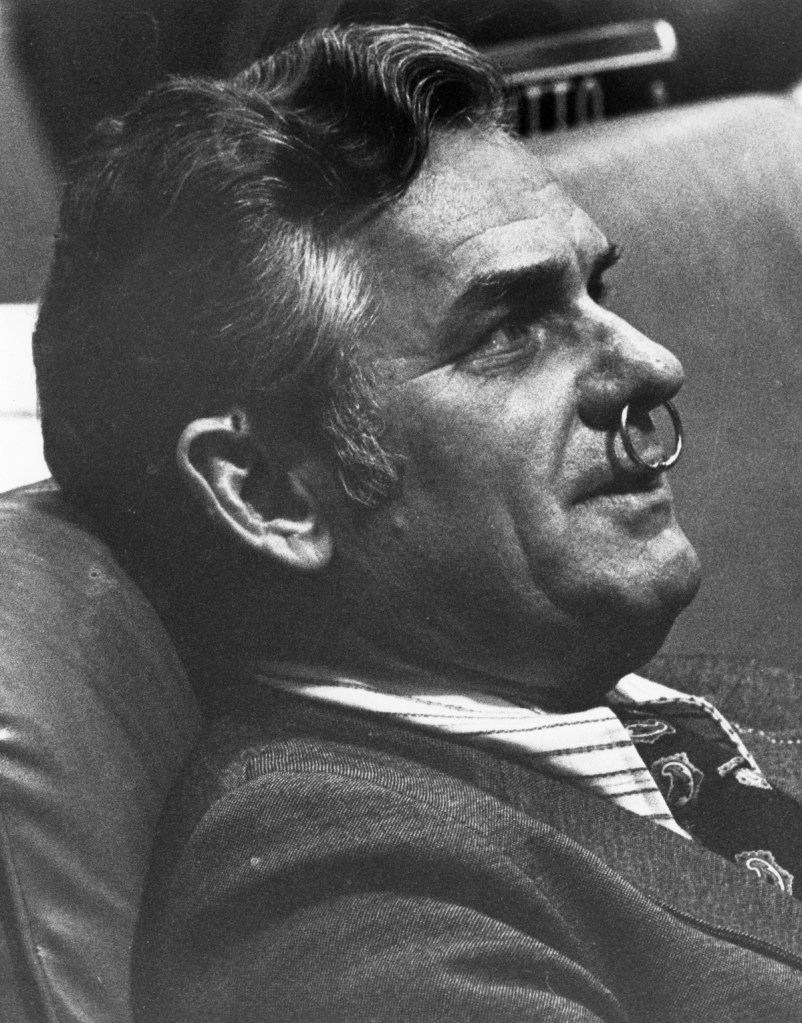
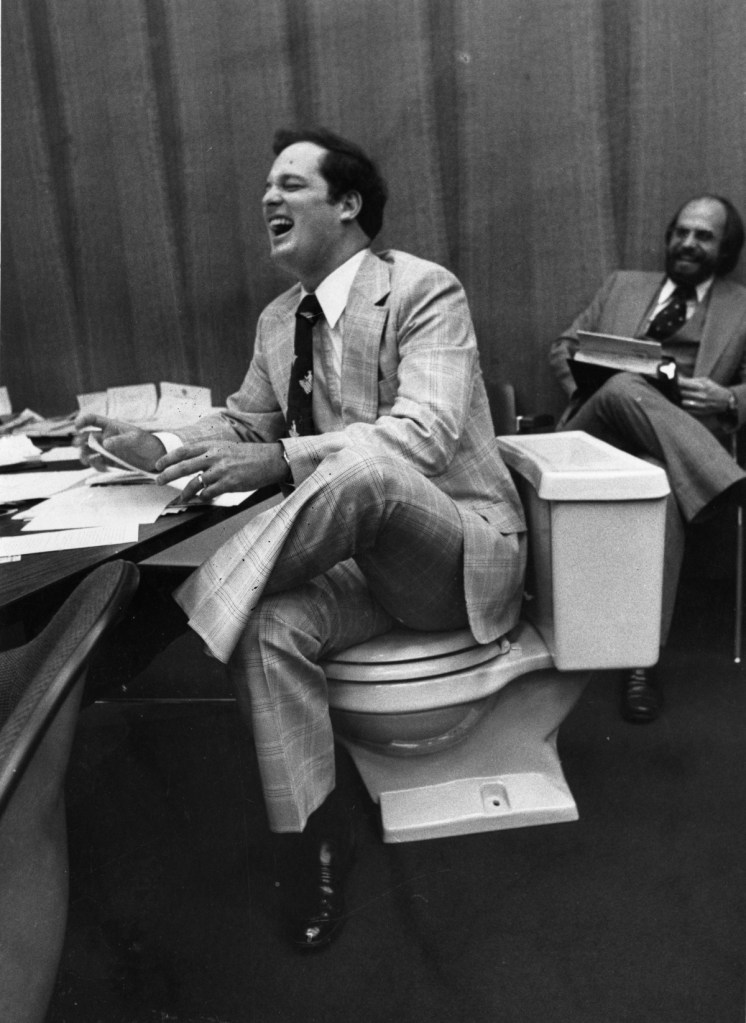
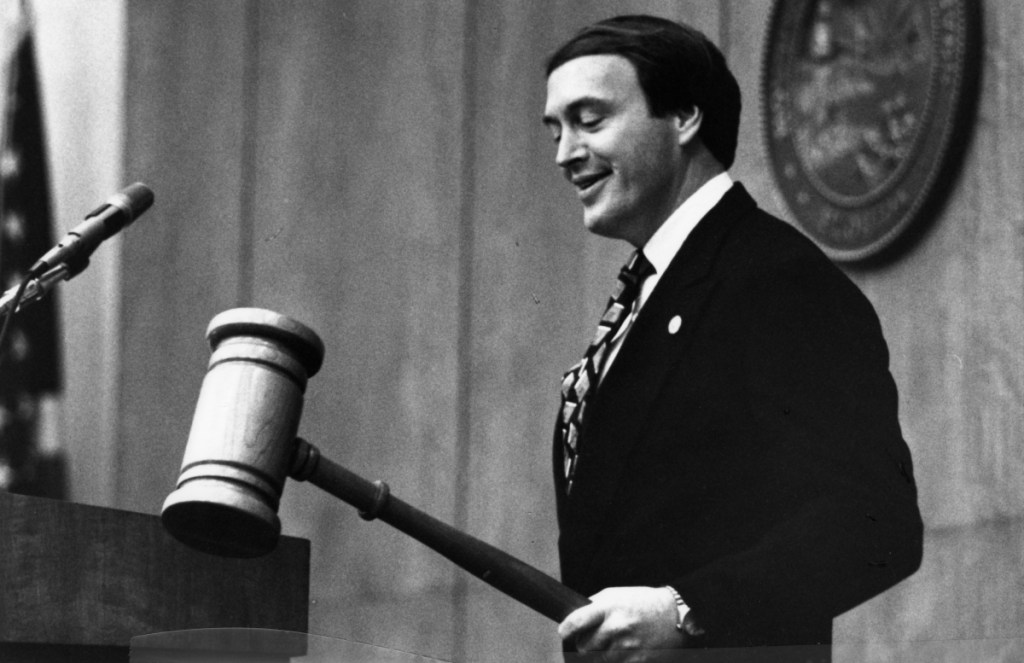
Despite Tallahassee being a capital due solely to its location as a midway point and our Capitol taking over 100 years to sort out, the truly silly side of Florida’s capital city lies in its politicians. As likely comes as no surprise, the land of Florida Man has plenty of laughs to serve up thanks to our politicians. From silly outfits to ridiculous outbursts and from mermaids to pirates, Florida’s legislators have contributed more than their fair share to the humor of Florida history. To end a long post with a few short laughs, enjoy the selection of historical photos below (all of the photographs are courtesy of the Donn Dughi Collection, State Archives of Florida):



Activity #1
Take a look into your own capitol building or other historic government buildings in your area. See if you can find out the following answers:
- When was the building constructed?
- Were there any big changes to the building over time? Were their additions? Was the building damaged by any storms, fires, or other disasters?
- What role does your building serve? Has its role changed over time?
BONUS: Can you figure out which architectural style your building was designed in? Spanish revival? Gothic? (Finding out more about local architectural styles can help you find more beauty in your local historic structures!)
Activity #2
Take a look into your state’s history. See if you can find out the following answers:
- When did your state officially become a state?
- Was your state a territory?
- Who controlled your area before it became a part of the United States?
Learning more about the history of our homes before the United States existed adds to our understanding of how we fit into larger themes of history!
Did you try either of these activities? What are some of the facts you found out about your area? Share your activity results with us on social media by tagging History Becomes You and by using #historybecomesyou !
Check back next Thursday for the next of many peeks into history!
 History Becomes You
I never knew how Tallahassee became our capital! Now I know and I’m amazed it stayed the capital. The evolution of the Capitol building is interesting. I remember driving up Apalchee Pkwy. and seeing the Capitol, just as the picture shows in your story, when I attended FSU. Good times. I especially enjoyed the pictures of various state leaders having fun while working. The pictures are hilarious! I vote for bringing such “shenanigans” back. Maybe if politicians were making their points with a sense of humor and creativity instead of anger and rigidity, it would spread beyond the walls of government to the American people in general! Wouldn’t that be lovely?!
The local government building I chose to research is the Cleveland St. Post Office in Clearwater, FL. It is a gorgeous building that I enjoyed visiting when I lived nearby. The front steps are worn from the feet that have climbed them since the post office opened in Oct., 1933. My research revealed that it was built to be a post office and has functioned as one ever since. I learned that it was built in the Mediterranean-Revival style intended to resemble seaside villas and palaces of the time. I also learned that the builders used oolitic limestone from the Florida Keys. My research didn’t mention any damage or additions to the original building. On August 7, 1980, it was added to the National Registry of Historic Places. Interesting.
LikeLike
The National Register of Historic Places is an amazing resource! It documents historical structures and sites all over the United States that have national significance. There are also local registers that document sites and structures that have local significance (sometimes on a city or state level). These registers can be a great way to find historical locations in your area and learn more about the history in your own backyard.
LikeLike
Good site you have here.. It’s difficult to find excellent writing like yours nowadays. I truly appreciate individuals like you! Take care!!
LikeLike