Throughout history, people have crafted objects that are both utilitarian as well as visually interesting. Known today as folk art, these items have often reflected themes such as family, work, religion, and community life. Some of the more well-known versions include specialized types of embroidery, wood working techniques, and clothing, but the basket makers of Florida have more than made their mark in the folk art community.
For many folk artists, their craftsmanship is a skill passed down through families and apprenticeships within their communities. Florida’s basket makers are no different. Perhaps the most famous of Florida’s white oak basket makers, Lucreaty Clark learned her skills at a young age from her mother and father who had, in-turn, learned it from her maternal grandparents.
Basket maker Lucreaty Clark at the 1984 Florida Folk Festival in White Springs, Florida (Image courtesy of the Folklife Collection, State Archives of Florida)
“Well the first person I know of them to make them was my mother and father. And, and uh momma told me that grandpa made them, her father made them baskets and that where she learned it from. So, after she learned it and she married my daddy, she learned him how to make baskets. So then her and him would make them every cotton season and they would make a lot of them, and they would sell them.”
Lucreaty Clark, October 1980 oral history interview
As a functional part of life in rural north Florida, the baskets represented not only a family tradition to her from a young age, but also an income source for herself and her family.
“So, sometimes our daddy would come home and he would say, “Miss so and so says she wants a basket.” He say, “if you can make a good one, I’ll sell it for you.” So then we’d be racing to make that money. And uh, we would make that basket. And poppa would sell it and bring us our change. We would buy us a pretty piece of cloth, and make us a dress and that would keep us racing with one another trying to get, see who could beat doing the best job.”
Lucreaty clark, october 1980 oral history interview
The desire to constantly better her basket making skills led Mrs. Clark to become a prolific basket maker and she was even honored with the 1985 Florida Folk Heritage Award for her preservation of what many considered a lost art.
…NEARLY lost that is…
Over the course of several interviews and discussions about her basket making, Mrs. Clark repeatedly voiced her concern over being the last of her line to continue the family’s tradition. So, when her grandson, Alphonso Jennings, became her apprentice, it became clear that their folk art tradition would live on.
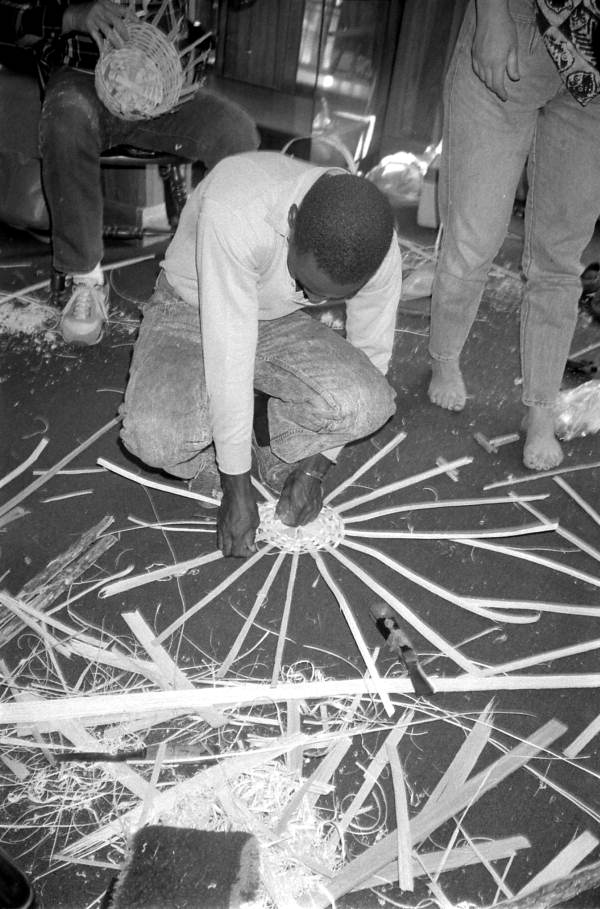
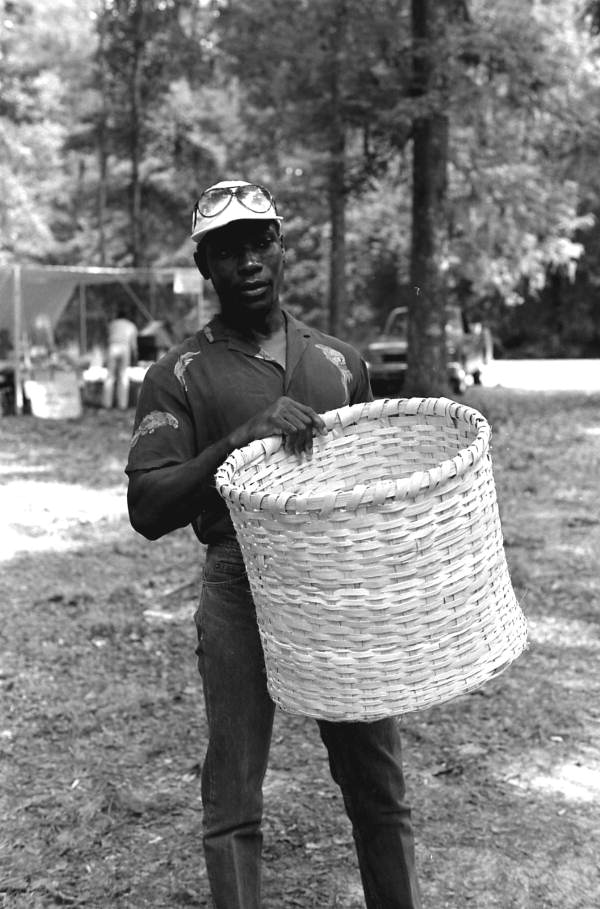
Alphonso Jennings demonstrating his basket making skills (Images courtesy of the Folklife Collection, State Archives of Florida)
Over the years, both Mrs. Clark and her grandson, Mr. Jennings, passed on their craft to others in demonstrations at Florida folk festivals. Following the passing of Mrs. Clark, Alphonso Jennings – an artist in his own right – worked to preserve his grandmother’s legacy by continuing to make baskets and share his knowledge through workshops, school programs, and public demonstrations.
Activity #1: Finding Your Own Folk Traditions
Identify some folk arts associated with your area or your background. Did anyone in your family create traditional folk art or pass down traditional ways of making things? Learn a bit about other communities in your area as well. What are some of their folk art traditions?
Activity #2: Folk Artists Today
Learn about artists continuing to create folk art today. On social media, check out #folkart and #folkartist to see a wide variety of artists carrying on traditions today!
If you want to learn about other basket makers, feel free to check out an artist that I recently came across, Corey Alston. A sweetgrass basket weaver, Mr. Alston creates beautiful traditional baskets in Charleston, South Carolina. You can find him on Instagram @corey_alston_sweetgrassbasket !
Did you try either of these activities? What are some of the folk art traditions that you discovered in your area? Can you find ways that folk art is being used to celebrate Black History Month? Amazing artists like Lucreaty Clark and Alphonso Jennings are always a great reminder that Black History is Art History!
Share your activity results with us on social media by tagging History Becomes You and by using #historybecomesyou !
Check back next Thursday for the next of many peeks into history as we celebrate Black History Month!
Florida’s capital city of Tallahassee is far from unknown. In fact, the city, the government offices, and the local colleges and universities get quite a bit of news coverage every year. However, like most historic cities and capitals throughout the United States, Tallahassee has also been the site of many historical, architectural, and political shenanigans.
Historically Humorous – An Unintended Capital
As it turns out, Tallahassee isn’t even Florida’s first capital and, although many people have heard about Florida’s five flags, few know the repercussions of Florida’s colonial periods.
FUN FACT: Florida has flown five flags over the course of its history. Not only has the state been a part of the United States since 1845, but it has also been under the control of the Confederacy, during the Civil War, and as a colony under the British, the French, and the Spanish.
While Florida was under Spanish control, the state was actually divided into two territories – East Florida and West Florida. These territories came complete with their own capitals – Pensacola in West Florida and St. Augustine in East Florida. However, when the region changed hands in 1821 and was acquired by the United States, these separate capitals began to pose a problem. Unified under the United States, the two territories became the Florida that we know today, but the question remained as to which capital would serve the soon-to-be state.
Florida’s answer? Why not use BOTH?
Rather than select either capital to serve unified Florida, the early 1820s saw the legislators transfer back and forth between St. Augustine and Pensacola. Although a trip that today would take less than six hours by car, the hazardous journey between capitals took more than 20 days by land and as much as two months by sea during the 1820s.
Some stories recount that, during one of these long and arduous journeys, one of the legislators died, while others point to exasperation at what some would term the worst commute in Florida (even by today’s standards) as the reason why the Council of the Territory of Florida ultimately decided to establish a new central capital for Florida. So, men set out from Pensacola and St. Augustine and located the midway point between the two storied cities – known today as Tallahassee.
For most states, this would be the end of the story and the end of the discussion – after all being a third attempt at a capital is strange enough – but not in Florida. It just so happened that the men charged with locating the site for the new capital might have been unflinchingly rigid in their adherence to their directive when they selected Tallahassee. Their rigidity, bordering on stubborn refusal to find a better option, became an issue because Tallahassee had been the site of successive indigenous settlements which had been burned by Andrew Jackson – an action not quickly forgotten or forgiven. So, rather than move the site several miles south (like arguably more logical people might have done), the selection of Tallahassee led to continued struggles between indigenous communities and the incoming settlers and legislators who remained determined to maintain the city as Florida’s official capital.
Architectural – How Many Tries Does it Take to Get to a Functional Capitol?
Despite the flawed decision that led to establish a new capital in the midst of an indigenous settlement, the Tallahassee began to grow and expand. Quick to provide a capitol in the area, work began on a log cabin that would serve as the territorial capitol building from 1824 until 1826. Recognizing the limitations of conducting government business in a small log cabin, work began on a two-story structure which became the new capitol in 1826. Originally planned to be the first part of a larger building, this capitol quickly became obsolete as well. After all, it only measured 40’ (12.2m) x 26’ (7.9m) which, at two stories tall, only allows for approximately 2,000 square feet of space.
In the continuous march onward, a new capitol was needed to facilitate the growing government as Florida prepared for statehood. In response to this need, Congress appropriated $20,000 in 1839 for the construction of a “suitable” state house for the Territorial Legislature. After tearing down the existing building and relocating government work into rented spaces, builders began work on the third capitol building. Completed in 1845 (the same year that Florida became a state), this third capitol remains the core of what is today known as the “Old Capitol.”
But, Florida didn’t stop there.
This third capitol remained largely unchanged for several decades – even throughout the Civil War during which it was the only Confederate capital east of the Mississippi to avoid capture by federal troops. It survived as it stood until the 1880s when, once again, a growing state needed a “suitable” state house. Facing a long list of desperately needed repairs, the building received cosmetic assistance in the 1890s and the addition of two wings on either side of the capitol’s core in 1902. These additions allowed Florida’s government to operate under the same roof for the last time as, by 1911, government services and departments began relocating to other buildings and locations.
The “Old Capitol” continued receiving additions and fresh coats of paint throughout the 1920s, 1930s, and 1940s until, in 1969, the Governor approved plans for the “New Capitol” and, in 1972, the Florida Legislature authorized money for a new Capitol Complex including a 22-story office building (completed in 1977).
This scene greets many residents and visitors to Tallahassee as they approach the city on Apalachee Parkway. Showing both the Old Capitol and the new Capitol Complex behind it illustrates the growth of Florida’s government since the 1820s. (Image courtesy of the Donn Dughi Collection, State Archives of Florida)
Although I am a great lover of symmetry in design, even I pause to question the design of the complex which included the 22-story office building situated between two smaller structures to house the legislative offices (complete with domed rooftops). Nonetheless, work moved forward on what many consider the phallic new Capitol Complex while attention once again shifted back to the “Old Capitol.” Despite support from 1978 Governor Reubin Askew and House Speaker Donald Tucker to demolish the “Old Capitol,” the structure was saved and restored to its 1902 version. Today, it operates as a museum and reminds Floridians and visitors of the last time our state government functioned under one roof. After all – the third time must be the charm when it comes to building capitols here in Florida.
Political – Because We Could All Use Reminding that Politicians Can Be Funny Too
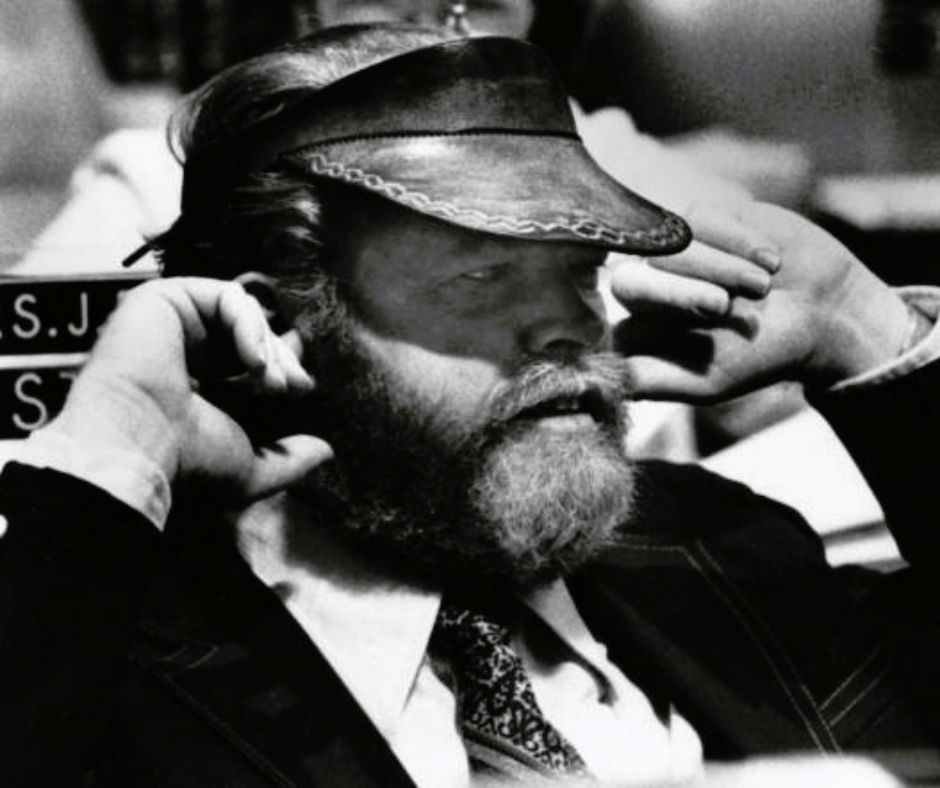
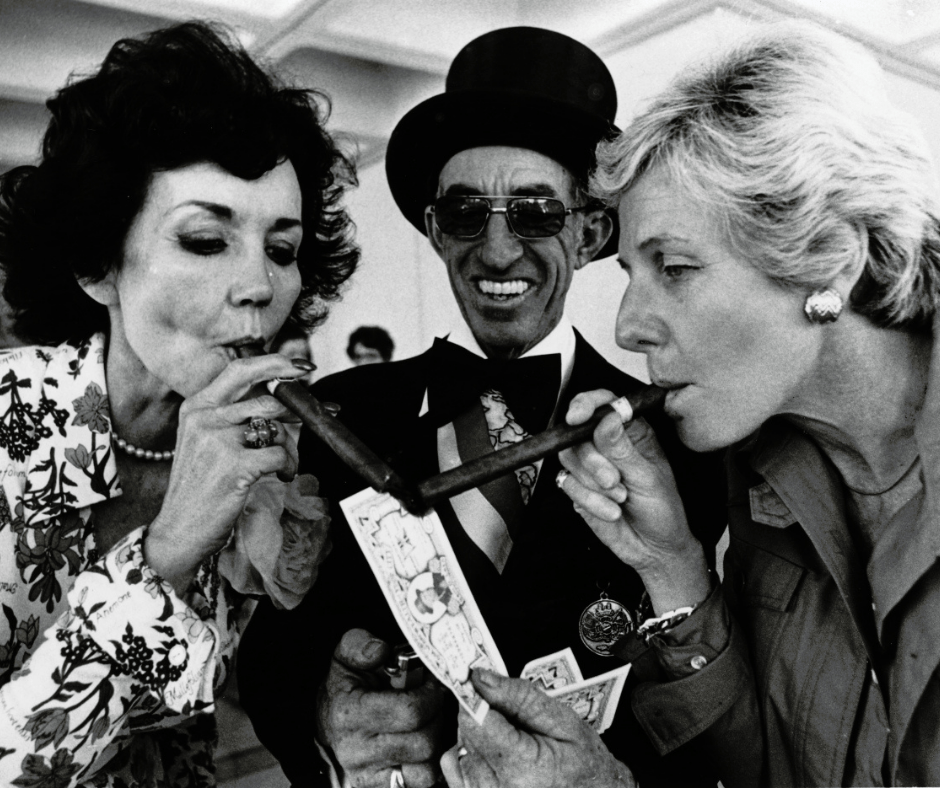
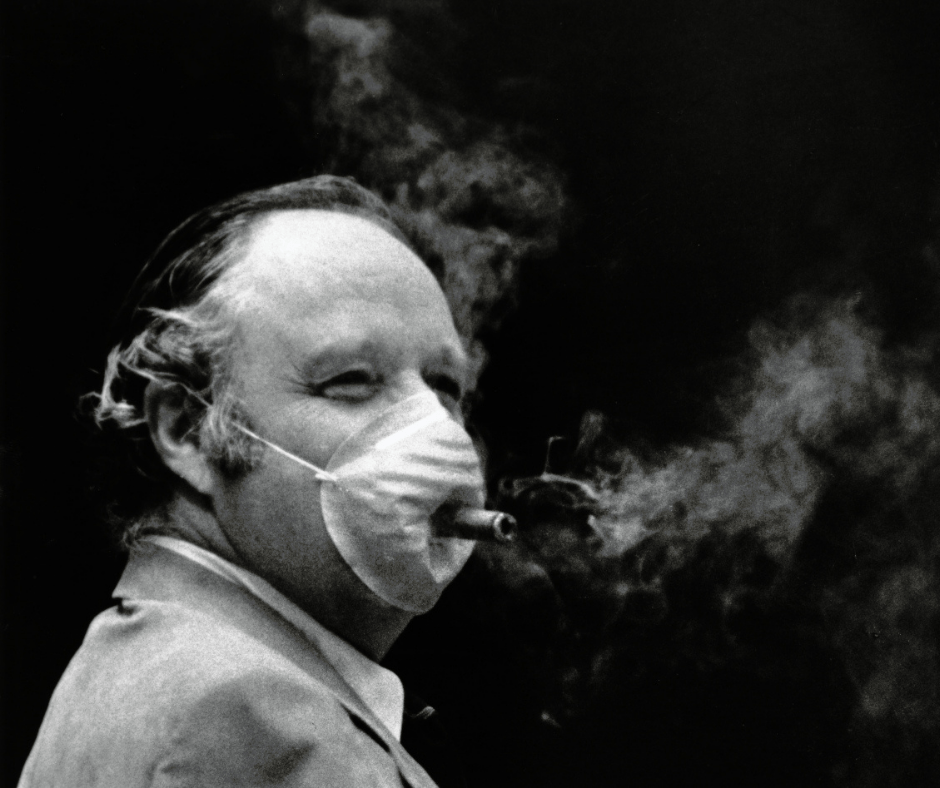
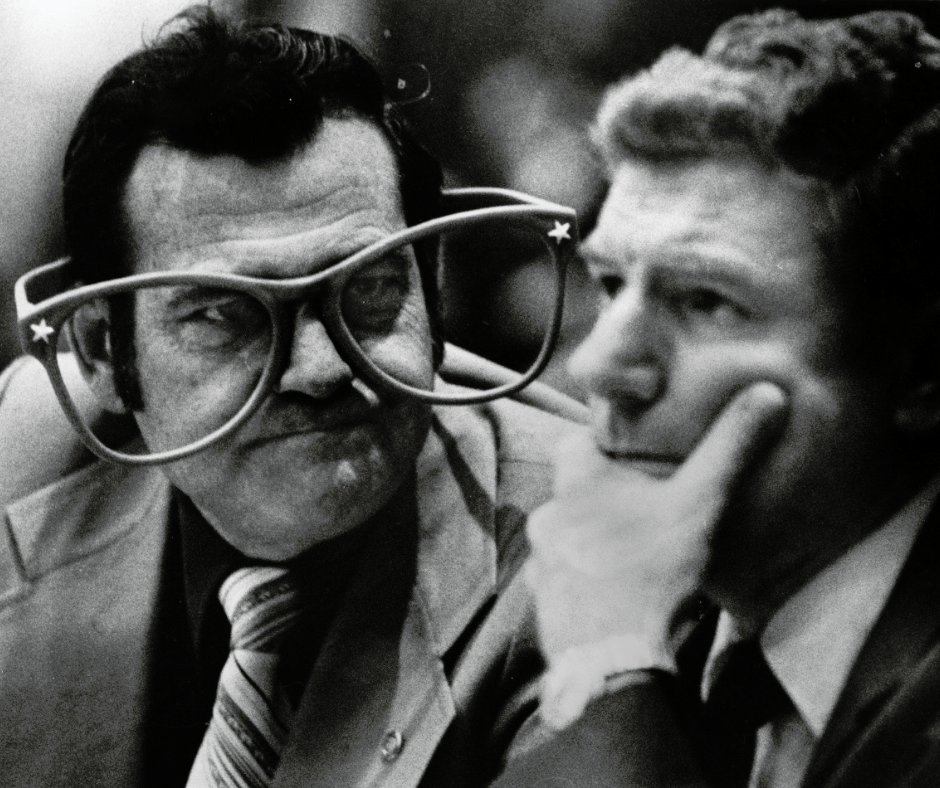
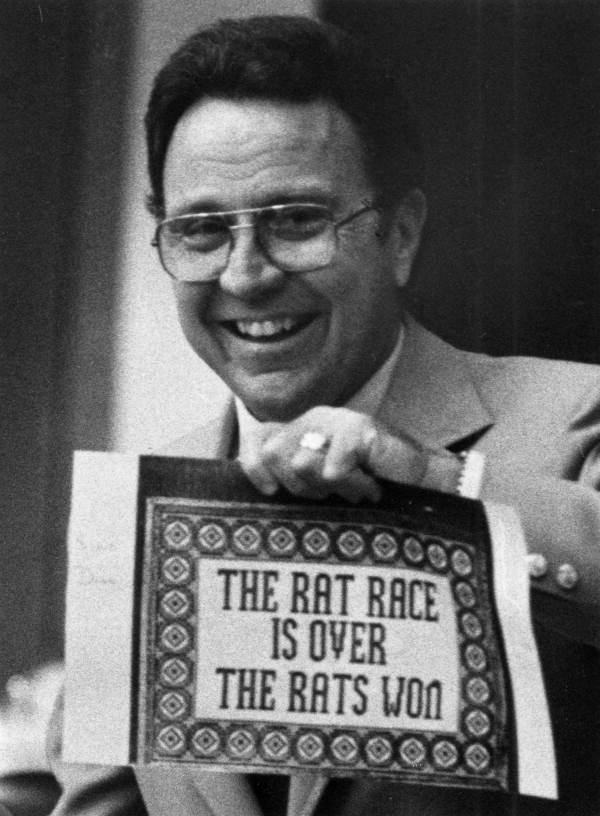
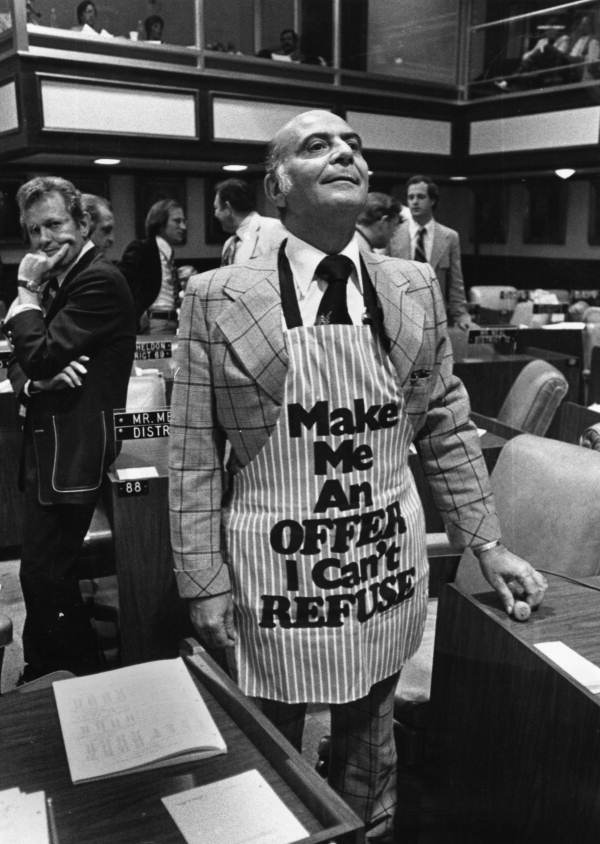
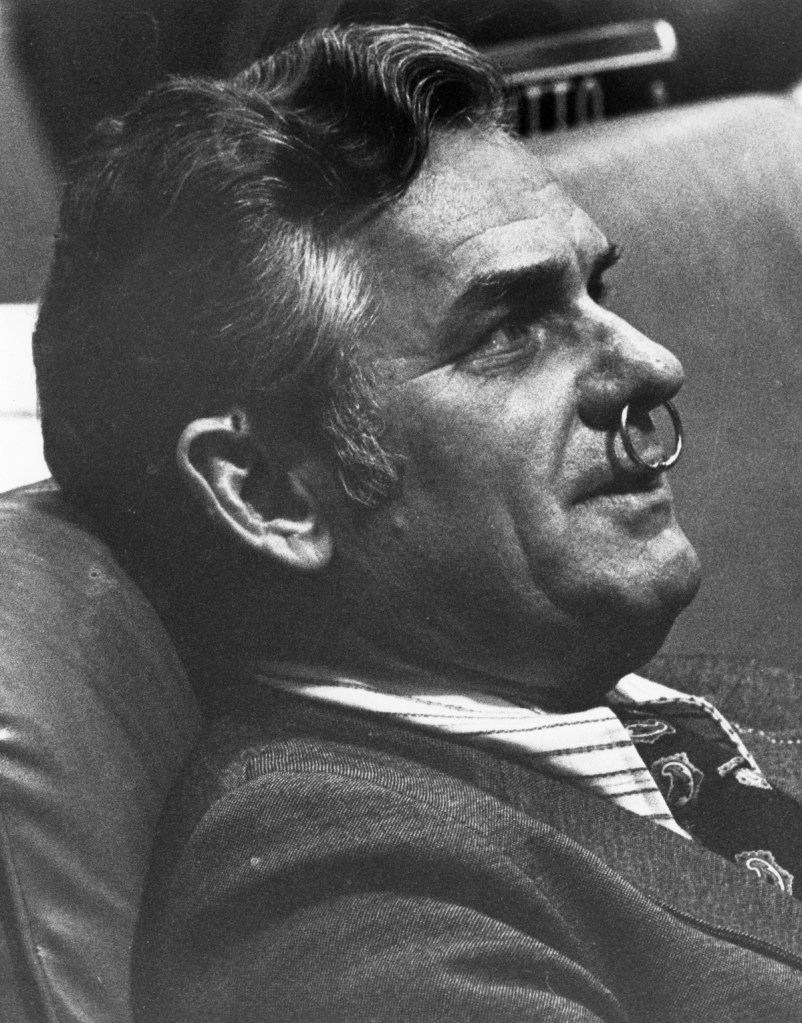
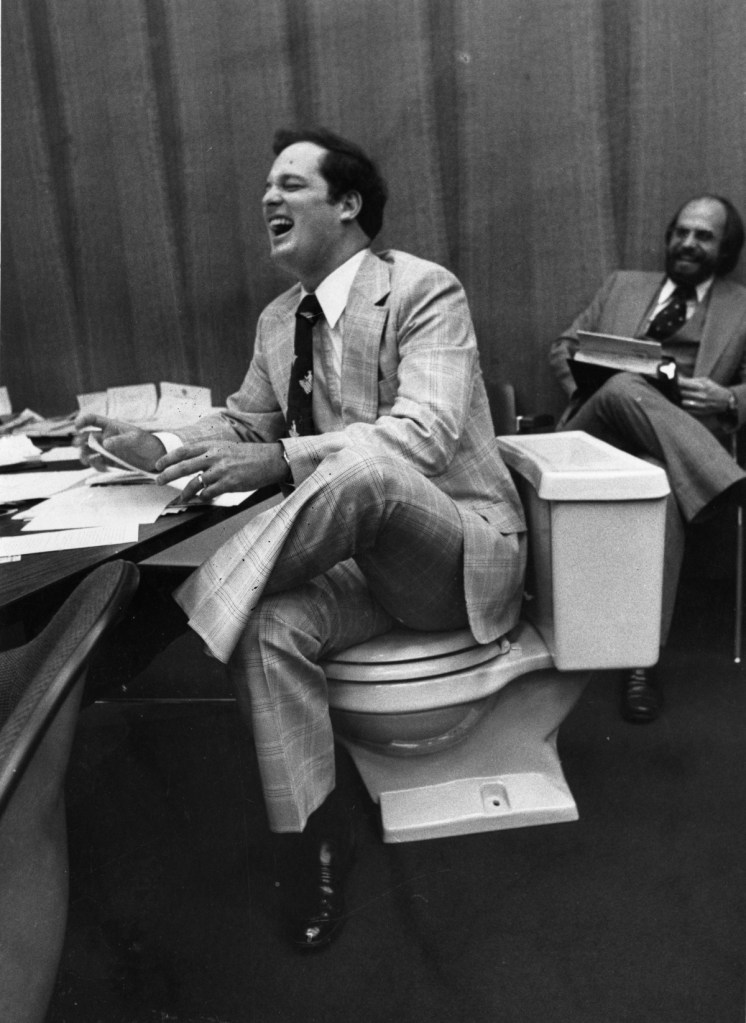
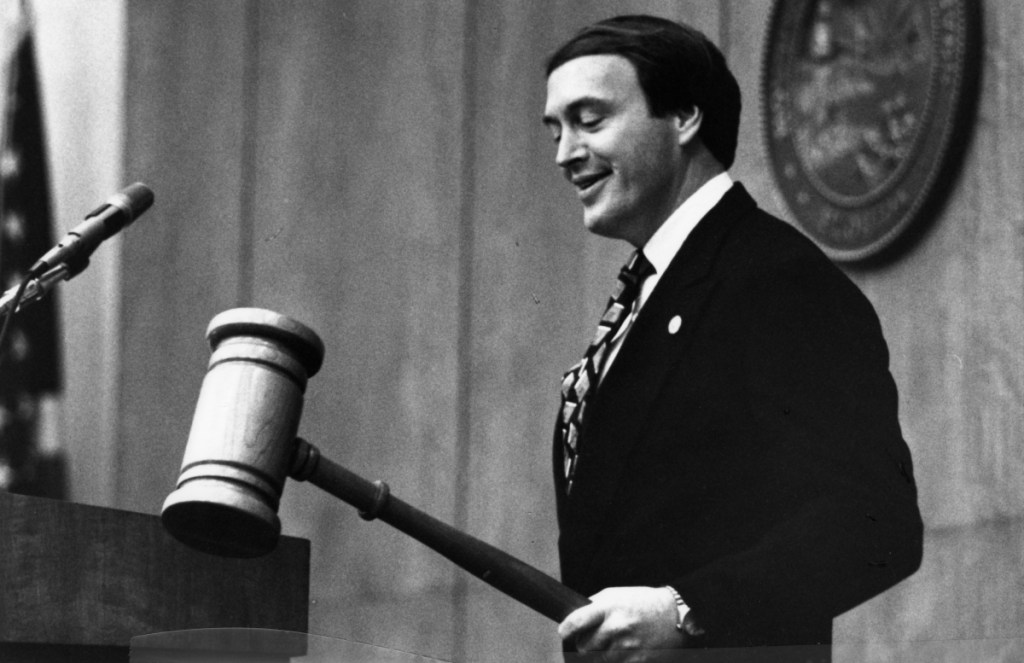
Despite Tallahassee being a capital due solely to its location as a midway point and our Capitol taking over 100 years to sort out, the truly silly side of Florida’s capital city lies in its politicians. As likely comes as no surprise, the land of Florida Man has plenty of laughs to serve up thanks to our politicians. From silly outfits to ridiculous outbursts and from mermaids to pirates, Florida’s legislators have contributed more than their fair share to the humor of Florida history. To end a long post with a few short laughs, enjoy the selection of historical photos below (all of the photographs are courtesy of the Donn Dughi Collection, State Archives of Florida):
Representative C. Fred Jones in visor holds his earsRepresentatives Helen Gordon Davis and Pat Frank get their cigars lit by the “Alacalde” of Ybor CitySenator Edgar Dunn Jr. smoking while wearing a maskFlorida State Senator Dempsey Barron carrying a Weeki Wachee Springs waterpark mermaid during the 1983 sessionRepresentative Larry Shackelford wearing a large pair of glassesRepresentative Tom Danson lets fellow legislators know the 1980 session is overRepresentative Tony Fontana wears a humorous apronRepresentative Wayne Mixson with a notebook binder ring in his noseSenator Robert McKnight sits on a toilet seat in the Florida SenateHouse Speaker Bo Johnson with an oversized gavelRepresentatives Frank Messersmith and Keith Arnold display a novelty t-shirtRepresentative Marilyn Evans-Jones with a pirate character during Tourism Day
Activity #1
Take a look into your own capitol building or other historic government buildings in your area. See if you can find out the following answers:
When was the building constructed?
Were there any big changes to the building over time? Were their additions? Was the building damaged by any storms, fires, or other disasters?
What role does your building serve? Has its role changed over time?
BONUS: Can you figure out which architectural style your building was designed in? Spanish revival? Gothic? (Finding out more about local architectural styles can help you find more beauty in your local historic structures!)
Activity #2
Take a look into your state’s history. See if you can find out the following answers:
When did your state officially become a state?
Was your state a territory?
Who controlled your area before it became a part of the United States?
Learning more about the history of our homes before the United States existed adds to our understanding of how we fit into larger themes of history!
Did you try either of these activities? What are some of the facts you found out about your area? Share your activity results with us on social media by tagging History Becomes You and by using #historybecomesyou !
Check back next Thursday for the next of many peeks into history!
Image courtesy of the Department of Commerce Collection, State Archives of Florida
For many people who think of Florida’s nickname as the Sunshine State, they often imagine of sun kissed beaches and idyllic days by the water. But the state’s average of over 200 days of sun per year also make it an ideal location for all things solar powered!
Now, with a nickname like the Sunshine State, you might think that Florida has both feet well and truly planted in the use of solar power. But that is not always the case. Although more and more people are interested in embracing solar power, the practice of harvesting Florida’s seemingly endless sun is not widespread.
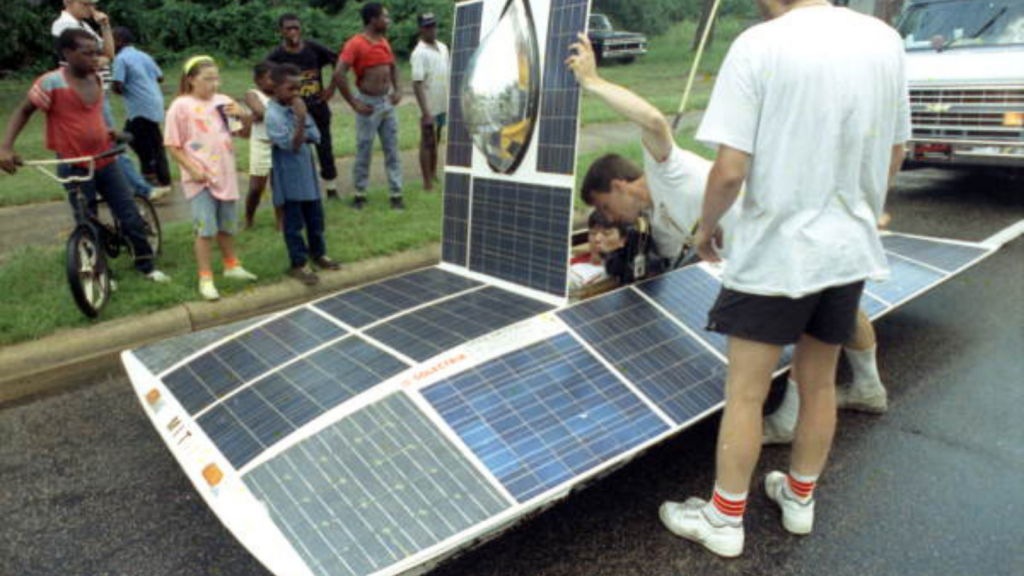
GM Sunrayce USA entry (Image courtesy of the Donn Dughi Collection, State Archives of Florida)
So when, in July 1990, a fleet of solar powered vehicles embarked on a strange and electrifying race, it turned heads all the way along the route from Florida to Michigan. Known as the GM Sunrayce USA, 32 teams of college students had spent the previous year and a half building a variety of vehicles designed to run entirely off of solar power before hitting the road from Orlando’s Epcot Center. Those that competed included:
Arizona State University – Tempe, Arizona
Auburn University – Auburn, Alabama
California State Polytechnic University – Pomona, California
California State Polytechnic University – San Luis Obispo, California
California State University – Los Angeles, California
California State University – Northridge, California
Clarkson University – Potsdam, New York
Colorado State University – Fort Collins, Colorado
Crowder College – Neosho, Missouri
Dartmouth College – Hanover, New Hampshire
Drexel University – Philadelphia, Pennsylvania
Florida Institute of Technology – Melbourne, Florida
Iowa State University – Ames, Iowa
Mankato State University – Mankato, Minnesota
Massachusetts Institute of Technology – Cambridge, Massachusetts
Rochester Institute of Technology – Rochester, New York
Rose-Hulman Institute of Technology – Terre Haute, Indiana
Stanford University – Stanford, California
Stark Technical College – Canton, Ohio
The University of Texas – Austin, Texas
University of Maryland – College Park, Maryland
University of Michigan – Ann Arbor, Michigan
University of North Texas – Denton, Texas
University of Ottawa – Ottawa, Ontario, Canada
University of Pennsylvania – Philadelphia, Pennsylvania
University of Puerto Rico – Mayaquez, Puerto Rico
University of Waterloo – Waterloo, Ontario, Canada
Villanova University – Villanova, Pennsylvania
Virginia Polytechnic University – Blacksburg, Virginia
Western Michigan U and Jordan – Kalamazoo, Michigan
Western Washington University – Bellingham, Washington
Worcester Polytechnic Institute – Worcester, Massachusetts
Although the design guidelines primarily required the cars to be solar powered and fit within maximum size parameters (6m (19.7ft) in length, 2m (6.6ft) in width, and 1.6m (5.25ft) in height), the race itself had several regulations that all teams were required to follow. First, all cars were inspected and tested prior to the race beginning. Second, given that the average race day would cover more than 160 miles, all teams were required to make a mandatory pitstop at a designated daily halfway point.
Covering more than 1,600 miles over the course of 11 race days, the 32 collegiate teams traveled from Orlando, Florida all the way to Warren, Michigan. With names like “Sunshine Special” and “Sunrunner,” the teams made up of university students provided great inspiration to residents and visitors alike along the entire route.
M.I.T. students with their entry for the GM Sunrayce USA solar car race (Image courtesy of the Donn Dughi Collection, State Archives of Florida)
Although primarily sponsored by GM, the race was also co-sponsored and promoted by Chevrolet, the Department of Energy, and the Society of Automotive Engineers. As such, the co-sponsors set aside a list of goals that they hoped could be achieved with this cross-country challenge. In particular, the Department of Energy hoped to educate and inspire in the following ways:
Further the educational skills and opportunities of student scientists and engineers
Stimulate the applications of conservation and renewable energy technology
Generate interest in the general population for alternative vehicle technology
Generate interest in science and engineering
Achieving all of that and much more, the race drew the attention of thousands of residents and students along the entire route as well as through a number of media outlets across the country.
Also known as the American Solar Challenge, the Sunrayce marked the start of organized solar car “raycing” in the United States. Born out of the 1987 victory of GM’s Sunryacer solar car in the first World Solar Challenge in Australia, GM leadership was inspired to create their own collegiate event. The “rayce” went on for years afterward, taking place in 1993, 1995, 1997, and 1999. Beginning in Orlando in 1990, the race returned to the Sunshine State in 1999 as the route took racers from Washington, D.C. back to Orlando as it closed out GM’s sponsorship of the event.
From then on, with a change in sponsorship, the aptly renamed American Solar Challenge (ASC) continued in 2001 with a new format, including race stages which lasted multiple days, higher mileage races, and no rest days.
Continuing to take place every two years, the GM Sunrayce USA and American Solar Challenge have crisscrossed the United States time and time again.
1990: Orlando, Florida – Warren, Michigan (GM Sunrayce USA)
2012: Rochester, New York – St. Paul, Minnesota (American Solar Challenge 2012)
2014: Austin, Texas – Minneapolis, Minnesota (American Solar Challenge 2014)
2016: Brecksville, Ohio – Hot Springs, South Dakota (American Solar Challenge 2016)
2018: Omaha, Nebraska – Bend, Oregon (American Solar Challenge 2018)
2021: Independence, Missouri – Santa Fe, New Mexico (American Solar Challenge 2021)
Activity
Discover your state’s nickname and its origin story. Brainstorm 2 or 3 different nicknames that your state could have based on its industry, environment, history, and people. (And feel free to give the reasons for your recommendations!)
To help you brainstorm, consider some of the following questions:
Is your state known for a particular historical event?
Is your state famous for its environment or for a rare plant/animal?
Does your state have a traditional industry that has shaped its reputation over the years?
For instance: Recently, some residents of Florida have begun to question the state’s nickname. Rather than the Sunshine State, they recommend that Florida, instead, become known as the Water State. Their reasoning centers on the abundance of water in Florida’s tourism and fishing industries, the state’s position as a peninsula which is bordered by water on three sides, and on their belief that other states are more deserving of the Sunshine State honor.
Did you try this activity? What are some of the nickname ideas that you came up with for your state? Share your activity results with us on social media by tagging History Becomes You and by using #historybecomesyou !
Check back next Thursday for the next of many peeks into history!
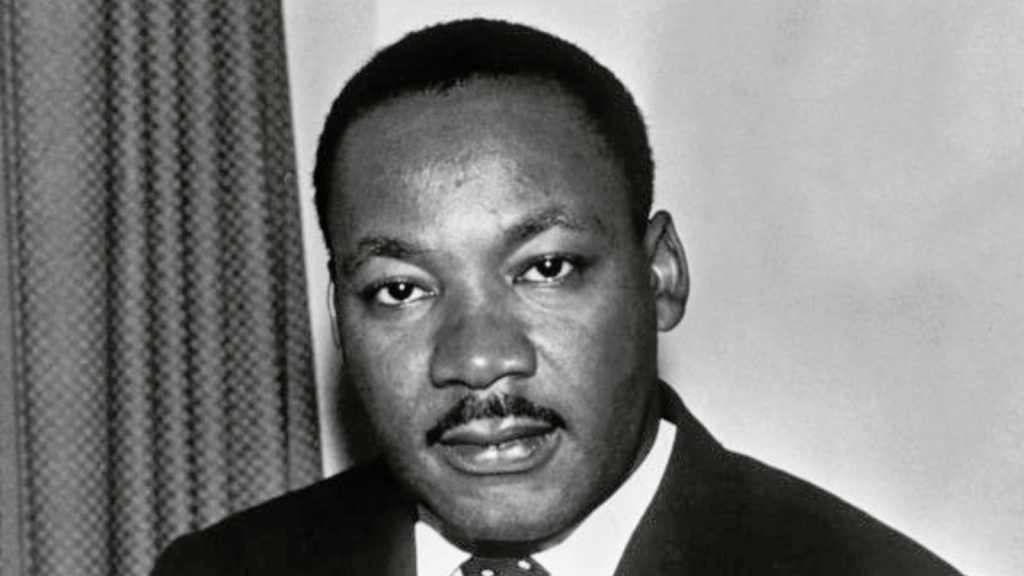
Dr. Martin Luther King, Jr., circa 1968 (Image courtesy of the General Collection, State Archives of Florida)
Public Memory
For many of us throughout the United States, the celebration of Martin Luther King Jr. Day can take on many different forms and meanings. On a basic level, it celebrates Dr. Martin Luther King’s birthday, but on a much larger level, it also celebrates Dr. King’s achievements during the civil rights movement as well as the achievements of thousands of civil rights activists from all walks of life.
But, as with most commemorations in history, Martin Luther King Jr. Day also reminds opponents of the civil rights movement of the ways in which the events of the 1960s painted their home states in a light of racism, segregationist policies, and violence. In some cases, Martin Luther King Jr. Day is grudgingly acknowledged, while in others it has been enveloped within other commemorations. Most notably, in Alabama and Mississippi (two states still known for civil rights abuses during the 1960s), a joint celebration known as “King-Lee” day has served as a celebration of both Dr. King and Confederate General Robert E. Lee – an unexpected and seemingly opposing pairing of historical figures.
Similarly, Virginia observed Lee-Jackson-King Day until 2000 – including another Confederate leader, Thomas “Stonewall” Jackson, in the celebration. Although the state went on to separate the commemorative days and, ultimately, eliminated Lee-Jackson Day, for many, these joint commemorations conjure up questions about how far the country has come over the course of the last 60 years.
Reading Between the Lines
As a public school-educated student, I was fortunate to have been taught by a series of amazing and dedicated teachers. I was taught to question the prevailing storylines of history, to look at historical events with new perspectives, and to work to understand the entirety of historical figures rather than the idealized versions that have become memorialized (often quite literally in stone or metal).
So, with my arsenal of amazing educators, I was surprised to find that my education had a glaring hole in it in the shape of Martin Luther King’s presence in St. Augustine. Although I had learned about the civil rights movement and about Dr. King’s involvement, the events always felt like they took place at a great distance – somewhere in Mississippi, Alabama, or Tennessee. The closest that it seemed the civil rights movement had come to me and where I had grown up was in the form of individual protests scattered throughout the state – wade-ins at public beaches, swimming in segregated pools, requests for service at segregated businesses. But somehow it never came up that Martin Luther King had spent time in Florida.
My shock at this glaring gap in my knowledge about such a well-known movement reminded me of the work that is still being undertaken to properly honor and understand the Civil Rights Movement and those who took part in it.
So, in honor of Martin Luther King Jr. Day, I want to share with you the story of the 1964 civil rights campaign in St. Augustine, Florida.
A Most Law-Less Community
In the days, weeks, and months leading up to the 400th anniversary of St. Augustine’s founding, Florida’s politicians and business owners hoped for a positive portrayal of one of the country’s oldest cities. Instead, the media captured a rapid succession of protests, demonstrations, and attacks all centered around racial tensions and segregation throughout the city. The rapidly approaching anniversary meant that the eyes of the nation would be on St. Augustine and, for the Southern Christian Leadership Conference (SCLC) leaders, this meant that it was the perfect stage to call attention to the racial injustices and inequality that thousands of citizens were experiencing under segregation and Jim Crow laws. According to a June 5, 1964 news article in the New York Times, Dr. King and the SCLC had chosen St. Augustine as a focal point of the 1964 summer campaign saying, “We are determined this city will not celebrate its quadricentennial as a segregated city.”
So, far from the tourism photographs of glittering beaches or historic architecture, images appeared across the nation of motel owners pouring acid into segregated pools, civil rights leaders examining bullet holes left by would-be assassins, and night after night of peaceful protests turned violent from attacks by angry segregationists and white supremacists. These events and images marked St. Augustine as a city that refused to end racial injustice even 400 years after its founding.
Called “the most law-less community he had encountered,” Martin Luther King saw the potential to advance the Civil Rights Act of 1964 through the movement’s efforts in St. Augustine. But he was continuously taken aback by developments in this northeastern corner of Florida. Not only had he been monitoring the escalating tension in St. Augustine over the course of 1963, but Dr. King also wrote to the White House to question the use of federal funding for the city’s 400th anniversary in the face of rumors that the St. Johns County sheriff, A. L. Davis, had recruited special deputies to handle “racial trouble” from the ranks of the Ku Klux Klan.
Arriving himself on May 18, 1964, Martin Luther King experienced much of this violence and unrest first hand. Speaking at a local church on May 27th, his presence garnered a great deal of unwanted attention and led to an early morning shooting at a small house at which he was staying just two days later. Threats on his life and multiple arrests made it clear to Dr. King that St. Augustine was as vehemently segregated as many of the other more well-known cities in which he and his fellow activists had worked.
Throughout June 1964, King and SCLC leadership continued to organize sit-ins, evening marches to the Old Slave Market, and wade-ins. While violence continued to escalate around these peaceful protests and hundreds of activists were arrested, King continued to appeal to the federal government and the White House to step in and pressure prominent white citizens to negotiate with the movement. But, rather than improve the tensions within St. Augustine, on June 18, 1964, a Grand Jury called on Dr. King and the SCLC to leave St. Augustine for one month to diffuse the situation. The Grand Jury claimed that the presence of the activists had disrupted the “racial harmony” of the city – a claim the Dr. King and SCLC leadership called immoral and false as they insisted that St. Augustine had never had anything approaching peaceful race relations.
Yet, as SCLC lawyers began to win court victories in St. Augustine under Judge Bryan Simpson against the Ku Klux Klan and other white supremacist organizations, the coverage of the tensions and protests in Florida were helping the Civil Rights Act to wind its way through the Senate. When Florida Governor C. Farris Bryant announced the formation of a biracial committee to restore interracial communications in St. Augustine, the SCLC was willing to leave the Sunshine State and continue their efforts elsewhere in the south. However, in spite of the passage of the Civil Rights Act in July 1964, constant threats and picketing by the Ku Klux Klan kept many in St. Augustine too intimidated to integrate. In the face of these continued threats and acts of intimidation, Dr. King observed that the violence and brutality that the St. Augustine community had endured had helped to prompt Congress to pass the Civil Rights Act of 1964 even though they continued to face segregation at home.
“Let us recognize that violence is not the answer. Hate isn’t our weapon either. I’m talking about a love that is so strong that it organized itself into a mass movement and says somehow, ‘I am my brother’s keeper and he is so wrong that I am willing to suffer and die, if necessary, to get him right.'”
Martin Luther King, St. Augustine, Florida (1964)
St. Augustine represents one of hundreds of stories of the Civil Rights Movement that we can still learn from today. And, although the city of St. Augustine has made progress, it continues to represent the changing attitudes towards Dr. King and the commemoration of Martin Luther King Jr. Day. St. Augustine eventually grew from a city where some people had once hated Dr. King’s presence to a place where people gather annually to celebrate the work of the Civil Rights Movement. It would have been unthinkable to those in power in 1964 St. Augustine, but today, people celebrate the places that Dr. King visited, stayed, and preached.
Activity #1
In honor of Martin Luther King Jr. Day, check your local news stations to find ways that people are celebrating the Civil Rights Movement in your area. Are there readings of Dr. King’s speeches? Are there commemorative marches? How do these celebrations look different due to COVID-19?
Activity #2
Take the time to look into your area’s history with the Civil Rights Movement. Were there sit-ins in your hometown? Were there wade-ins at a beach you go to with friends or family? Find at least three examples of civil rights activism in your area and consider what the civil rights activists and local residents must have experienced or thought as part of these demonstrations.
Did you try out these activities? What are some of the ways that you can celebrate Martin Luther King Jr. Day with your friends, family, and community? Share your activities with us on social media by tagging History Becomes You and by using #historybecomesyou !
Check back in Thursday for the next of many peeks into history!
So much of Florida’s draw relies on the state’s stunning natural beauty. From glistening beaches to crystal clear springs, Florida’s residents and visitors alike have flocked to this tropical paradise for generations. But, with great natural beauty, comes great responsibility.
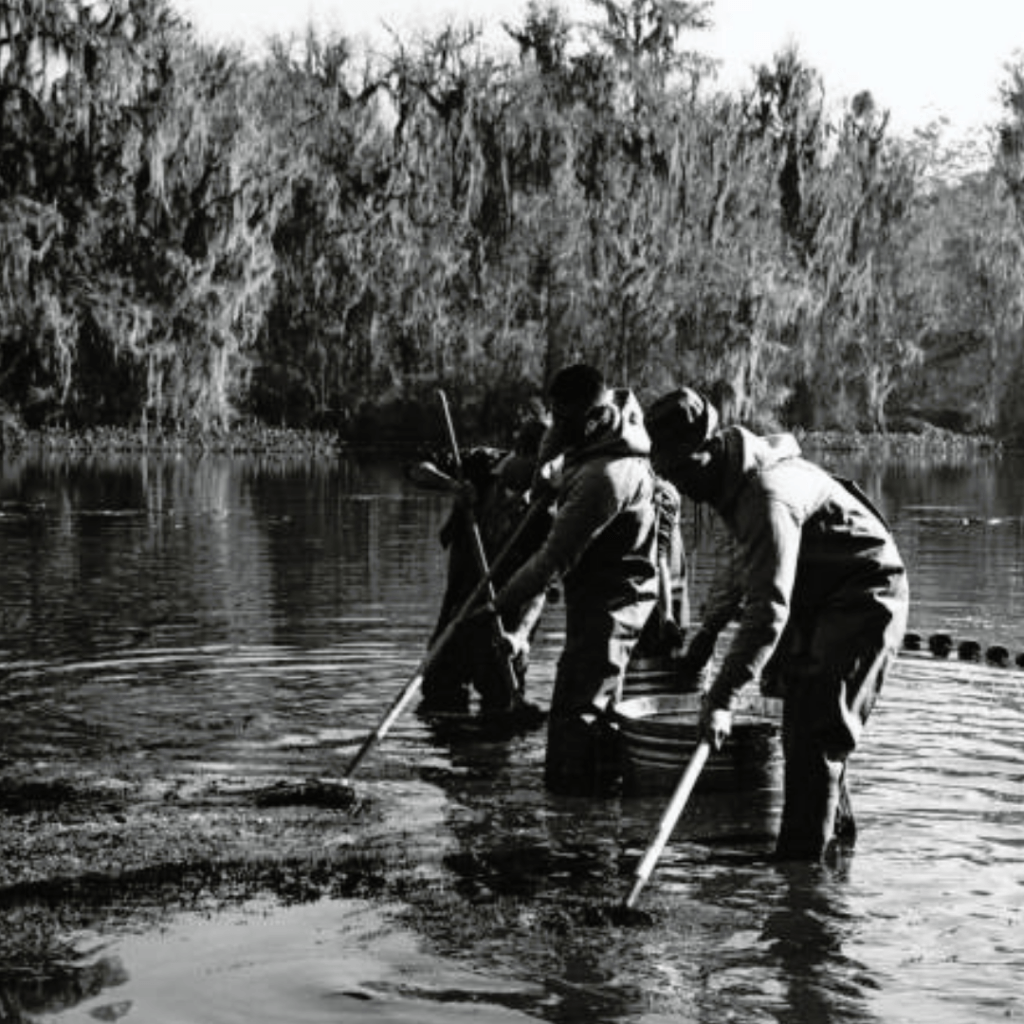
For many of the people who have grown up in Florida, memories of sunny beaches and even performing mermaids coexist along with memories of banding together with friends and family to take part in clean up operations throughout the Sunshine State. Sometimes in an effort to tidy the shore line of trash and other debris and other times in an effort to reverse the effects of pollution and mismanagement, these clean ups have forged several generations of ecowarriors. And many of these individuals have continued to stand up and protect Florida’s stunning scenery from becoming choked with invasive species, littered with garbage, or toxic from chemicals and pesticides.
In fact, for more than 30 years, Floridians and visitors have harnessed the power of people to remove thousands of pounds of trash and debris from the state’s shorelines and waterways. For instance, just a few months ago, in September 2021 as part of International Coastal Cleanup Day, more than 50 cleanups were held throughout Miami-Dade County alone. These involved over 3,000 volunteers who pulled a massive 17,771 pounds of garbage from areas including Elliott Key, Biscayne National Park, and Oleta State Park.
An additional 200 pounds of trash were collected by cleanup teams in neighboring Broward County (including more than 1,000 cigarette butts).
And a further 200 pounds was collected in Virginia Key.
That’s not to mention the 1,400 pounds of debris removed from the MacArthur Causeway area or the 2,000 pounds of trash pulled out of the Miami Marine Stadium basin.
According to Ocean Conservancy (a nonprofit environmental advocacy organization involved in many Coastal Cleanup events throughout the world), the top five types of trash removed in recent cleanups included:
Cigarette butts
Food wrappers
Plastic bags
Plastic bottles
Bottle caps
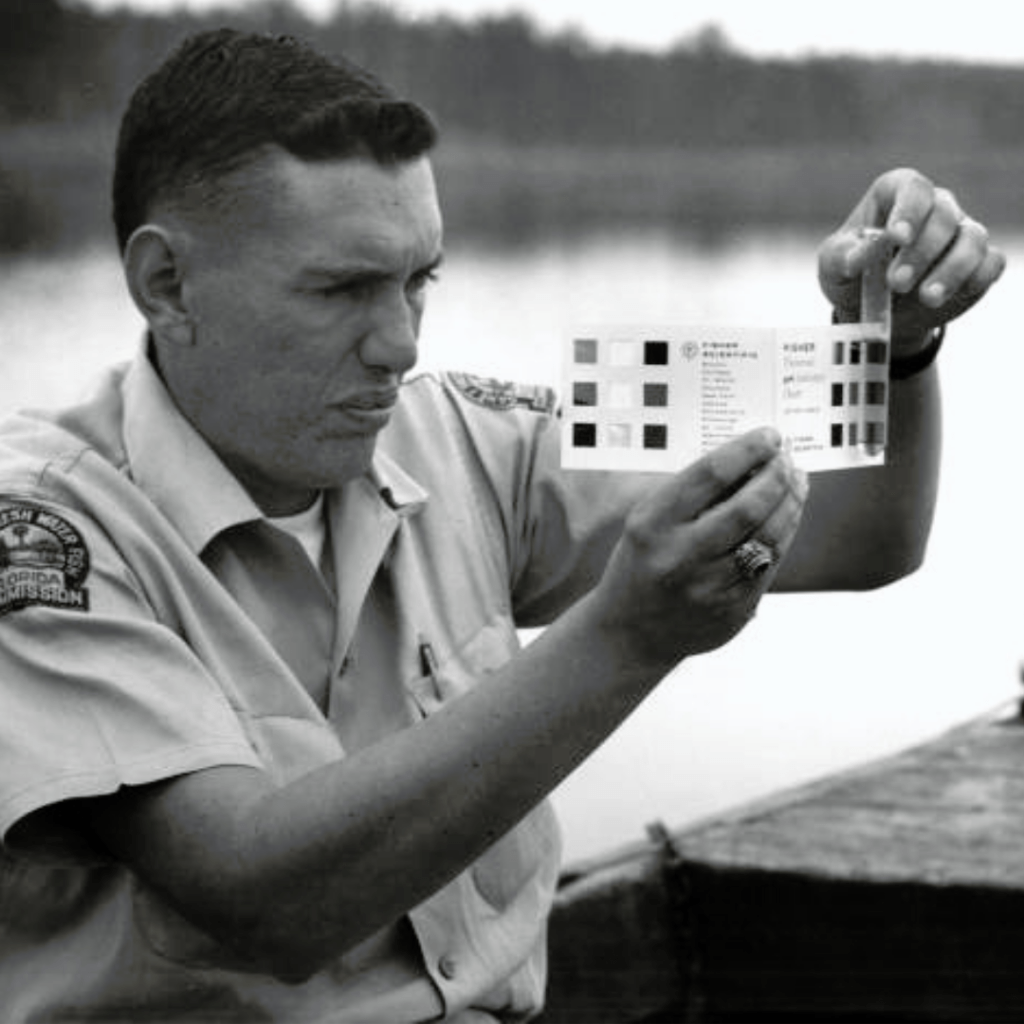
Yet, as thousands of pounds of trash and debris are removed from Florida’s coastlines and waterways each year, many of the people fighting to conserve the natural draws of Florida are a mixture of dedicated volunteers and professionals. These groups work together not only to clean up shorelines, but also to monitor pollution and its effects on plant and animal populations throughout the state.
But what many people don’t realize is that, in addition to the monumental efforts undertaken by cleanup crews throughout the state, environmental professionals have been working behind the scenes for decades to monitor other risks to the Florida ecosystem as well. From invasive species to the loss of natural habitats, this work has led to a number of laws focused on the protection of the state’s critical ecosystems.
From the Clean Water Act and Clean Air Act to the Superfund Sites program, Floridians have made it clear that protection of our natural beauty is an important part of living in and visiting the Sunshine State. In addition to the legislative protection, Florida has also identified more than 120 endangered and threatened plant and animal species – many of which are actively monitored and their habitats protected throughout the state. Although some protection attempts are well-known, such as communities turning out lights near beaches to protect baby sea turtles during nesting season, others are truly grassroots efforts such as the efforts of volunteers throughout the state to replant acres of seagrasses and mangroves.
But don’t become disheartened because there are many ways that we can all help protect endangered species and ecosystems both in Florida and wherever you call home. Interested in getting involved or learning more about your home state’s natural environment? Check out either of the two activities below!
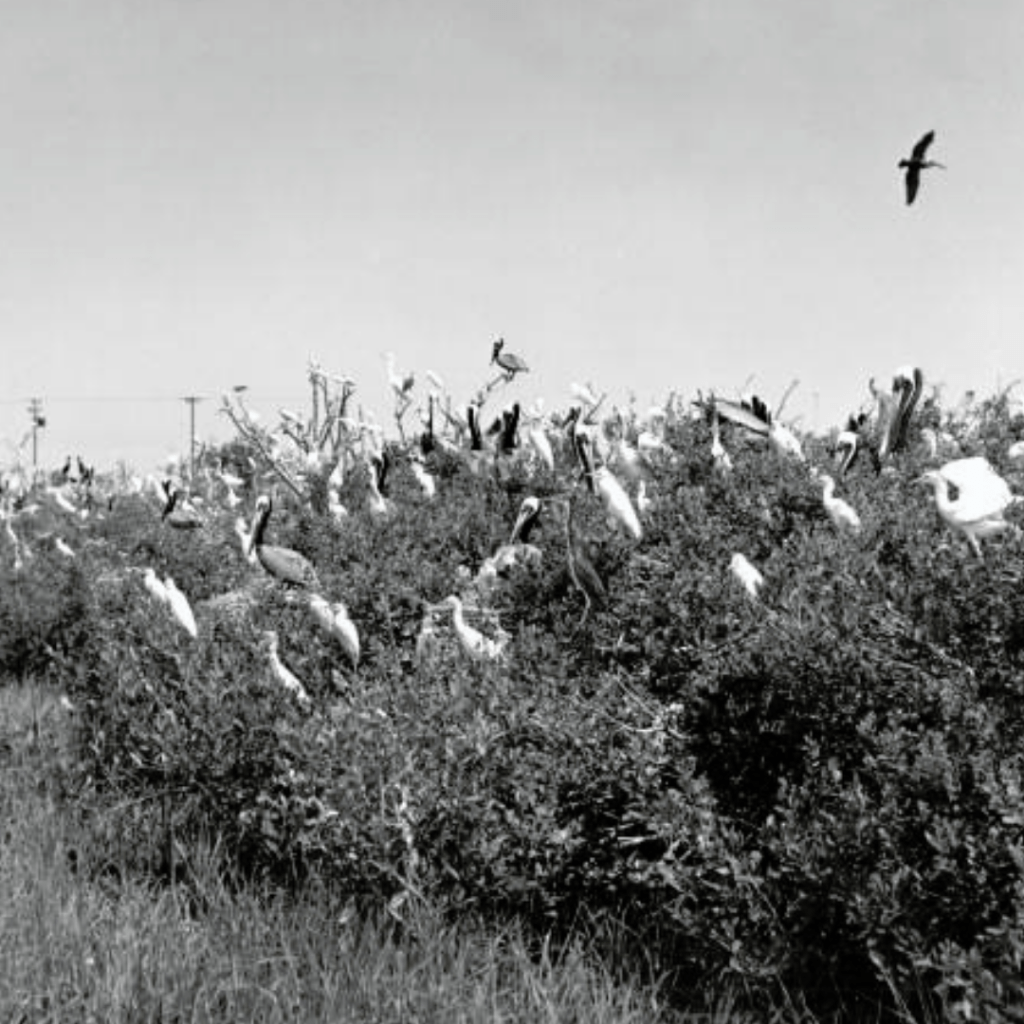
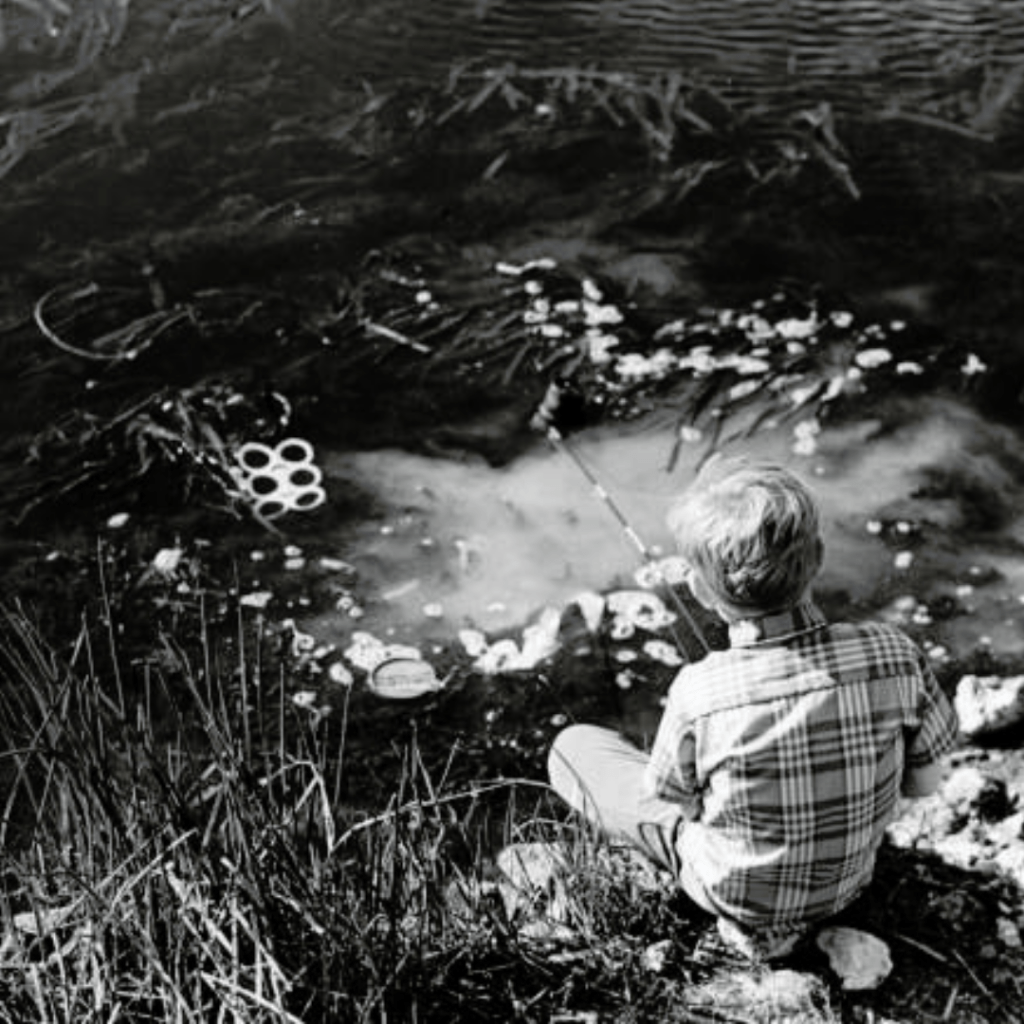
*All images courtesy of the Game and Fresh Water Fish Commission Collection, Florida State Archive
Activity #1: Get to know your natural state
First: Identify at least 3 preserves or state/national parks in your state.
Second: Identify at least 3 endangered species (plants or animals) in your state and research the causes behind their endangered status. Were their habitats destroyed? Have they been hunted? Has pollution or changes in air and water quality led to a population decline?
Third: Find a way to get involved in protecting your nature. Find a cleanup or environmental event in your area and take part! Getting outside and having fun with others is a great way to help the environment and preserve your neck of the woods.
Activity #2: Recycle, Reduce, Reuse
Based upon the list below of common trash removed in cleanups around the world, identify at least 3 ways that you can limit your use of these items or at least 3 ways that you can ensure they are disposed of in the safest way possible.
Most Common Types of Trash Found on Beaches
Cigarette Butts
Food Wrappers
Plastic Straws
Plastic Bottle Caps
Plastic Bottles
Plastic Bags
Every little bit helps! And, although no one is perfect, each small change we can make helps the environment and our future!
Did you try out this activity? What are some of the ways that you are pitching in for the planet? Share your activities with us on social media by tagging History Becomes You and by using #historybecomesyou !
Check back in next week for the next of many peeks into history!
Welcome to the History Becomes You blog – a new source of history education and exploration!
The first thing that you will learn here is that not only is history AWESOME, but that it is also a great way to learn about EVERYTHING! This is because (and you will see this over and over again) EVERYTHING IS HISTORY!
From science to math and from art to travel, everything is history. How ideas were formed in every field is history. Exploration of the world through travel is history. Artistic movements are history. Scientific discoveries are history. So, rather than a fringe topic or field of study, HISTORY IS THE FIELD OF STUDY and I am looking forward to sharing it with you!
Historian, Archivist, and Floridian
As the voice behind this blog, I want to introduce myself and explain why I’m so excited to share my love of history with you. My name is Lindsay and I have been a history buff since childhood. But, unlike many budding historians, I was always drawn to disasters and chaotic events. From the Hindenburg to Chernobyl and from Ancient Egypt to World War II, I was drawn to the grim and strange side of history. I can assure you that my mother would have been much happier if I had instead chosen to study peace movements around the world or the history of charitable organizations, but instead she patiently listened as I rattled on about the Book of the Dead or the sinking of the Titanic. Thanks to her patience, I can stand here today and tell you that it made all the difference.
I have worked in the public history field and in archives for years and I am still as excited about history as ever!
So, to get things started off on the fun side of history, I’ll be sharing some of the quirky history from my home state over the next few weeks both through the blog and through Instagram, Twitter, Facebook, and Pinterest.
Make sure to check back here every Thursday and on the History Becomes You social media accounts to learn more about fun history and find weekly history activities to enjoy with family and friends!
Activity:
Think about your favorite subject (history, science, math, art, geography, literature, etc.) and identify 3 ways your subject can be linked to history.
For example: If your favorite subject is geography, here are some of the ways that geography can be linked to history.
The names of countries around the world have changed over time. The USSR was divided into many separate countries after the end of the Soviet Union.
Many early human societies can be located around rivers or bodies of fresh water. This is because access to fresh water has always been very important to people’s ability to survive long enough for historians to know about them.
The borders that we think of today crossed many indigenous communities. For example, the border between the United States and Canada splits lands that had been inhabited by indigenous communities for centuries.
Did you try out this activity? What links did you find? Share your activities with us on social media by tagging History Becomes You and by using #historybecomesyou !
Check back in next week for the first of many peeks into history!










 History Becomes You