Preservation By The People

In almost every community there is a place that everyone still talks about. They reminisce about their fond memories or strange events. They share their passion for a building, a bridge, or a site that formed and shaped their homes, schools, and experiences.

In almost every community there are people who, in the midst of these reminiscences and stories, still feel the pain of loss when these places change beyond recognition or are even demolished. These people recall the beauty of these lost places, the changes that they heralded for their communities, and the hard work that they put into attempts at saving these historical landscapes. These are the preservationists and community activists.

And, in one of those towns, cities, and communities, there once stood the El Vernona.

And, behind the El Vernona, stood teams of preservationists and activists trying everything in their power to save their beloved landmark.

The El Vernona

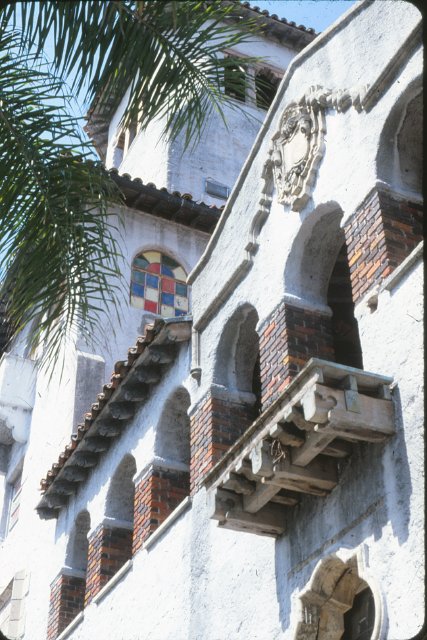
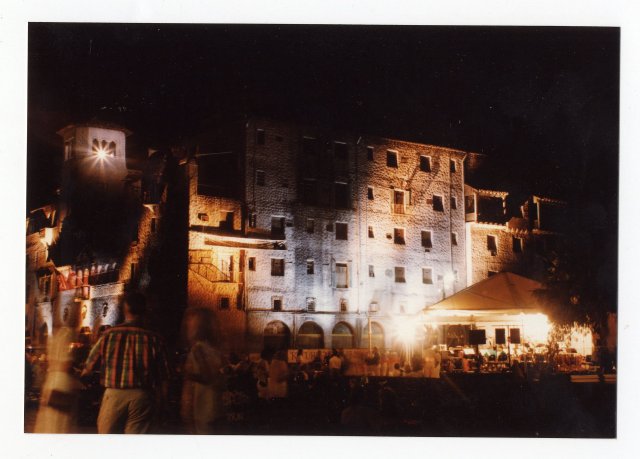
Built in the 1920s, the El Vernona was the brainchild of architect Dwight James Baum and Owen Burns – a prolific developer during the Boom years of Sarasota, Florida. Named for Burns’ late wife, Vernona Hill Freeman, the massive hotel dominated the view of Sarasota’s bayfront and signaled a shift not only in the movement of development towards the water, but also a shift in the size and opulence of local architecture.

Afterall, you can’t formally open a hotel with a grand ball and not expect the new addition to practically ooze luxury, right?

Well, the El Vernona did not disappoint.
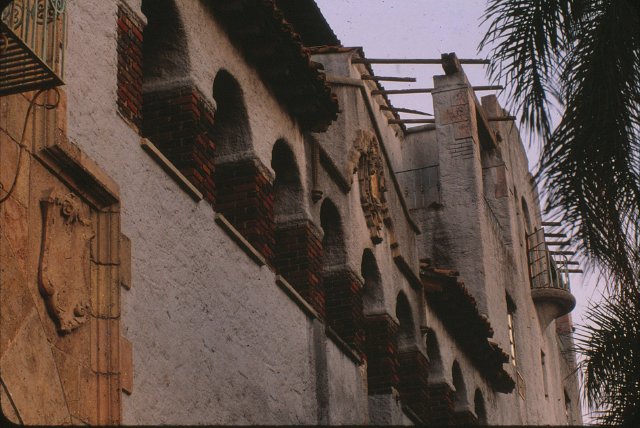
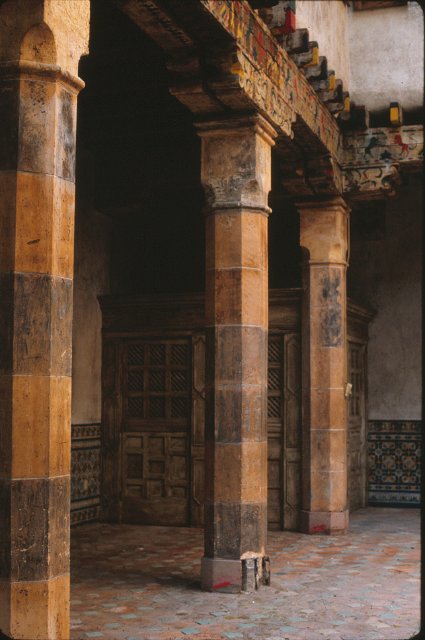
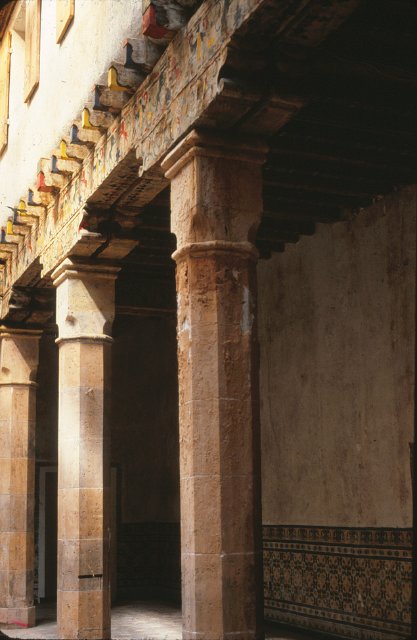
Designed in the Mediterranean Revival Style, the El Vernona offered a mixture of several architectural styles including Colonial Revival, Spanish Renaissance, and Hispano-Moresque features. It was the perfect follow-up to Baum’s first Sarasota project – John and Mable Ringling’s Ca’d’Zan (translated to mean the House of John). In fact, the two projects became so well-known that Baum’s work was even written up in a national architecture publication – “The American Architect” – in August of 1926 which praised both buildings as a new regional style of architecture which was particularly suited to Florida.

During its formal opening grand ball, attendees found themselves entering a towering structure of gold stucco and stone punctuated with dozens of wrought iron balconies and brick insets, almost stepping back into time

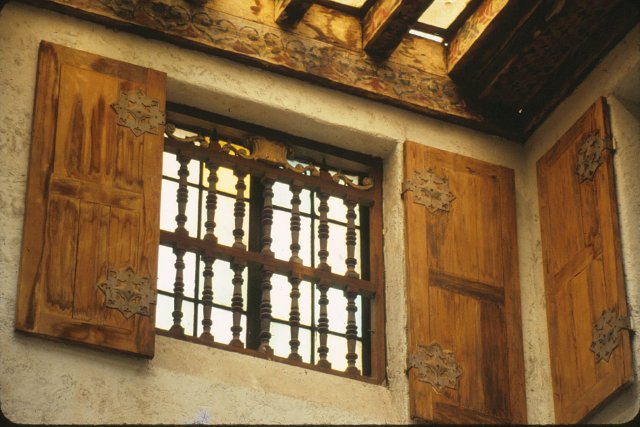
 Unlike most grand openings, this hotel did not appear bright, new, or seamless. Instead, the El Vernona had been purposely distressed to appear historic from the start. Perhaps playing into the narrative of Spanish settlement or even the (highly inaccurate) legend of Sara de Soto – the young daughter of Hernando de Soto for whom Sarasota was supposedly named after her arrival here as part of her father’s landing party – the El Vernona stood tall as a faux relic of the past. Inside, the sheer magnificence of design could be seen in every direction. From the imported tiles that lined the walls and floors to carefully carved Spanish galleons and broad pecky cypress beams which projected from the lobby ceiling, every detail was taken into consideration. Entering the monumental dining room, complete with a central fountain and second-floor clerestory, it would have been easy to imagine the daring performances that would take place there in the future.

John Ringling Hotel and John Ringling Towers

After John Ringling’s purchase of the hotel in the 1930s, it did indeed play host to dozens of circus acts for years to come with residents remembering a powerful man on a white horse galloping up the steps and into the dining room to announce the performers. Not only had the circus come to town, but it had come to the El Vernona – now renamed the John Ringling Hotel.

After the Boom period, however, came the Great Depression and, although the hotel survived, the changes to tourism signaled difficult times for many of John Ringling’s endeavors.

Nonetheless, the John Ringling Hotel made it out of the depression, into World War II and the arrival of military men and women to Sarasota’s shores. Yet, despite this influx of new people, the hotel fell on hard times during the 1950s and, in 1964, was converted into an apartment complex (then renamed the John Ringling Towers). But, with time and changes to building codes, the alterations (including window air conditioner units and a poorly planned elevator shaft) took away from the initial appeal and beauty of the building.

Ultimately, the stunning structure found itself vacant by 1980. Yet, rather than see its splendor turn to squalor, community activists stepped forward and threw themselves into preservation efforts with a reckless abandon.

Preservation by the People

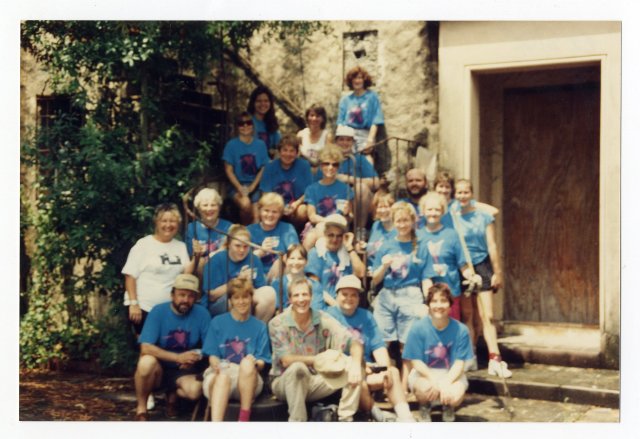
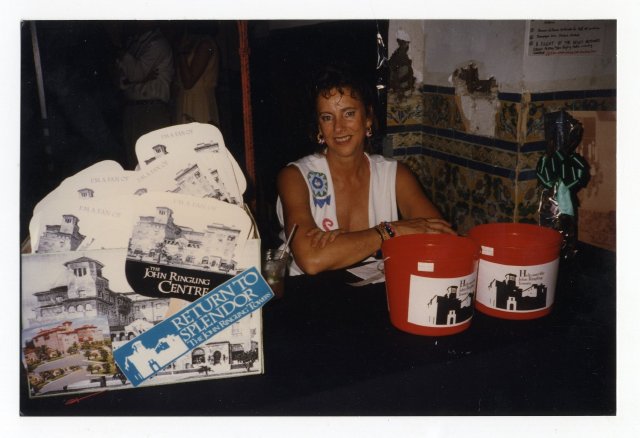
From gardening to plumbing and from fundraising to advocacy, the preservation work of local organizations and community groups was unfaltering. Determined to avoid demolition by neglect, locals organized a series of projects aimed at reminding the growing Sarasota community of what made this building and site so special. Not only had it helped to build Sarasota’s tourism industry, but the El Vernona/John Ringling Hotel/John Ringling Towers had also become a vital part of the community’s cultural landscape.
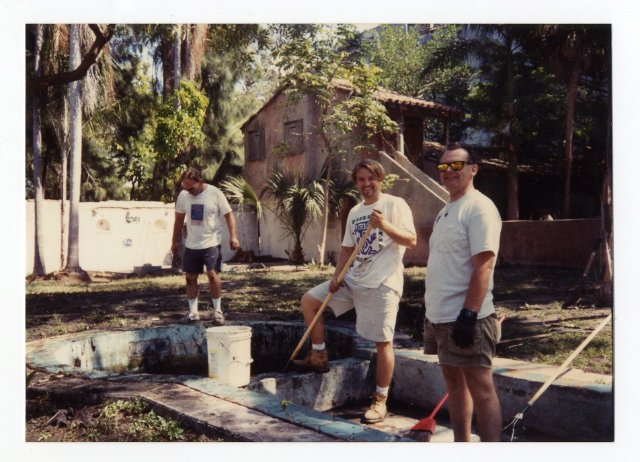
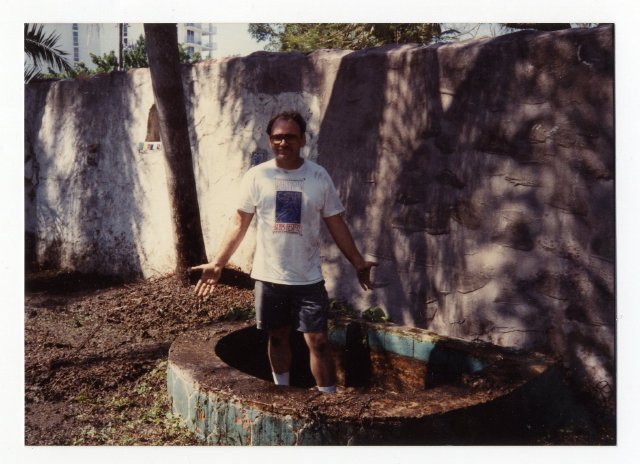
Their fears came to light when, on March 10, 1983, the Buildings Department of the City of Sarasota issued a demolition permit to the owners of the hotel and the adjacent site (including the original Burns Realty office and what had become known as the Karl Bickel house).

Fundraising and advocacy work expanded and hundreds of local community members stepped forward to protest the potential demolition.

Saved from the wrecking ball, albeit temporarily, the building remained vacant as organizations proposed countless projects to save it. Even proposing adaptive re-use of the structure and taking into consideration more modern creature comforts such as central air conditioning, the groups went before developers and local companies in the hopes that their proposals might be the saving grace of this 60-year-old structure.

It appeared as though hope was on the horizon when, in December of 1986, the owner of the site at that time (Larry D. Fuller) sent a letter to the State Department of Historical Resources indicating his interest in completing the National Register nomination for both the hotel and Bickel home. Stating that a previous owner had elected not to designate the structures, he instead requested a “reversal of objection” and started the ball rolling on officially listing the property on the National Register of Historic Places.

Listed officially in March of 1987, the buildings were celebrated not only for their association with Owen Burns, Dwight James Baum, John Ringling, and Karl Bickel but also as a sterling example of their architecture style – a true rarity among remaining structures from the Boom period.

For many in the community, a sigh of relief was felt as they hoped that this would mean the protection of the site for years to come.

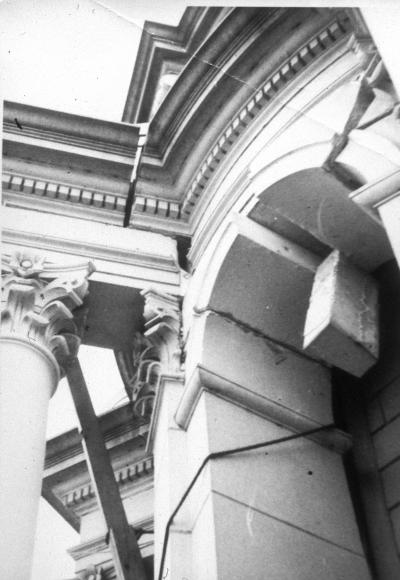
But, in 1998, the wrecking ball came for the iconic site. Despite years of community resistance and preservation efforts and even its listing on the National Register of Historic Places, the hotel and Bickel home were demolished to make way for a new hotel. Gone was the building that so many adored. Gone was the site that so many had protected and tended. All that was left were the memories and documentation of their efforts which found homes in a local archive and museum.

For many, the phrase “gone but not forgotten” rings true for this landmark as preservationists and community members continue to lament the loss of the El Vernona. It is a prime example of the power of local people in preservation efforts and a call to action for many communities with similar sites throughout the country.

So, in celebration of Historic Preservation Month, History Becomes You thanks preservationists and communities all over the world who continue to fight for the protection of historic sites and structures. Your work and efforts have not gone unnoticed and we celebrate you!

If you would like to learn more about Historic Preservation Month, historic preservation, or preservation efforts in your area, you can follow #historicpreservation, #thisplacematters, and #historicproperties on Twitter, Facebook, and Instagram.

Activity #1: Most Endangered

Did you know that preservation groups announce lists of endangered sites and structures each year? One of the most widely known is the list of America’s 11 Most Endangered Historic Places which is put out by the National Trust for Historic Preservation. For the year 2022, their list includes the following sites:

  • Francisco Q. Sanchez Elementary School (Humatak, Guam)
  • Camp Naco (Bisbee, Arizona)
  • Palmer Memorial Institute (Sedalia, North Carolina)
  • Brown Chapel AME Church (Selma, Alabama)
  • Minidoka National Historic Site (Jerome, Idaho)
  • Picture Cave (Warren County, Missouri)
  • Deborah Chapel (Hartford, Connecticut)
  • The Brooks-Park Home and Studios (East Hampton, New York)
  • Chicano/a/x Community Murals (Multiple Locations, Colorado)
  • Jamestown (Jamestown, Virginia)
  • Olivewood Cemetery (Houston, Texas)

Are any of these historic places near you? Want to learn more about these sites? You can find out more about these places, why they are historically significant, and what threats they are facing through the National Trust for Historic Preservation at savingplaces.org.

Activity #2: Historic Preservation Near You

Do you know of any historically designated sites or structures near you? For many of us, we have historically significant sites and structures very close to home (for some of you it may even be your home). Can you find three historic sites or structures that have been designated in your area?

Don’t know what to look for? Keep an eye out for historical markers and plaques discussing local, regional, and even national significance. You’ll be surprised to find how much history is in your own back yard!

Did you learn something new about historic preservation? Did you find historic sites and structures in your area? Share your activity results with us on social media by tagging History Becomes You and by using #historybecomesyou!

Check back next week for the next of many peeks into history!

30 Seconds and 100 Years

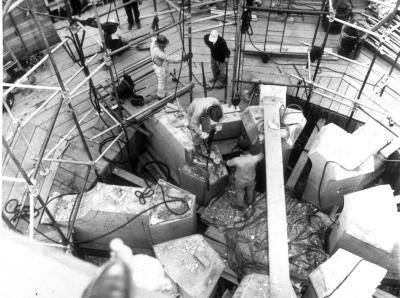
Bird's eye view of the Washington state Capitol Complex, circa 1945 (image courtesy of the General Subjects Photograph Collection, Washington State Archives)
Image of the Washington State Capitol Complex, circa 1945 (Image courtesy of the General Subjects Photograph Collection, Washington State Archives)

April 1949

Just before noon on April 13, 1949, a magnitude 7.1 earthquake rocked western Washington state. Still regarded as the one of the most powerful earthquakes to shake the Puget Sound region, this rattler left largescale chaos and destruction in its wake. From homes to businesses and everything in between, the damage from this earthquake was deeply felt and documented throughout the region.

And, although the shaking lasted for only 30 seconds, it was felt over an area of 230,000 square miles (including all of Washington state, northwest Oregon, southwest British Columbia, the northern Idaho panhandle, and into northwest Montana). While most of the damage occurred between Seattle and Chehalis, historic preservationists sprung to action to save the iconic Washington Legislative Building in the Capitol Complex.

1922

After years of fights and funding disputes, work began on one of the most recognizable buildings in Washington – the state’s Legislative Building. Based around the intriguing and creative idea of constructing a complex of structures rather than a single sprawling capitol building, the state’s Capitol Complex began to take shape through a plan for roughly six buildings – all interrelated and cohesively planned – as well as carefully curated landscaping and decoration.

And, although the growing population of Washington might not have expected the dominance of these Graeco-Roman structures, their classical design drew eyes and attention from miles around. As the centerpiece and largest of the five buildings, the massive Legislative Building and its towering dome stood apart as an example of groundbreaking achievement in both design and construction.

In the case of the dome, its construction posed questions from the very beginning. Requiring a massive reinforced concrete mat (measuring 130 square feet) and four huge concrete pillars (each 19 square feet) as just the footing for the dome gave construction teams and engineers pause. From logistical issues such as having enough cement to allow for a continuous pour all the way to being able to build forms strong enough to hold the vast amount of concrete while it set, teams even had to contend with how they could get the concrete high enough to pour at all on the upper levels.

Brick and stone work proved a complex process as well. Although it is not readily evident, the walls of the Legislative Building are made out of brick and covered by sandstone or marble – a design that was carried all the way through the building and up onto the dome.

But, even more impressive is the fact that the construction of the dome actually involved the creation of multiple domes and cones. While the outer dome was made of brick covered with cut stones, the inner dome (also made of brick) was finished with plaster on the interior face. But, unseen and unknown to many outside of the building teams, between the two a steel cone was constructed to support the concrete slab which held the lantern. Even more interesting was the use of greased led between the outer dome and the lantern’s slab to allow the outer dome to expand or contract without affecting the lantern.

1928

Stepping back from the completed Legislative Building after its six-year construction, many throughout the state stood in wonder at the beauty of the architecture and craftsmanship. From the elegant colonnades to the massive bronze doors complete with bas-reliefs of the state’s industrial heritage and early government structures, the Legislative Building appeared a capitol fit for a burgeoning state and determined people.

But not everyone was so pleased…

One man, in particular…

Governor Roland Hartley was greatly distressed by the cost of the Legislative Building. As a Republican running for office in the same year, he, instead, saw the Legislative Building as an example of unnecessary opulence. During his statement at its completion in 1928, he described the building as “a monument to extravagance” and as a “criminal waste of public funds” – hardly the expected remarks of the state’s governor.

Nonetheless, Hartley decided to make the Legislative Building a major political issue in his 1928 election campaign. Taking a brass spittoon from the Legislative Building and attaching it to the roof of his car (an act of theft that few people seemed to notice or grasp), he travelled throughout the state criticizing the building as a large expenditure of public funds. He came to call the Legislative Building the “golden spit box” and the pilfered spittoon became his symbol for waste. The issue became so ingrained in his campaign that his team was even dubbed the “Cuspidor Caravan.”

However, despite Hartley’s re-election, historians have revisited the 1928 campaign for further study. As it turns out, 1928 was a Republican year. So, some historians argue that Hartley simply ran behind the rest of the ticket. And, although we can be sure he would disagree, it would seem that his “golden spit-box” smear campaign actually had little to do with his re-election. Nonetheless, his would not be the last attempt made by politicians and other powerful individuals to take up arms (or spittoons) in an attempt to shame architecture or historic preservation over the consideration of money – thankfully it would not be an argument just two decades later.

April 1949

For 30 seconds, the Legislative Building shook, the 5-ton chandelier hanging in the rotunda swayed, and the stone around the dome began to crack under the strain.

In 30 seconds, the Legislative Building – an iconic structure just celebrating its 21st birthday – stood cracked, broken, and in desperate need of help as people spread out over thousands of miles struggled back to their feet and took stock of the damage around them.

Yet, as communities sprang to action to clean up the debris and help their neighbors, preservationists turned their eyes to the Legislative Building.

Not only would the stone lantern at the top of the dome need to be repaired, but some of the columns had shifted and there were large cracks in the structure.

But how could teams begin the process of repairs? The dome was hardly what one would call accessible, particularly given the heavy stone materials needing repair and the ability to move through the building safely after the earthquake.

The solution?

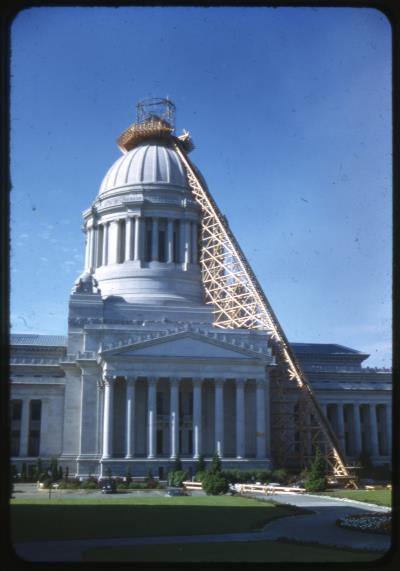
The team built an incline railroad right up the side of the dome. Creative or crazy, no one could say at the time, but their boldness paid off and repairs went ahead.

The incline railroad built during restoration work on the Legislative Building, circa 1949 (Image courtesy of the General Subjects Photograph Collection, Washington State Archives)

Meanwhile teams worked to shore up cracks in stone features and realign columns to restore the building back to its spittoon-worth glory.

All-in-all, the preservation teams restored the 30,800,000 pound dome and the building itself – retaining the architectural beauty that continues to make it a standout among capitols throughout the country.

1979

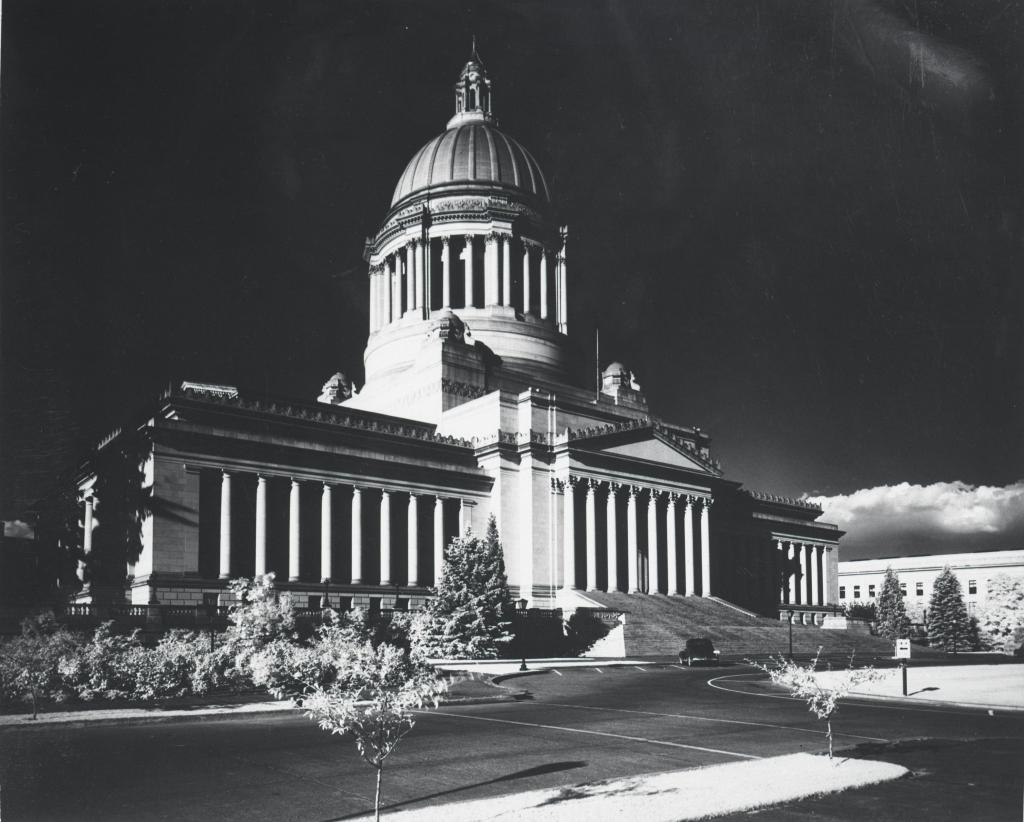
There remain few great domes in the western United States so it came as no surprise that such a stunning architectural and historical feature of Washington state would be significant enough for historical designation. Listed on the National Register of Historic Places in 1979, the Capitol Complex historic district continues to stand apart from other government sites in so many ways. From its cohesion and architectural beauty to the community’s dedication to preserving its iconic architecture despite earthquake after earthquake, the Legislative Building remains a pivotal and eye-catching part of the district – the icing on top of the dome if you will.

The Washington State Legislative Building (image courtesy of the General Subjects Photograph Collection, Washington State Archives)
The Washington State Legislative Building (Image courtesy of the General Subjects Photograph Collection, Washington State Archives)

And, while salvage and repair work may not make up the bulk of historic preservation initiatives, this vital work has allowed historically significant structures all over the world to be protected and restored to their full glory in the face of natural and man-made disasters.

So, in celebration of Historic Preservation Month, History Becomes You thanks preservationists and communities all over the world who continue to fight for the protection of historic sites and structures. Your work and efforts have not gone unnoticed and we celebrate you!

If you would like to learn more about Historic Preservation Month, historic preservation, or preservation efforts in your area, you can follow #historicpreservation, #thisplacematters, and #historicproperties on Twitter, Facebook, and Instagram.

Activity #1: Dome and Go Seek

There are many states and regions that have beautiful and historic domed buildings. Can you find any in your area? Don’t know where to start? Try looking at your state capitol building or complex. Domes also play a role in acoustics, so you can also try looking for historical theaters, museums, musical venues, etc.

Happy seeking!

Activity #2: Historic Preservation Near You

Do you know of any historically designated sites or structures near you? For many of us, we have historically significant sites and structures very close to home (for some of you it may even be your home). Can you find three historic sites or structures that have been designated in your area?

Don’t know what to look for? Keep an eye out for historical markers and plaques discussing local, regional, and even national significance. You’ll be surprised to find how much history is in your own back yard!

Did you learn something new about historic preservation? Did you find historic sites and structures in your area? Share your activity results with us on social media by tagging History Becomes You and by using #historybecomesyou!

Check back next week for the next of many peeks into history!

Growth in a Desert

For many people of the past, the idea that people in the center of civilization lacking access to food would have seemed impossible to fathom. Scenes of starvation during the Dust Bowl or of bread lines during the Great Depression offer a stark comparison to what appears to be convenient access to food today, but the nutritional quality of these foods

What Is a Food Desert?

The term “food desert” refers to an area or region that is considered nutritionally underserved – otherwise described as an area with limited or no access to healthy foods. Misunderstood for many years, the concept of food deserts appeared to be an oxymoron. Afterall, how could areas with so many convenience stores be experiencing food insecurity?

Yet, it is this proliferation of convenience stores and the highly processed foods and drinks sold therein that create problems for those living amongst them. For many food deserts, a combination of lower-income communities and a lack of healthy food create a higher risk for diseases such as heart disease, diabetes, high blood pressure, and other obesity-related health issues. Afterall, when a community’s primary source of food sells high priced food staples or affordable chips, candy, and sodas, the declining health of that community seems almost inevitable.

Furthermore, and perhaps unsurprisingly, many of these food deserts are found in communities of color across both urban and rural areas. For many, the policies and decisions that led to the creation of food deserts began with racial and ethnic policies stemming back to the Jim Crow era for some and back to colonialism and the advent of the reservation system for others.

A Quick History

In fact, a number of studies have been done which document the exodus of food sources from the cities to the suburbs in hot pursuit of the shifting middle-class families. Once established in the suburbs, these grocery stores and supermarkets created scaled economic systems that perpetuated the trend, leaving rural and urban areas to become food deserts as their stores and goods became freely available just outside of their reach.

In their place, convenience stores and small, often overpriced shops, moved into these areas and, ultimately, became the only option for nearby people as some communities found themselves more than an hour away from the nearest grocery store.

Who Experience Food Deserts?

For many experiencing food insecurity, the term “food desert” has come to describe communities that meet some or all of the following factors:

  • Food deserts often have unhealthy options for food with a disproportionate abundance of fast food chains and convenience stores.
  • Food deserts often have community members who are already experiencing or are at a higher risk for health issues due to the poor quality of diets and a reliance upon highly processed foods.
  • Food deserts are often found in lower-income communities.
  • Food deserts are often experienced by communities of color to the extent that some researchers have even begun to use the term “food apartheid” to describe the correlation and to reference the policies that led to the creation of food deserts.
  • Food deserts are found in both urban and rural areas due to a two-fold issue of access – access to healthy alternative foods and access to transportation. Although both urban and rural food deserts face similar issues of food insecurity, for many urban food deserts, the primary concern is the disproportionate amount of processed foods while, for the rural food deserts, the primary concern is a lack of access to geographically distant supermarkets.

How can Gardening Combat Food Deserts?

Urban Farming and Urban Gardening Movements

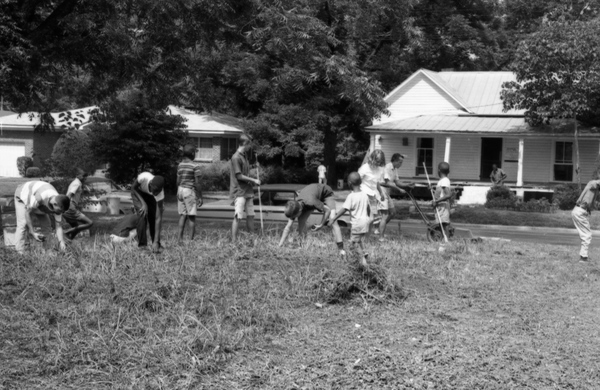
Image shows children and adults working in a community garden (image courtesy of the Tallahassee Democrat Collection, State Archives of Florida)
Community working in their garden on N. Copeland St. in Tallahassee (Image courtesy of the Tallahassee Democrat Collection, State Archives of Florida)

For many, the urban farming movement has begun to grow and gain broader attention in recent years, moving into vacant lots and open rooftops in large cities such as Chicago and Detroit. Seen by some as a type of revolution, the urban farming and urban gardening movement focus on creating food and financial security for people in urban food deserts. Taking into account the social implications of vacant lots and reclaiming these spaces to provide for community needs, phrases like “Mowtown to Growtown” have begun to capture the spirit of the movement as it surges forward. From offering local gardening classes to organizing free plant giveaways, the urban farming and gardening movement continues to help community members provide for themselves through personal and community gardens in some of the least expected locations.

Indigenous Food Sovereignty Movement

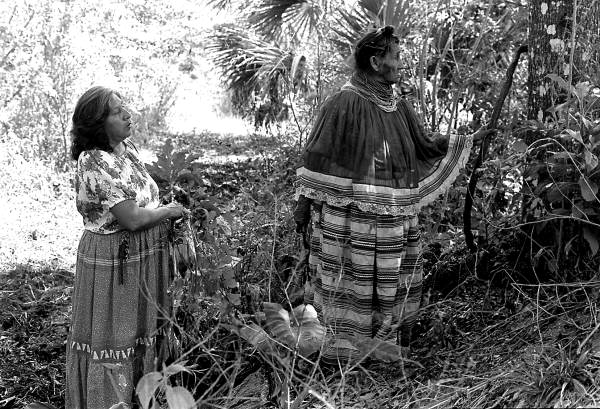
Image shows two women looking for medicinal plants (image courtesy of the Folklife Collection, State Archives of Florida)
Susie Jim Billie and daughter Agnes Cypress searching for medicinal herbs- Big Cypress Seminole Indian Reservation, Florida, 1985 (Image courtesy of the Folklife Collection, State Archives of Florida)

The indigenous food sovereignty movement has taken on many forms over the years. From access rights to fishing on the Klamath River for the Yurok people to foraging and cultivation of traditional foods by the White Mountain Apache Nation, the concept of food sovereignty has become more than a movement. The broader movement goal remains the same – an end to long term food insecurity as well as a reconnection to traditional foods and foodways. In celebrating centuries-old knowledge, values, and wisdom, indigenous communities have found ways of creating a restorative framework for policy reform in forestry, fisheries, rangeland, environmental conservation, health, agriculture, and community development.

One prime example of indigenous food sovereignty in action is The People’s Farm, on the White Mountain Apache Reservation which seeks to reconnect the community to its food, traditional lifestyles and, ultimately, a healthier mindset. It offers mentorship to young indigenous farmers and is challenging the effects of food deserts on the health of indigenous communities.

Originally started in 1980 as a for-profit farming venture, The People’s Farm (Ndee Bikiyaa) has been redeveloped into a community food initiative and sells its produce to community members at cost through farmers markets. It has taken on further community roles through organizing community events, workshops, and festivals while also playing host to a team of volunteers, interns, and seasonal employees. Additionally, the farm also supports school garden construction, facilitates gardening workshops for the community, and nutrition education. Its team’s dedication to preserving traditional foods and restoring the land to health has reconnected many people to their heritage and continues to serve as a model for burgeoning farmers around the world.

Activity #1: Find Your Local Roots during National Garden Month

Do you know much about National Garden Month? Try looking into your area’s local agricultural offerings! Stumped and don’t know where to start? Try answering some of these questions:

  • Do you know about any community gardens in your area?
  • Do you know of any gardening classes in your area?
  • Do you know of any plant giveaway events in your area?

If you can find any of these kinds of programs in your local area, look for ways to get involved or for ways to take advantage of these offerings and learn more. Getting involved with the urban farming and gardening movement can be as easy as visiting a community garden or picking up a free plant at a giveaway event!

As we wind down the month of April, you can continue learning more about gardening and the ways that people continue celebrating all year long by following #gardening on Instagram, Facebook, and Twitter!

Interested in learning more about some of the movements we discussed in today’s post? You can follow along by following #urbanfarming and #urbangardening on Instagram, Facebook, and Twitter!

Did you learn something new about the agricultural history or food security of your area? Did you try your hand at gardening?

Share your activity results with us on social media by tagging History Becomes You and by using #historybecomesyou!

Check back next week for the next of many peeks into history!

Invaluable

For many generations, families have relied upon gardens in, around, or near their homes. Predating the prevalence of grocery stores, gardens of all sizes have helped to make ends meet for people all over the world. And, in times of economic uncertainty or political upheaval, the ability to feed oneself or family members was an invaluable relief for people of all walks of life.

Yet, as times have changed, people have moved in and out of cities and carefully manicured lawns have replaced vegetable gardens. Today, many people have lost touch with the simple joy that comes from growing their own food.

While some cite a lack of space or money as a reason for not starting a garden, the beauty of gardening lies in its ability to be scaled up or down as space and finances allow. And as the urban farming movement has grown, more and more people have embraced small windowsill herb gardens, window box vegetable patches, and container gardens clustered on balconies. From rooftops to vacant lots, the urban farming movement and a resurgence of community gardens have led to people returning to old ways and looking to history for inspiration.

In Your Own Backyard

For many, the idea of starting gardens from scratch (or seed as it were) can be daunting so many of us budding gardeners have started with a type of historical foraging. By looking back in time at traditional recipes (particularly those predating the proliferation of Jello molds – all bets were off by that point), it can be much easier to find vegetables, herbs, and even fruits that grow well in your region. After all, how would earlier residents have built traditional recipes if not on what was readily at hand?

For many, a successful jumping off point for historical recipe foraging are the periods that include both the Great Depression and World War II. Why?

Let me tell you!

During the Great Depression, many people went without the comfort foods that we think of today. For instance, many families (particularly those on the famous or infamous bread lines) relied primarily on food staples like bread and soup unless they were able to grow, hunt/fish, or trade for locally grown fresh foods. In my home state of Florida, there are countless stories of families living off of local fishing and hunting supplemented by their garden or of families that created intricate trading operations to barter their small crop of oranges for tomatoes and, in turn, the tomatoes for other nutrient dense vegetables like spinach or radishes. As a result, many depression-era recipes feature plants and game that are native or grow well in the surrounding area.

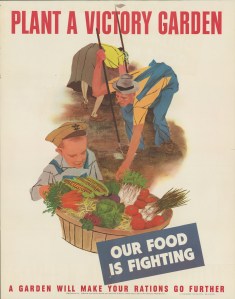
Similarly, during World War II, people all across the United States were encouraged to plant and harvest from Victory Gardens! With slogans like “Our Food is Fighting,” the idea behind victory gardens was that the harvested produce would help rations stretch further and would free up farmers to grow food for the war effort rather than just the homefront.

A color poster showing people harvesting vegetables (image courtesy of the State Archives of Florida, S1205)
Victory Garden Poster, 1943 (Courtesy of the State Archives of Florida, S1205)

Ultimately, history and historic recipes show us what can be done when food is sparse, too expensive, or otherwise unavailable. With a reliance upon local fruits and vegetables, many recipes from various areas throughout the country can be an excellent place to start when considering what to plant in a home garden.

Recycle, Reuse, Regrow

Along similar lines, many people find access to seeds or to already sprouted plants difficult or (in some cases) nearly nonexistent.

To people in areas with limited access to seeds or to gardens, nurseries, and greenhouses, history also teaches us about plants that grow well from scraps and even some which can grow entirely in water (requiring no soil – and, therefore, less investment for budding urban farmers).

Among the foods that grow from scraps, you can recycle, reuse, and regrow vegetables like lettuce, onions, celery, potatoes, and scallions as well as herbs like fennel and even pineapples!

So…Get Creative!

Image shows an unidentified person gardening out of an old boat (image courtesy of the Koreshan Unity Collection, State Archives of Florida)
An unidentified person gardening in an old boat in Estero, Florida (Image courtesy of the Koreshan Unity Collection, State Archives of Florida)

From container gardens to growing vegetables in the hull of a damaged boat, there seem to be a million different ways to find space for plants. For those in tight quarters (a.k.a. all of us in small apartments), there remains a number of ways to make space for plants. For instance, a row of cleaned out pasta sauce jars filled with water can serve as the perfect beginner garden for regrowing those kitchen scraps.

So, in honor of National Garden Month, take a few minutes and think about the vital role that gardens have played for years in your own area. While you’re at it, perhaps try to find a few spots in or near your home where you might be able to try your hand at gardening! Or, try out some of the other activities below.

Activity #1: Walk the Walk

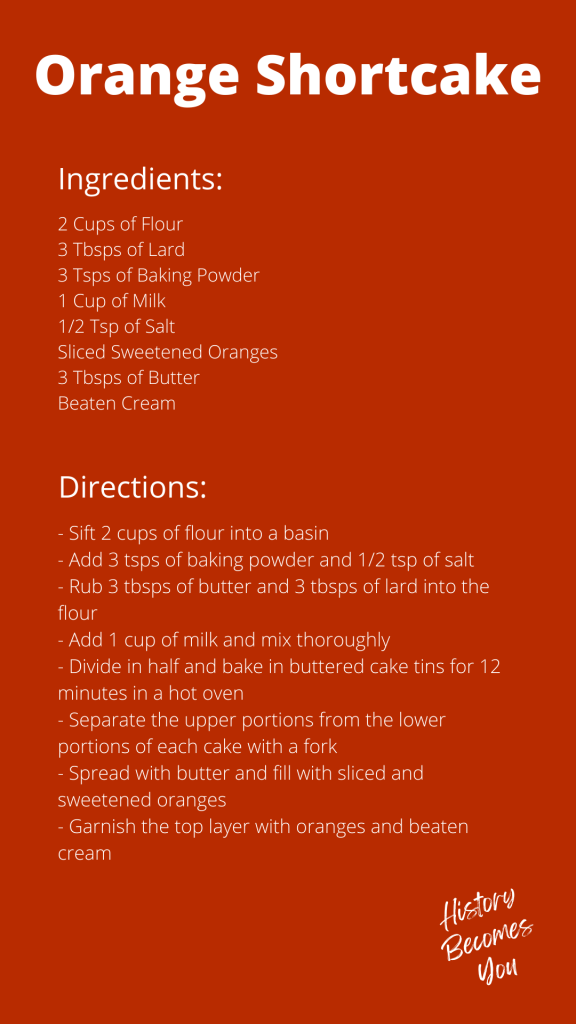
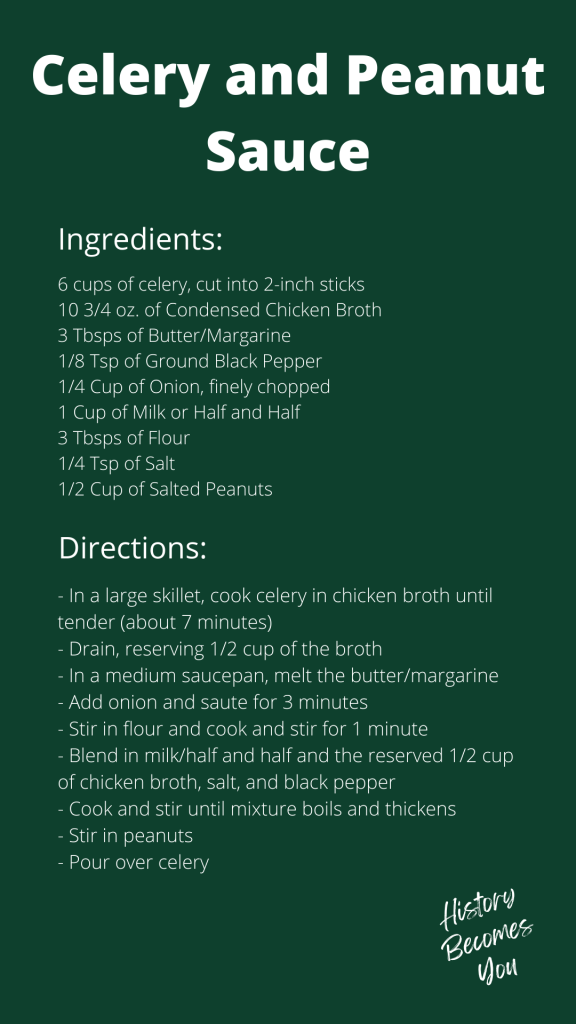
Try one of these local recipes and let us know what you think of these historical foraging nuggets! Want to try something from your area? Check local newspapers and historical cookbooks from your region to find recipes centered on your local produce!

Activity #2: Try Your Green Thumb

The next time you are at the grocery store, look for the following items in the produce section: scallions, onions, potatoes, or fennel. If you are already purchasing any of these items, try regrowing from the scraps.

Looking for other options to start your gardening adventure? Check out our National Garden Month board on Pinterest for a few tips and tricks for budding gardeners.

If you already have a green thumb, show off your hard work by documenting your own garden online! What are you growing? How are you kicking off spring in your garden? And what do you plan to plant next?

Activity #3: National Garden Month

Do you know much about National Garden Month? Try looking into your area’s local agricultural history! Stumped and don’t know where to start? Try answering some of these questions:

  • Are there any nearby farms or public/community gardens in your area?
  • Are there any gardening classes or clubs in your area?
  • Do any of the nearby schools have either a 4H Club or a Future Farmers of America Club?
  • Are there any projects in your area focused on teaching people how to grow their own food?

Throughout the month of April, you can learn more about National Garden Month and the ways that people are celebrating it by following #nationalgardenmonth on Instagram, Facebook, and Twitter!

Did you learn something new about the agricultural history of your area? Did you try your hand at gardening? How did you choose what to plant?

Share your activity results with us on social media by tagging History Becomes You and by using #historybecomesyou !

Check back next week for the next of many peeks into history as we continue to celebrate National Garden Month!

Highly Skilled

From the Mind of a Woman

For many Americans, World War II was a distant thought until the attack on Pearl Harbor in December of 1941. However, for U.S. Representative Edith Nourse Rogers (Mass.), the looming likelihood of U.S. entry into the war spurred an idea that would forever change the role of women in the armed forces.

Rogers, recalling the involvement and treatment of women during World War I, saw the opportunity to provide much needed opportunities, support, pay, and protection for women offering to serve their country. Unlike during the First World War, Rogers was determined to make it possible for women to receive the same legal protection as their male counterparts. As a result, she proposed the creation of an Army women’s corps (separate from the existing Army Nurse Corps).

Despite opposition from both the U.S. Army and Congress, the bill which Rep. Rogers introduced in May of 1941 garnered attention and reconsideration after the December attack on Pearl Harbor. Heralded as an opportunity for women to “free a man for combat,” the bill met fierce opposition in Congress – chiefly among southern male delegates who contended that women belonged in the homes cooking, cleaning, and raising children. Some, along with several newspapers, even argued that, with the women overseas, there would be a drop in the birth rate (a hotly debated topic when it came to light that members would be discharged should they become pregnant).

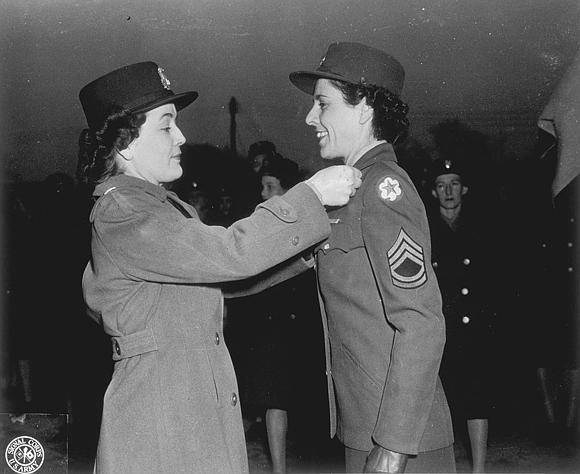
Nonetheless, the need for soldiers and support staff was overwhelming and, by May of 1942, Congress approved the creation of the Women’s Army Auxiliary Corps (WAAC). Not wasting any time, President Franklin D. Roosevelt signed the bill into law the next day and Oveta Culp Hobby was sworn in as the corps’ first director.

Led by a Woman

With ten years experience as an editor for a Houston newspaper, five years as a parliamentarian in the Texas legislature, the author of a book on parliamentary procedure, and the wife of former Texas Governor William P. Hobby, Oveta Culp Hobby was a stellar candidate for the first director of the WAAC. Her own credentials made her a standout in a largely traditional era and her experience in politics alongside her husband had rendered her adept at navigating the waters of local and national politics. With strength and smarts, Director Hobby weathered everything from open condemnation of women in the armed forces to more subtle and frequently sexist questions aimed at whether the women involved would be allowed to wear makeup or even what color their uniform underwear would be.

Despite these unsettling questions and jabs from political opponents, the WAAC hit the ground running with more than 35,000 applicants from all over the country vying for less than 1,000 positions. The requirements for applicants included the following:

  • Applicants had to be a U.S. citizen between the ages of 21 and 45 with no dependents.
  • Applicants had to be at least five feet tall and weigh 100 pounds or more.

The quality of applicants, beyond the basic requirements, became clear early on. Interviews conducted by the press revealed that the average WAAC officer candidate was roughly 25 years old, had attended college, and was working in an office or educational setting. In less than two months, the first class of WAACs were selected and on their way to training camp and Officer Candidate School.

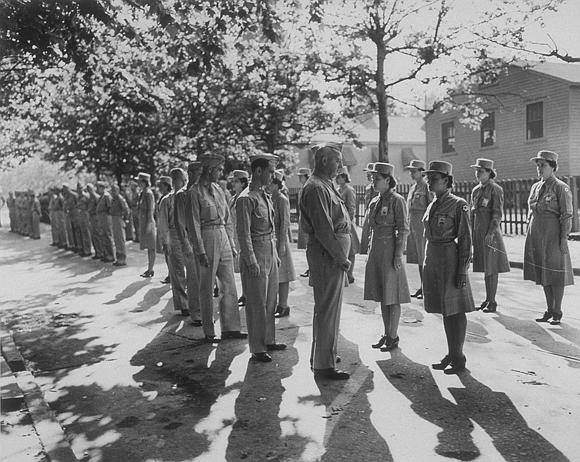
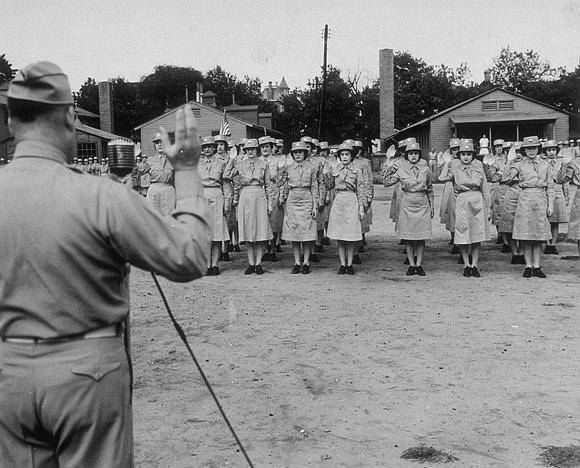
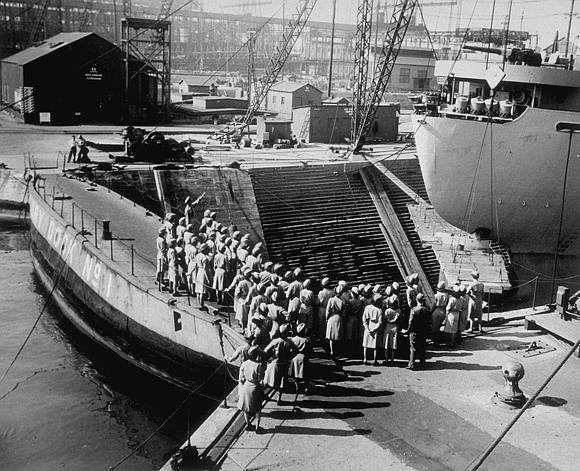
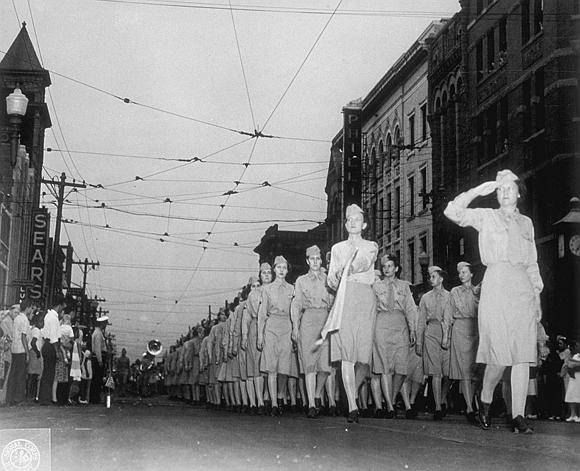
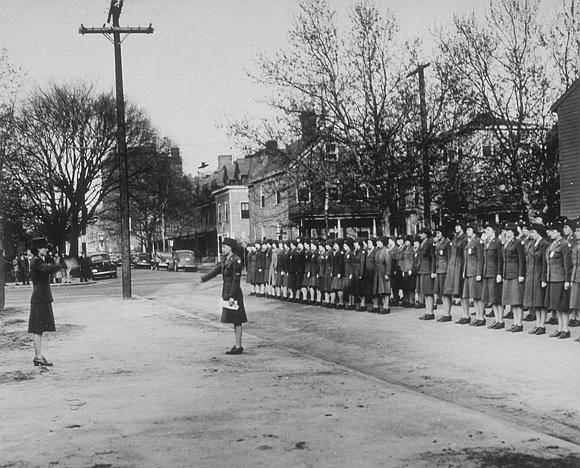
This first class of WAAC officer candidates arrived at Fort Des Moines in Iowa on July 20, 1942. As the first WAAC Training Center, the fort welcomed 125 enlisted women and 440 officer candidates (40 of whom were women of color). These candidates offered the U.S. not only its first view of women in the armed forces, but also its first view of women of different races being trained together.

Made up of Women

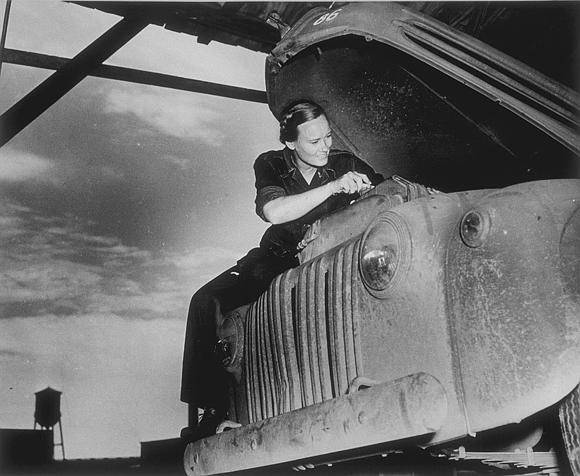
Initially, women worked in positions such as baking, clerical, driving, and medical work. But, over its first year, more than 400 jobs became open to women. As more and more of these women took on new roles for their country, they found work as weather forecasters, cryptographers, radio operators, sheet metal workers, parachute riggers, aerial photograph analysts, control tower operators, mechanics, and so much more. Their value became clear to many both within the WAAC administration as well as within some sections of the Army (most notably the Army Air Forces or AAF).

But, the fact remained that, despite Rep. Rogers’ goal of providing equal protection and treatment for women serving their country, noticeable inequities persisted. For instance, the bill which created the WAAC did not prohibit women from serving overseas, but it also failed to provide them with overseas pay, veterans medical coverage, government life insurance, and death benefits. Similarly, the ranking systems between the U.S. Army and the WAAC illustrated further inequity. Not only were women not allowed to command men, but they were also paid less than men in equivalent rankings.

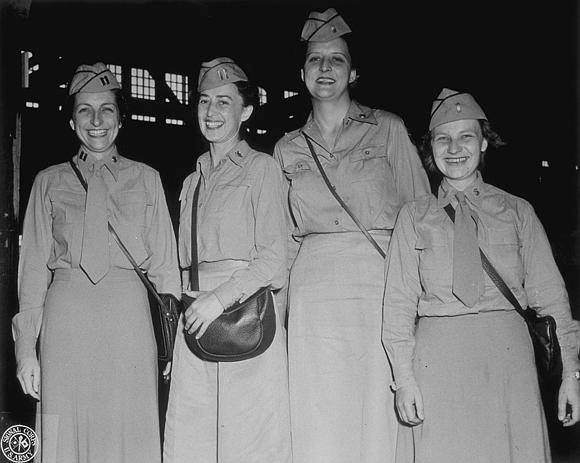
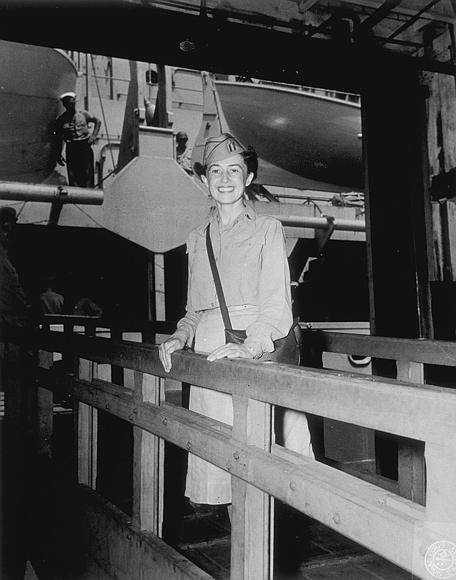
Nonetheless, approximately 150,000 women served in the WAAC (later known as the WAC or Women’s Army Corps) during World War II. Operating both on the home front and overseas, WACs arrived in New Caledonia, Australia, and even on the Normandy beach head while still more served in the regions of China, Burma, and India.

For many of these women, they served for their country, for their families, for their communities, and for themselves. As the first women (other than nurses) to serve within the ranks of the U.S. Army, they pioneered the involvement of women in the U.S. armed forces. Made up of women from multiple races and ethnicities, the diversity of this often unsung group of servicewomen along with its origin, management, and work at the hands of women set it apart in U.S. military history.

Activity #1: WAAC/WACs at Home

Although the first WAAC Training Center was in Des Moines, Iowa, other training centers were created in these locations as well:

  • Daytona Beach, Florida
  • Fort Oglethorpe, Georgia
  • Fort Devens, Massachusetts

Look into how far away each of these locations are from your home. Which of these four training centers would be closest to your area? Do you know of any other WAAC or Army field installations that were near your area during World War II?

Activity #2: WAAC/WAC Work

Although some of the early jobs assigned to WAAC/WACs were baking, clerical, driving, and medical work, later on women had the opportunity to work in many other fields. Which of these would have been most interesting to you? Why?

  • Weather forecasting
  • Cryptography
  • Radio operation
  • Parachute rigging
  • Bombsight maintenance
  • Aerial photograph analysis
  • Control tower operation
  • Mechanics and vehicle repair

Activity #3: Women’s Month

Do you know much about Women’s Month? Try looking into your area’s local women’s history! Stumped and don’t know where to start? Try answering some of these questions:
  • Are there any programs, organizations, or businesses in your area that have been founded or run by women?
  • Are there any buildings, parks, or sites named after local prominent women in your area?
  • Are there any projects in your area focused on celebrating women’s history?

Throughout the month of March, you can learn more about Women’s Month and the ways that people are celebrating it by following #nationalwomensmonth or #womenshistorymonth on Instagram, Facebook, and Twitter!

Did you learn about WAAC/WAC history or women’s history in your area this week? Did you discover something new about Women’s Month? There are countless stories that come to light every year about the amazing roles that women have played in communities around the world! So, in honor of these women, celebrate Women’s Month by remembering that Women’s History is American History!
Share your activity results with us on social media by tagging History Becomes You and by using #historybecomesyou !

Check back next week for the next of many peeks into history as we continue to celebrate National Women’s Month!

The Beating Heart

Since its founding in 1881, the American Red Cross has seen generations of women serve as the beating heart of the organization’s relief work. From its founder, Clara Barton (a wartime nurse and one of the first women to work for the federal government) to the countless women who have served as Red Cross staff and volunteers over the organization’s nearly 150 year history, women have been at the center of many of the group’s efforts and programs.

And similar to the great Clara Barton, women flocked to the Red Cross in droves during both the first and second World Wars. They served as nurses, as volunteers, as support staff, and as confidants to the thousands of servicemen and women both at home and overseas.

The Nurses

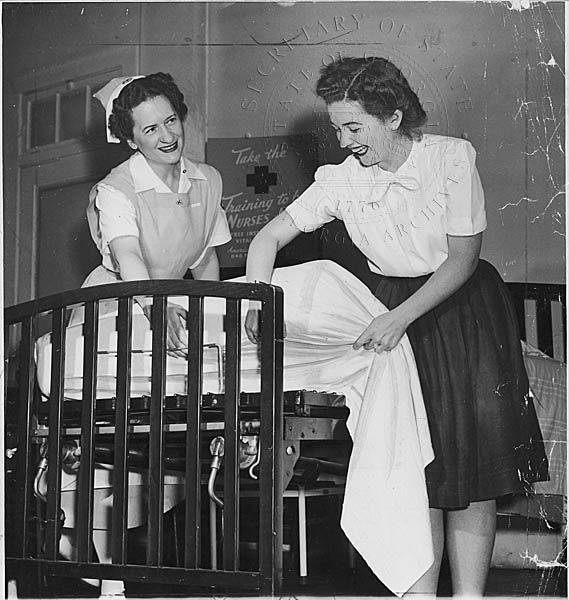
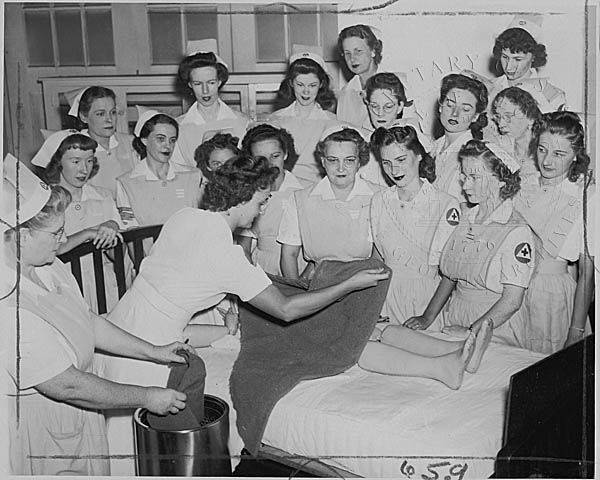
As perhaps the most widely known and recognized groups of women who served in the Red Cross, the nurses who answered the call during both World Wars nearly became an army unto themselves. Between 1939 and 1946, roughly 212,000 nurses enrolled in the Red Cross Nursing Service. Of these, half (APPROXIMATELY 106,000 NURSES) were certified to serve the military in the Army and Navy Nurses Corps. And, out of the 71,000 of these qualified nurses to serve during World War II, they made up MORE THAN 90% of the total nurses in service during the war (both at home and overseas).

To say that the Red Cross nurses left their mark is an understatement.

Both at home and overseas, the nurses provided lifesaving medical care and helped to alleviate the shortage of both doctors and nursing staff throughout the United States. So, whether they were saving lives on the front lines or caring for the sick and wounded back home, it is safe to say that, without the nursing might of the Red Cross, the 1930s and 1940s would have looked dramatically different to Americans – both military and civilian.

Blood Campaigns

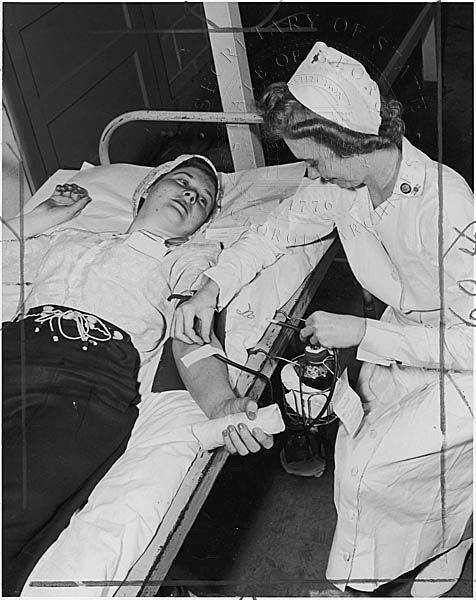
As the model for the blood donation programs we continue to see today, another wartime effort of the Red Cross has saved millions of lives through blood donation centers and blood drives throughout the country.

Beginning in the fall of 1940 and lasting only a few months, the first war-related blood collection program was known as the “Plasma for Britain” project. Focused on remedying a shortage of plasma in Britain due to both heavy wartime casualties and to German air raids on British cities, the project was a joint effort between the Red Cross and the Blood Transfusion Betterment Association. Their efforts began in New York where the Red Cross solicited donations of blood in order to ship lifesaving plasma to Britain. From there, the Betterment Association collected and processed the blood into liquid plasma for use in transfusions. In all, the project collected approximately 15,000 pints of blood which allowed it to ship 5,500 liters of plasma to Britain.

THAT’S OVER 81 PINTS OF BLOOD PER DAY AND MORE THAN 29 PINTS OF PLASMA EVERY DAY!

After the successful efforts of the “Plasma for Britain” project, it should have come as no surprise when the Red Cross was tapped to organize a Blood Donor Service in January of 1941. Even then, the U.S. military saw the need to prepare for the country’s possible entry into World War II.

After hiring Dr. Charles R. Drew (the same physician in charge of the “Plasma for Britain” program), the Red Cross took to its new role by establishing a model blood collection program focused on processing blood into dried plasma on a massive scale. Fortunately, with the tireless efforts of Dr. Drew and Red Cross members, by the time of the attack on Pearl Harbor, the Red Cross was operating 10 different blood donor centers in the eastern United States. These were added to throughout the war and eventually grew to 35 blood donor centers as well as more than 60 mobile units. (Who would have thought that the humble blood mobile had its origins in the war effort?)

Despite the program’s end in September of 1945, the Blood Donor Service had involved more than 2,200 doctors, nurses, and technicians alongside roughly 25,000 volunteers and had collected 13.4 MILLION PINTS of blood from 6.6 MILLION DONORS.

THAT’S THE SAME AMOUNT OF BLOOD AS MORE THAN 1.3 MILLION PEOPLE!

Not only did this program provide desperately needed supplies of blood for the front lines, but it also continues to impact lives today through civilian blood programs started by the Red Cross in 1948.

Unsung Heroes

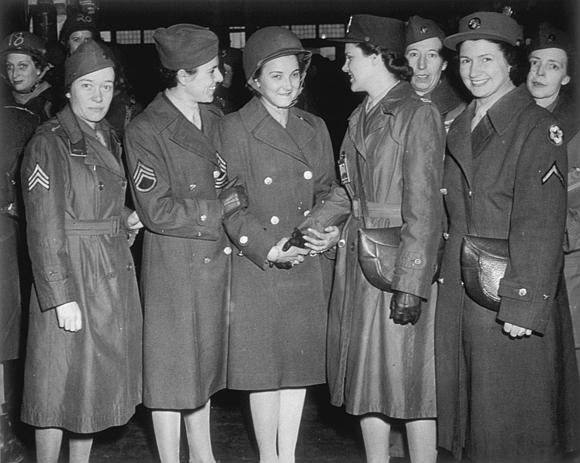
For many, both the nurses and the blood drives come as little surprise (particularly if you are familiar with the Red Cross). But, throughout both World Wars, women volunteered in a variety of other services and programs under the umbrella of the Red Cross. Among these unsung heroes were both the Gray Ladies and the Motor Corps.

The Gray Ladies

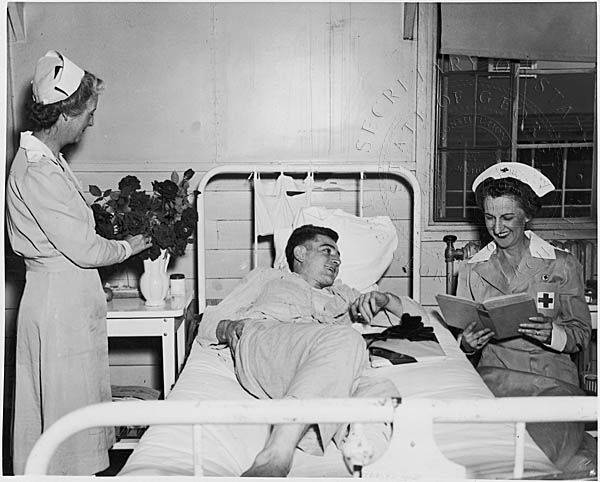
Image shows Red Cross Gray Ladies members at work
(Image courtesy of the Lamar Q. Ball Collection, Georgia Archives)
Atlanta Chapter Gray Ladies at work
(Image courtesy of the Lamar Q. Ball Collection, Georgia Archives)

Originally known as the Hospital and Recreation Corps, the group that became known as the Gray Ladies served an indispensable function for the thousands of veterans and families throughout the United States. From writing letters to reading to patients in military and veterans’ hospitals, the Gray Ladies provided a number of what were considered hostess and recreational services to servicemen and women returning home from war. They were there for veterans for everything from a compassionate listener to a tutor and even assisted in running errands for their patients outside of the hospitals.

“To understand [the Gray Ladies] duties was to see them in homey relation to what they meant to the lonely patient who wanted to talk; to the restless patient who wanted to play cards; to the disabled patient who could not write his letters … to men who were invariably homesick in a hospital far from their families.”

Red cross history in world war ii

With nearly 50,000 volunteers between 1944 and 1945, the Gray Ladies provided a much needed personal touch to the war effort for thousands of families.

The Motor Corps

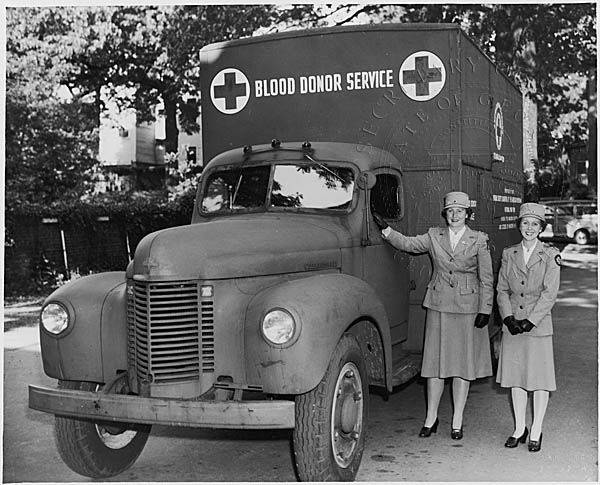
Image shows Red Cross Motor Corps members at work
(Image courtesy of the Lamar Q. Ball Collection, Georgia Archives)
Atlanta Red Cross Motor Corps, mobile unit, Miss Judy King and Miss Ruth Lewis
(Image courtesy of the Lamar Q. Ball Collection, Georgia Archives)

Perhaps the least recognized group of women in the Red Cross is the Motor Corps. Consisting almost entirely of women, the Motor Corps clocked more than 61 MILLION MILES and answered over NINE MILLION TRANSPORT REQUESTS.

THAT’S THE EQUIVALENT OF DRIVING ACROSS THE UNITED STATES MORE THAN 21,000 TIMES!

Whether delivering supplies, transporting the sick and wounded, or transferring volunteers and nurses to and from their posts, the Motor Corps provided a much needed service on the home front. And, when you consider that most of the group’s 44,668 volunteers between 1942 and 1943 served while driving their own cars, the frustration of a daily commute seems trivial. Even repairing their own cars on the road, these women illustrate a little understood component of women’s wartime efforts.

Activity #1: The Red Cross

During World War II, the Red Cross estimates that nearly every family in America contained a member who had either served as a Red Cross volunteer, made contributions of money or blood, or was a recipient of Red Cross services.

Do you know of anyone in your own family who was connected to the Red Cross in some way? Do you know of anyone in your area who has served as a Red Cross volunteer?

Activity #2: Women’s Month

Do you know much about Women’s Month? Try looking into your area’s local women’s history! Stumped and don’t know where to start? Try answering some of these questions:
  • Are there any programs, organizations, or businesses in your area that have been founded or run by women?
  • Are there any buildings, parks, or sites named after local prominent women in your area?
  • Are there any project in your area focused on celebrating women’s history?

Throughout the month of March, you can learn more about Women’s Month and the ways that people are celebrating it by following #nationalwomensmonth or #womenshistorymonth on Instagram, Facebook, and Twitter!

Did you learn about any Red Cross history or women’s history in your area this week? Did you discover something new about Women’s Month? There are countless stories that come to light every year about the amazing roles that women have played in communities around the world! So, in honor of the women, I invite you to celebrate Women’s Month by remembering that Women’s History is American History!
Share your activity results with us on social media by tagging History Becomes You and by using #historybecomesyou !

Check back next Thursday for the next of many peeks into history as we continue to celebrate National Women’s Month!

Fore!

“Fore” score and many MANY of years ago, the game of golf changed forever as women stepped onto the greens. So, although many people may think of women golfing as a relatively new phenomenon, the truth is that women have been swinging clubs for AT LEAST 300 YEARS!

Some sources put the advent of women on the golf course even earlier, claiming that Mary, Queen of Scots, was not only an avid golfer but also the inventor of the term ‘caddie.’ Others point to the creation of the famous St. Andrews Links golf course during her reign as further proof of her love of the game.

But the truth may be less glamorous – albeit equally as interesting.

In Scotland and England during the 18th and 19th centuries, many women found the game through their husbands. A perfect example can be seen in the Scottish town of Musselburgh where women who worked in the fishing industry at Fisherrow took part in an 1811 tournament. Considered to be the first recorded golf tournament for women competitors only, the event took place on the local 18-hole pitch and putt course. Similarly, growing out of an established men’s club, the first women’s golf club was formed in 1867, called The Ladies Club of St. Andrews and later The Ladies Putting Club or The Ladies Putting Club of St. Andrews. Additionally, just one year later in 1868, a specially built 18-hole ladies course was created at the golf course Westward Ho! where, again, local women could strut their stuff on the course and show their skills on local greens.

In the late 1800s, golf made its way to women across the Atlantic as local clubs allowed women to play alongside men and even began to host women’s competitions in the United States. With a heavy presence in New York, one of the earliest golf club’s in the country formed in 1891, allowing women to play on a 9-hole course at Shinnecock Hill Golf Club. Four short years later in 1895, the Meadow Brook Club in Hempstead, New York held the first U.S. Women’s Amateur competition.

But that is not the United States’ only claim to women’s golf fame!

In 1893, Issette Miller – a top female golfer of the time – invented the very first golf handicapping system, helping to level the playing field and allowing less experienced players to have a competitive chance.

But U.S. women golfers didn’t stop there! In the midst of World War I, they organized and formed the Women’s Tournament Committee of the United States Golf Association (U.S.G.A.) which later became the Women’s Committee of the U.S.G.A. Moreover, during the interwar years of the 1930s, the creation of the Curtis Cup allowed amateur women golfers from the United States, England, and Ireland to square off against each other in a golf battle from across the pond.

As women continued to prove themselves on both sides of the Atlantic, Helen Hicks became one of the first women to become a professional golfer in 1934 when she signed with the Wilson-Western Sporting Goods Company.

But other women had more difficulty gaining the respect of the golf elite.

Babe Zaharias found herself denied amateur status in golf and, in response, shattered gender barriers to become the first woman to attempt to play in a professional men’s tournament at the 1938 Los Angeles Open – a feat which would not be attempted again for roughly 60 YEARS. Despite not surviving in the competition past the first two rounds, Zaharias went on to become one of America’s first female golf sensations as well as a well-known player during the 1940s and 1950s.

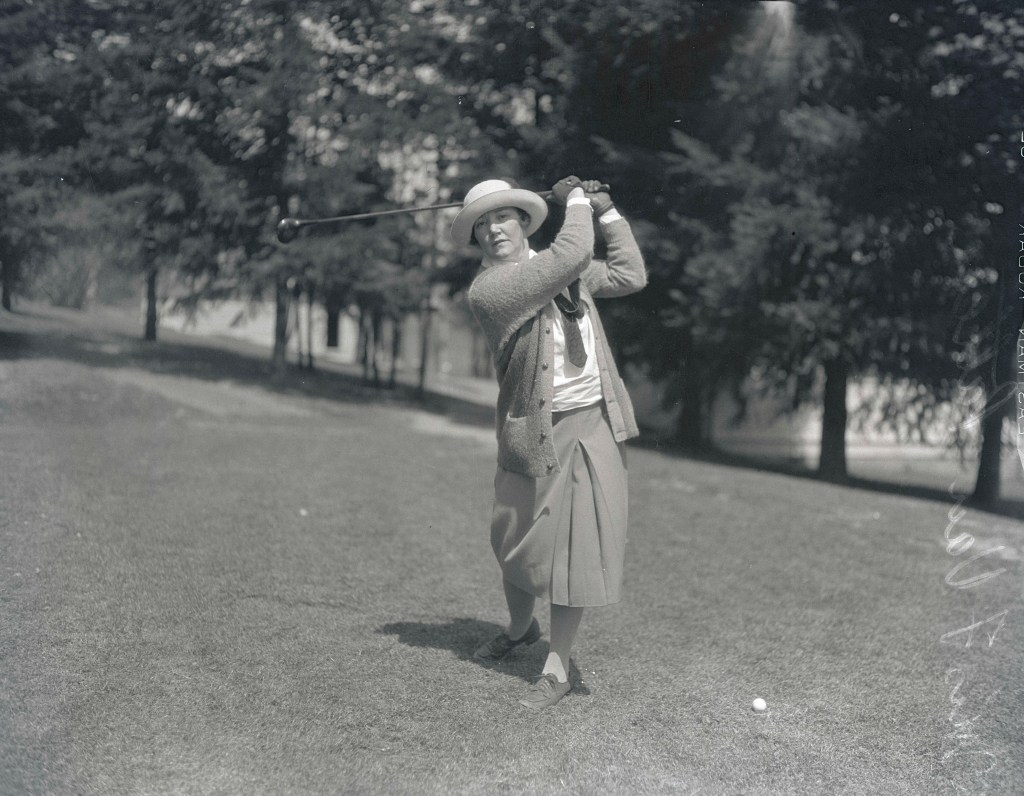
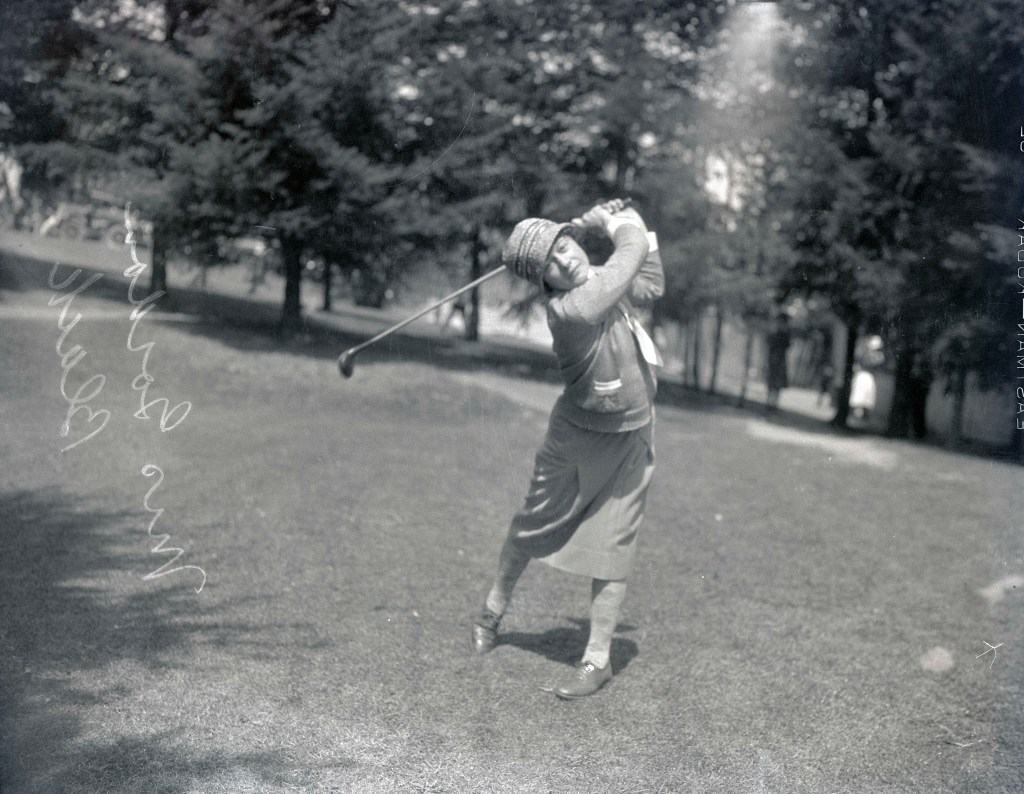
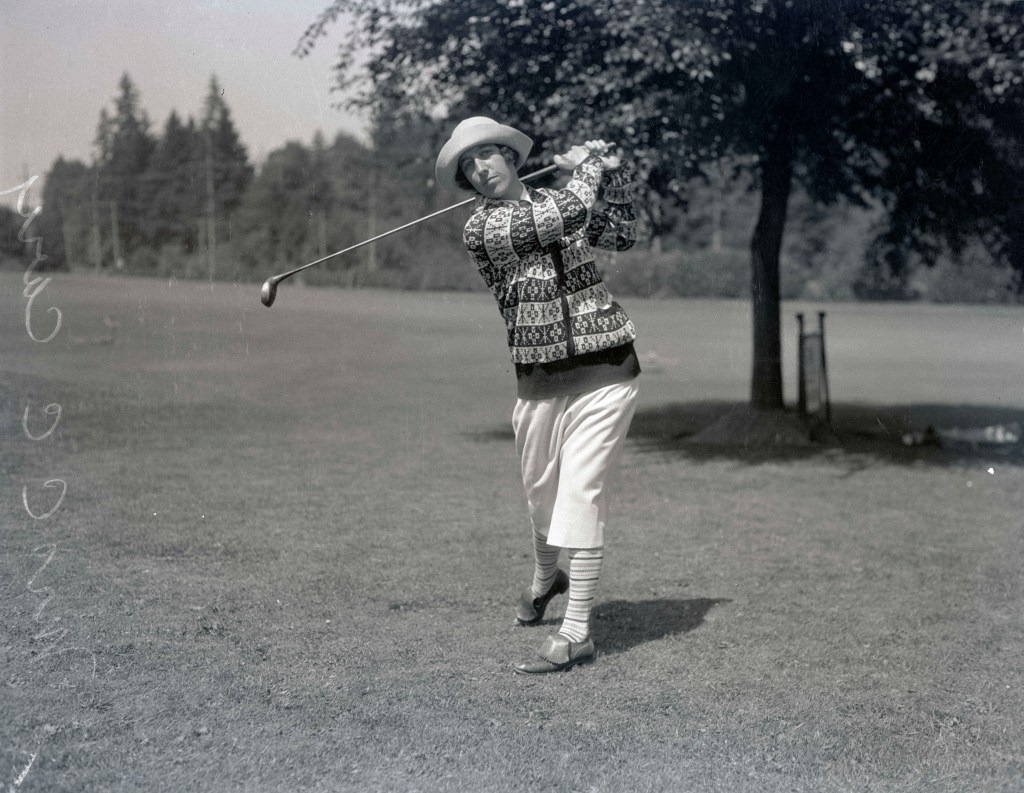
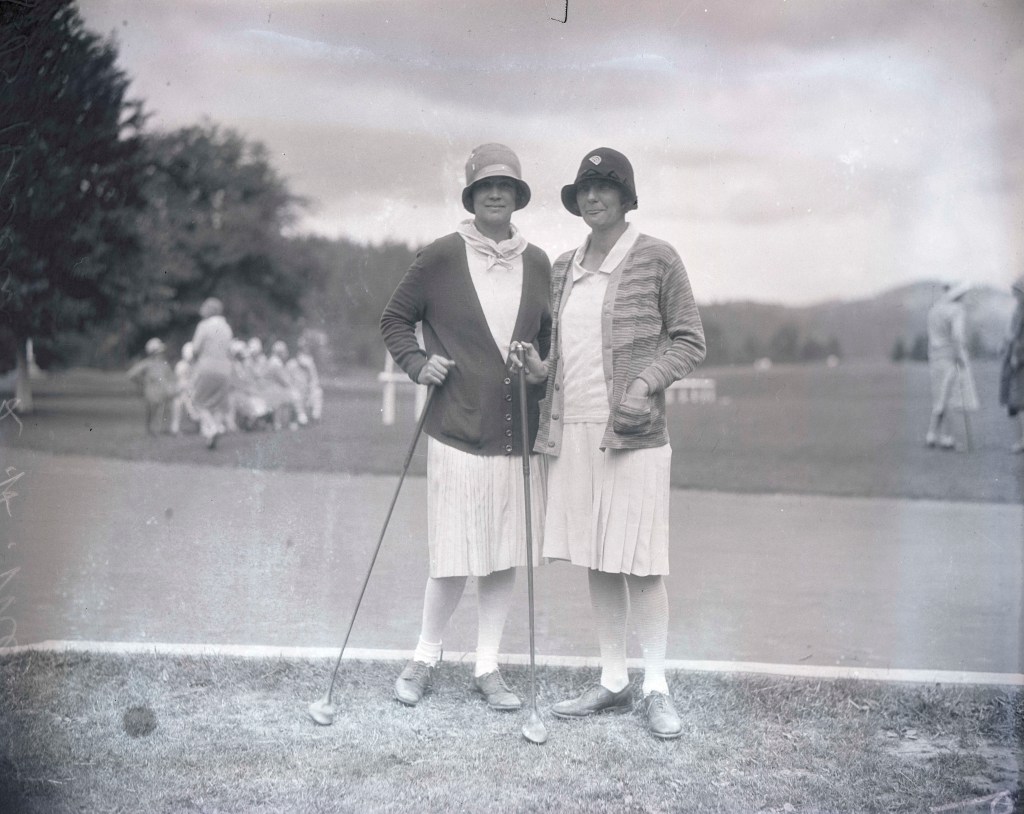
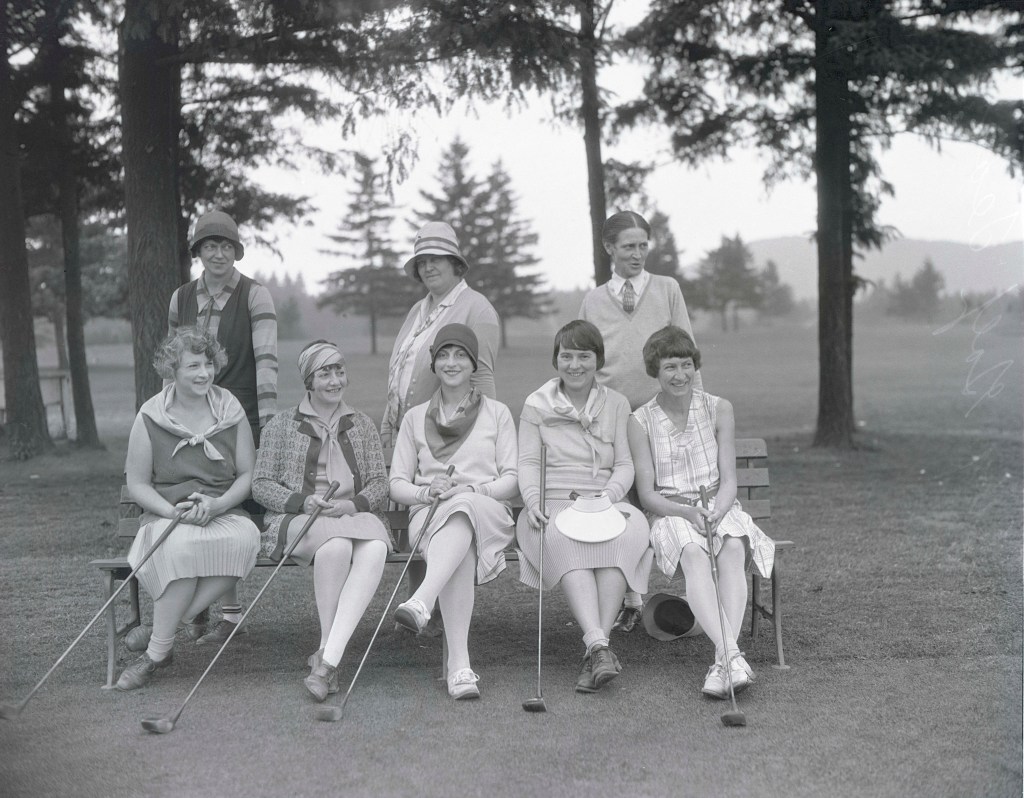
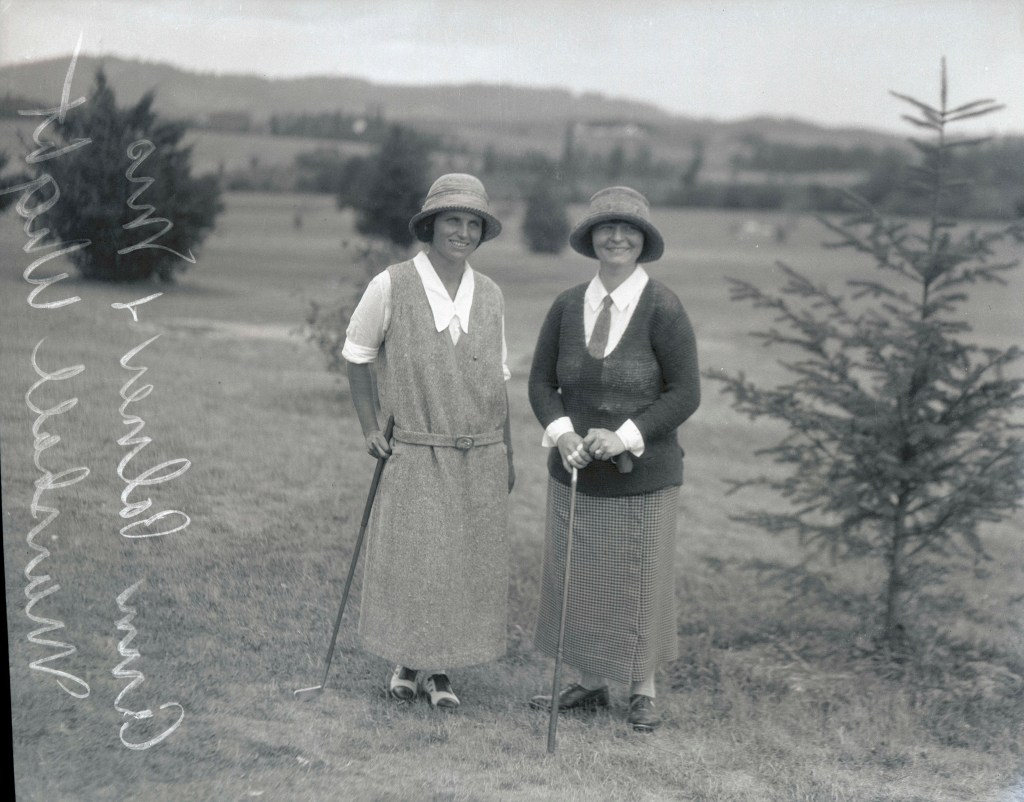
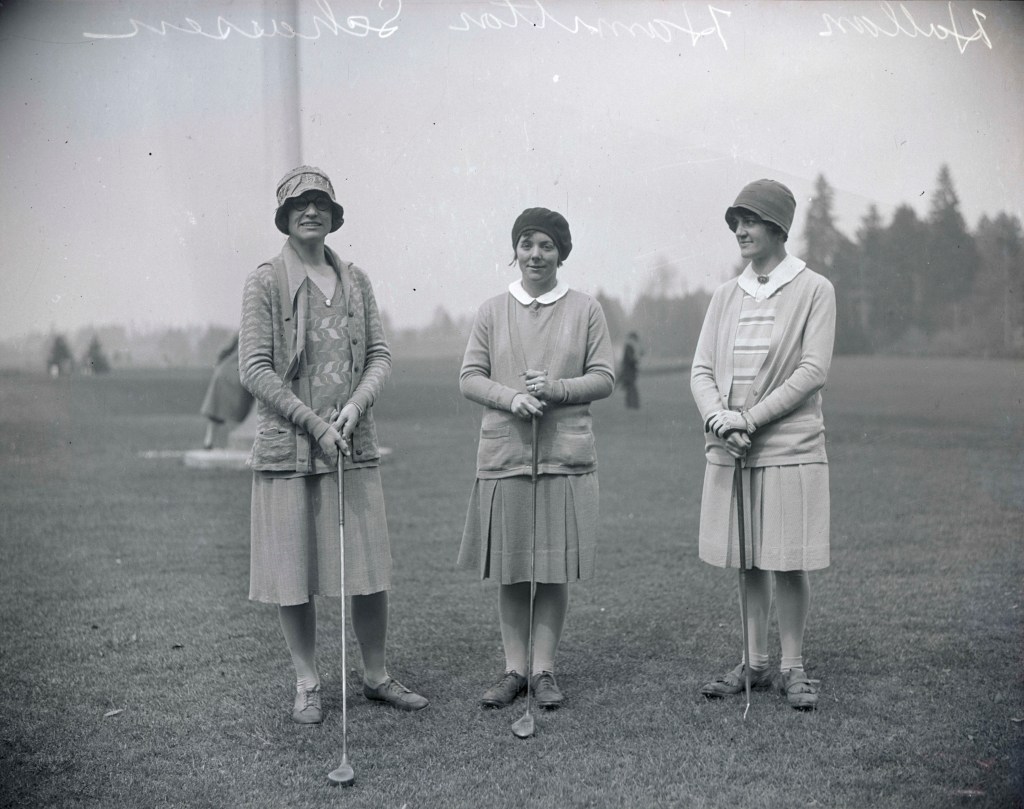
For many early women golfers, their introduction to the tee began as a trickle only to become a flood in recent years as the LPGA created several programs to reach youth, including the Girls Golf Club and the Urban Youth Golf Program. Although these programs and many other training opportunities have broadened access to the game, for many of golf’s early adopters, their names may never be known. In honor of the many women who paved the way for today’s female golfers, take a look at some of these images from the Oregon Journal Negative Collection at the Oregon Historical Society.

Just a few of the hundreds, if not thousands, of stories about women on the greens, these photographs show us a glimpse of early women golfers in the United States. And, if you thought golf was difficult before, try playing 18 holes in heels!

Activity #1: Local Greens

Take a look at your neighborhood or community and do a little digging into your local golf history. Stumped and don’t know where to start? Try answering some of these questions:

  • Do you know about any golf courses in your area?
  • How old are the golf courses near you?
  • Do any golf courses near you offer women’s tournaments?
  • Have golf courses near you ever offered special courses or competitions for women to take part in?
  • Do any nearby golf courses offer training programs for young women and girls?

Activity #2: Women’s Month

Do you know much about Women’s Month? Try looking into your area’s local women’s history! Stumped and don’t know where to start? Try answering some of these questions:
  • Are there any programs, organizations, or businesses in your area that have been founded or run by women?
  • Are there any buildings, parks, or sites named after local prominent women in your area?
  • Are there any projects in your area focused on celebrating women’s history?

Throughout the month of March, you can learn more about Women’s Month and the ways that people are celebrating it by following #nationalwomensmonth or #womenshistorymonth on Instagram, Facebook, and Twitter!

Did you learn about any fun golf or women’s history in your area this week? Did you discover something new about Women’s Month? There are countless stories that come to light every year about the amazing roles that women have played in communities around the world! So, in honor of these women, I invite you to celebrate Women’s Month by remembering that Women’s History is American History!
Share your activity results with us on social media by tagging History Becomes You and by using #historybecomesyou!

Check back next Thursday for the next of many peeks into history as we continue to celebrate National Women’s Month!

Forged

Blacksmithing is perhaps one of the most widely experienced types of folk art. Not only is it made up of traditional skills which are passed down through generations, but the creations are also used by more people than almost any other kind of folk art. From doorknobs to horseshoes and from hinges to fishing gear, Thomas Rains’ work can be found throughout northern Florida in homes, historical organizations, and even opera houses.

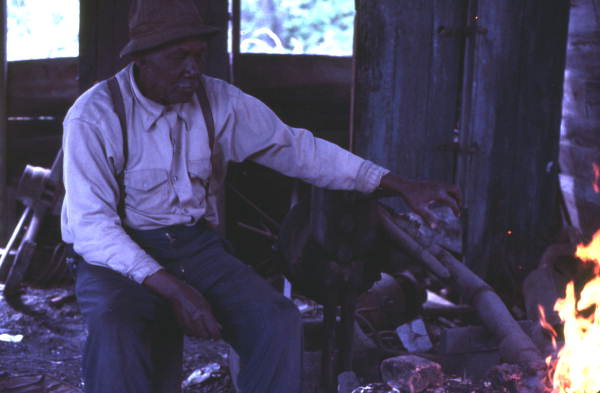
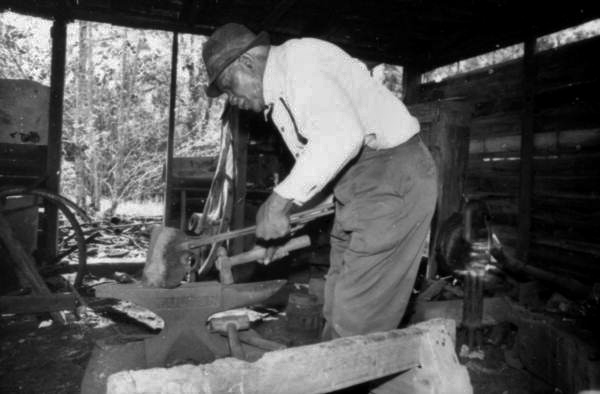
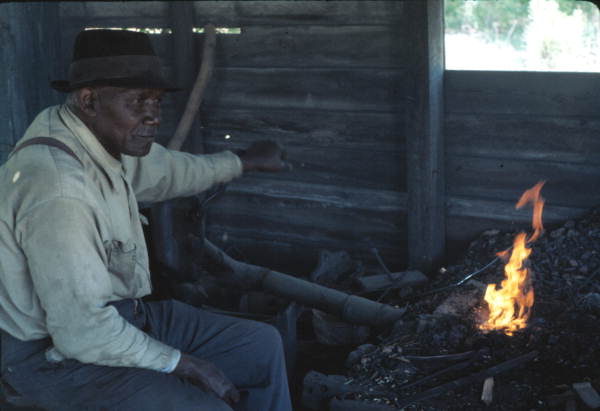
Thomas Rains at his forge in Monticello, Florida, 1978 (Image courtesy of the Folklife Collection, State Archives of Florida)

In his more than 70 years as a blacksmith, Thomas Rains created pieces of everyday life for generations of people. Starting work as a blacksmith in 1912, Rains learned his skills from his older brother just as his brother had learned from their father. As multigenerational blacksmiths, the sons began working in their father’s shop when Rains was just 17 years old – the same age at which he shoed his first mule for a difficult customer with very high expectations. Unlike most folk artists, however, blacksmiths carry the risk of immediate artistic feedback as Rains learned when he was kicked directly in the face by a frustrated mule. After 63 years of shoeing horses, Rains moved away from one of the trade’s longest standing skillsets.

Instead, he turned his sights towards a variety of other projects brought to him by people from all over Florida. One day he might be working on wagon wheels, whereas the next day might find him knee-deep in decorative hinges and doorknobs.

Born on December 24, 1894, Thomas Rains saw a great deal of change before his passing in 1990. But it could be argued that his father and grandfather saw even more. Born into slavery, both his father and grandfather experienced the value placed on skillsets when they were sold to Thomas Rains (a white slaveowner in Georgia). While living in Georgia, the artist’s father was sent to Macon, Georgia to study under a well-known and respected blacksmith. And, although his newly acquired skills had been arranged to help the plantation on which he lived, they ultimately allowed him to set up shop and purchase land for his family after being freed. As a free man, he arrived in Florida in 1877, set up a blacksmith shop on his new property, and began to teach his sons the family trade. While Thomas Rains (the artist and blacksmith) began to learn blacksmithing at roughly 17 years old, his elder brother began working and shadowing their father at the tender age of 9. Sadly, Rains’ father didn’t see all that his sons would achieve in the family shop as he passed away in 1912 when Rains was only just beginning his career as a blacksmith. Continuing to keep the home fires burning as it were, Rains worked hard to maintain the forge and his family’s reputation as quality blacksmiths. After his brother, Abraham, passed away in 1951, Thomas Rains carried on the family trade alone.

Nonetheless, his drive and enjoyment of life remained clear as he joked in a 1977 interview about the fact that he was man enough to tell people what he thought was right while, at the same time, getting along with everybody. From stories of gardens and goats to tales of kicking mules and handcrafting gun springs, Thomas Rains’ art has directly impacted thousands of lives. In fact, many may still be experiencing his work today without even realizing it.

Activity #1: Blacksmiths and Blacksmithing

Look into the history of your area. Is there any mention of a local blacksmith in your community’s past? Did your area have horses and mules? Were there farms that might need horses shoed or wagon wheels repaired?

Evidence of local blacksmiths can be found just about anywhere! In fact, if you can’t find mention of a local blacksmith, perhaps take a look at a local historical building. There’s a good chance that some of the nails, wrought iron, and other decorative designs were handcrafted by skilled artisans – artwork that you can still enjoy today.

Activity #2: Folk Artists Today

Learn about artists continuing to create folk art today. On social media, check out #folkart and #folkartist to see a wider variety of artists carrying on traditions today!
Interested in finding a present-day blacksmith or metal artist? There are plenty to discover! Considering how far the field has come, comparing early blacksmithing to the outrageously detailed work of metal artists today can be jaw dropping. Many metal artists today combine traditional techniques with new materials and tools to create stunning works of art.
Did you find any new artists this week? Did you discover blacksmiths in your local history? There are countless similar stories of people who have left their mark in folk art and in the broader realm of history who have passed on their skills to future generations. So, in honor of their work and craftsmanship, I invite you to celebrate Black History Month by remembering that Black History is Art History!

Share your activity results with us on social media by tagging History Becomes You and by using #hsitorybecomesyou!

Check back next Thursday for the next of many peeks into history as we celebrate National Women’s Month!

Blues on Canvas

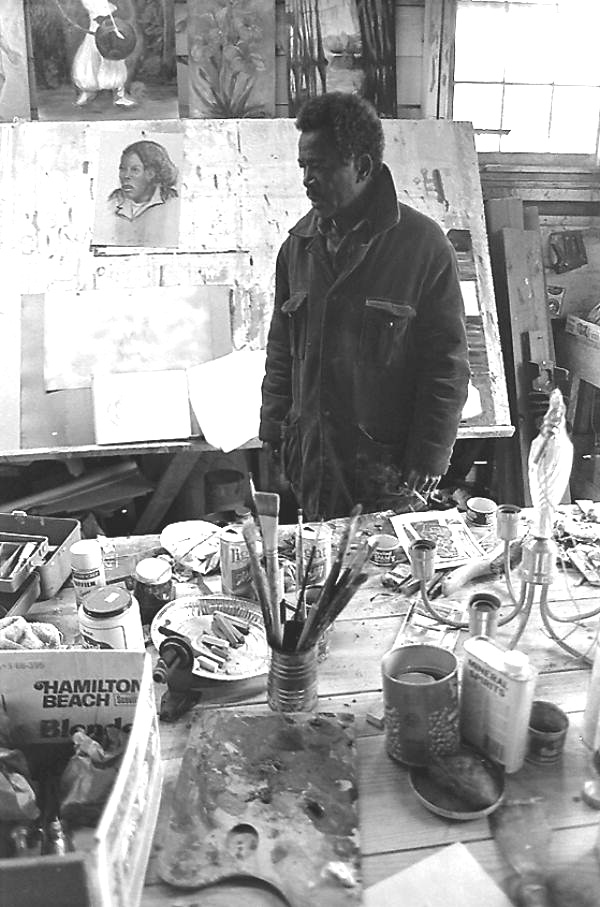
Painter Pharoah Baker in his studio in Lake City, Florida (Image courtesy of the Folklife Collection, State Archives of Florida)

When asked how he might describe folk art, painter and sculptor Pharoah Baker responded that he though of folk art as a native thing.

“If it’s something people have been doing for generations and generations, that becomes folk art.”

– Pharoah Baker

January 12, 1984 interview

But unlike many of the other folk artists discussed over the course of the last few posts, Pharoah Baker did not learn his trade from previous generations of his family or neighbors. He was a rare self-taught folk artist from a young age.

Baker’s first foray into the art world was when he copied a church fan for his childhood preacher. When asked if he could paint a design of Sampson and a lion, young Baker took to his work with a 25-cent watercolor set and a 10-cent piece of cardboard. When finished, he returned to the church with his artwork and was awarded $10 for his first commission (roughly equivalent to $170 today). Reflecting back in later years, he admitted that the church had taken up a collection to pay him for the small art piece – a kind and much appreciated gesture for the young budding artist. He continued to draw, paint, and create art everywhere he went in his rural hometown of Sneads, Florida and, despite trying to learn about or focus on other means of expression, he always returned to painting and sculpture.

After serving in the U. S. Navy during World War II, Baker returned home with hopes of putting his G.I. Bill to good use studying art. Once at the VA, he found that his hopes might be dashed. After all, he hadn’t finished high school before joining up and he was told in no uncertain terms that he would need a high school education or some kind of equivalent to be able to use his benefits for school. After being sent to Bethune Cookman College for a comprehensive test, he returned with his GED and enrolled in art classes at Florida A&M University in Tallahassee from 1947 through 1949. While there, he studied both painting and sculpture. While at school, he took part in student art shows and gained some recognition among his classmates. Years later, he would continue to credit the constructive criticism and attention of his professors for his continued drive to improve.

“The day you think you’re good, is the day you die. Always strive.”

– Pharoah Baker

January 12, 1984 interview

He went on to earn a living as a professional sign painter in Lake City, but he continued to create his own paintings and sculpture on the side. When asked about selling his artwork, Baker responded that he may be hungry but that he wasn’t starving and that selling his work (especially in his later years) was something that he avoided.

For him, his work wasn’t about the monetary value of his artwork. Instead, he often referred to them as similar to children – even going so far as to compare himself to a pregnant woman with an undeniable need to birth his thoughts and emotions onto canvas or be left in pain and misery. Similarly, he likened the creative process to childrearing by describing the creation of his works as raising children and preparing them for life before letting them go and allowing them to stand on their own two feet as adults.

Artist Pharaoh Baker painting at the 1983 Florida Folk Festival in White Springs, Florida (Image courtesy of the Folklife Collection, State Archives of Florida)

Although he didn’t consider himself a well-known artist, Baker was a respected painter and sculptor within the art community with many artists purchasing his pieces during the 1970s. He became well-respected and was among the first master folk artists to take part in the Folk Arts Apprenticeship Program in 1983 alongside his apprentice, Ellis Wright. The program, which began in 1983 and continued until 2003, provided an opportunity for master folk artists to share their technical skill and cultural knowledge with apprentices in an effort to keep folk art traditions alive. As some of the first participants, Baker taught Wright painting in his studio in Lake City where the two painted together – sharing materials, paints, and a burgeoning friendship.

Artist Ellis Wright and painter Pharoah Baker at Baker’s studio in Lake City, Florida, 1985 (Image courtesy of the Folklife Collection, State Archives of Florida)

When asked about the program and his work in training Wright, Baker stated that his goal was not to turn Wright into another Pharoah Baker. Instead, his purpose was to help Wright continue and grow in his own direction. In fact, throughout a January 1984 interview with Florida folklorists, Baker continued to remind his interviewers that his artwork was based upon his own experiences and feelings – things that Wright had not experienced and could not relate to in the same way. As a result, he insisted, the two were artists in their own right who got along well and could both create in their own way together.

“I paint the past and the future. I paint what I feel.”

– Pharoah Baker

January 12, 1984 interview

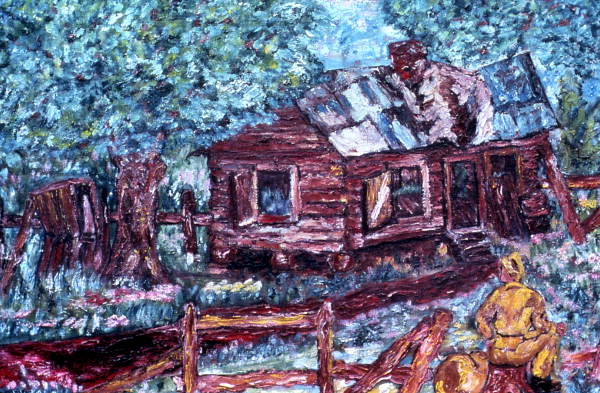
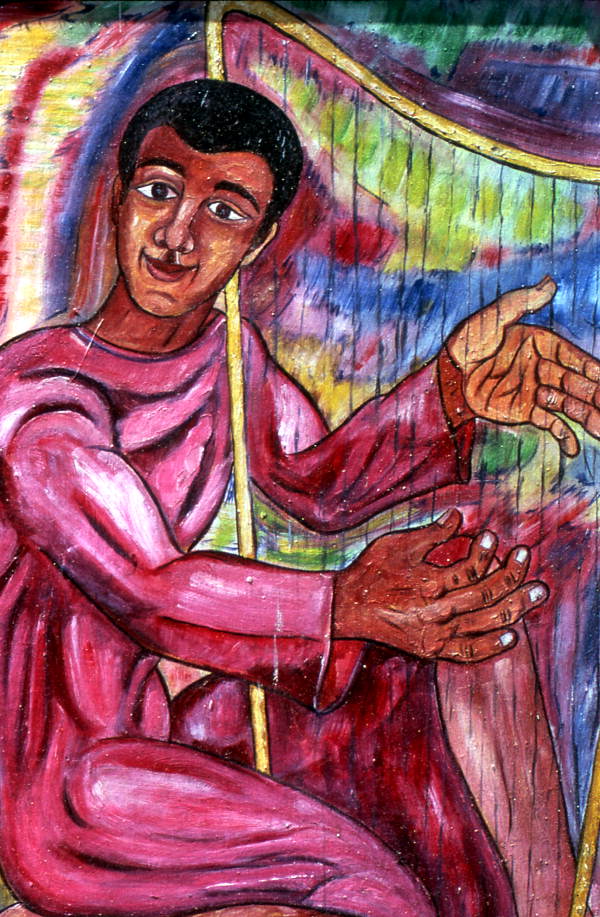
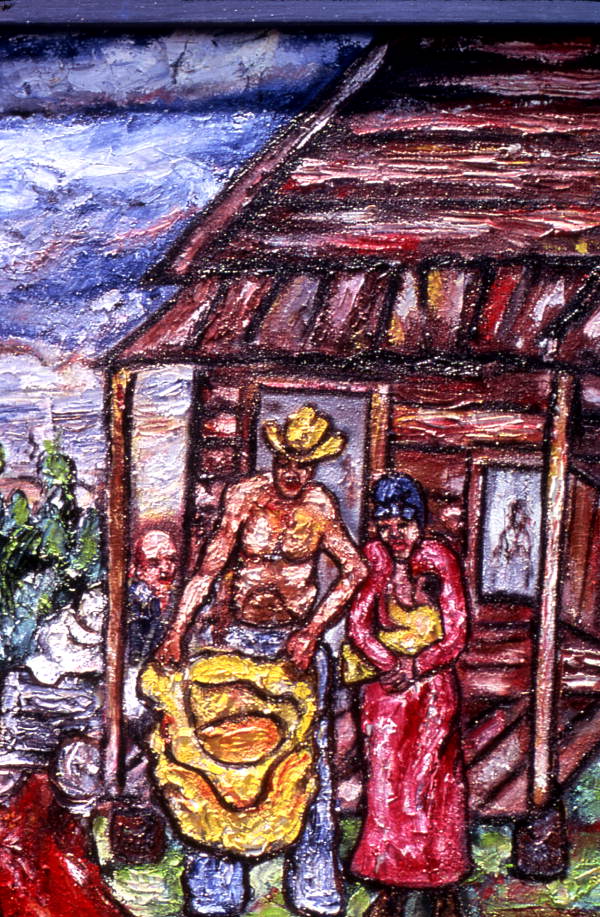
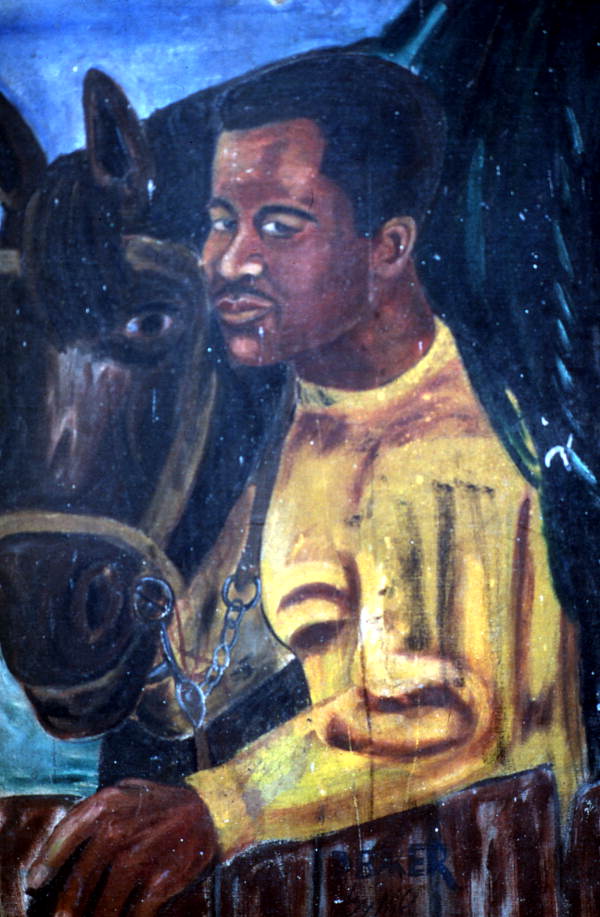
Taking inspiration from his daily life and his Christian faith, Pharoah Baker created paintings and sculptures that represented his upbringing in rural Florida during the 1930s and 1940s. Inspired by everything from local farmers to the murder of Emmett Till, Baker continued to create vibrant and colorful representations of life until his passing in 2002.

With his art referred to as ‘blues on canvas,’ his bright and dynamic artwork continues to represent the beauty and individuality of folk art.

Activity #1: Folk Artists Today

Learn about artists continuing to create folk art today. On social media, check out #folkart and #folkartist to see a wider variety of artists carrying on traditions today!

Interested in finding a present day painter? Artist Amy Sherald has become well-known not only for her portrait of former First Lady Michelle Obama, but also for painting noble and colorful portraits of Black Americans. Feel free to check out her work on Instagram @asherald !

Did you find any new artists this week? Did you discover more painters? There are countless similar stories of people who have left their mark on the folk art and broader art world who have passed on their skills to future generations. So, in honor of their work and craftsmanship, I invite you to celebrate Black History Month by remembering that Black History is Art History!

Share your activity results with us on social media by tagging History Becomes You and by using #historybecomesyou !

Check back this Thursday for the next of many peeks into history as we celebrate Black History Month!

A Stitch In Time

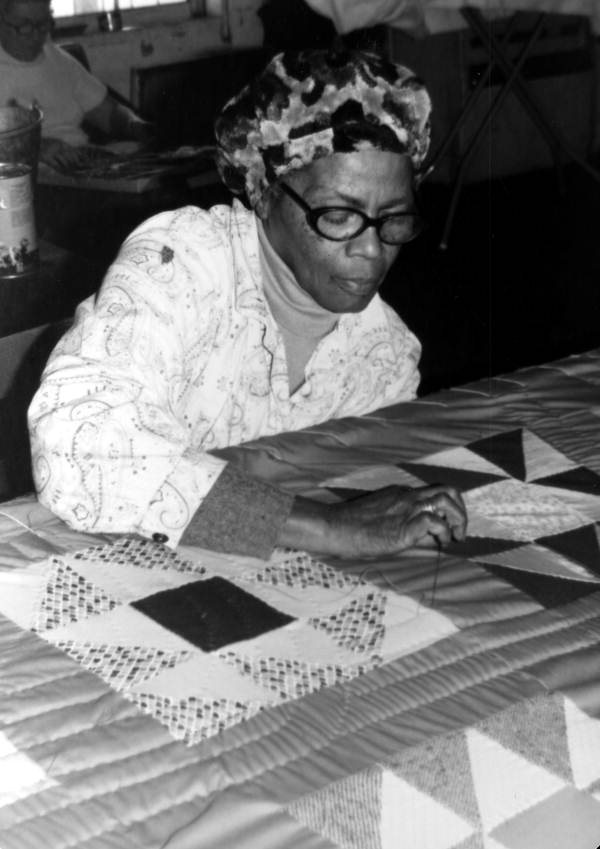
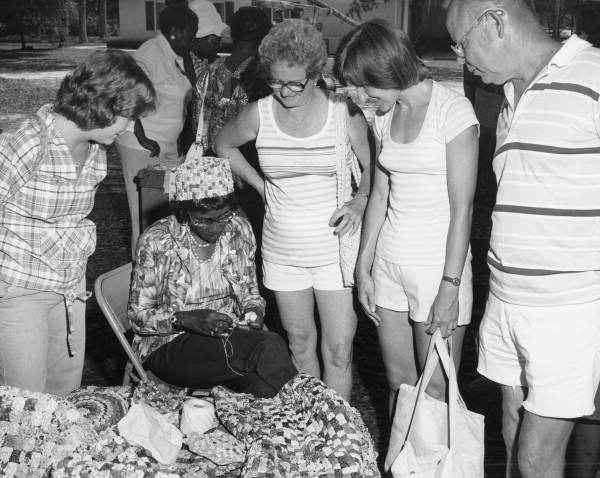
Strawdie Udell working on a quilt (Image courtesy of the Folklife Collection, State Archives of Florida)

Quilting is a technique, pastime, and tradition that has existed amongst various cultures for CENTURIES. From the protection and warmth to the communal nature of early quilting, this practice and folk art represents a wide variety of lived experiences and cultural identities as well as the changes brought on by broader historical themes and events.

In the earliest days, quilted garments were afforded only by the wealthy of Europe, Asia, and the Middle East. However, as time passed, its accessibility to those with a lower economic status grew. For instance, throughout the pre-Revolutionary American colonies, access to precious fabrics became less of an issue as the European powers could provide textiles and different fabrics to its colonists overseas. In those cases, the practice centered less upon the supply of fabric and more upon local skillsets. Given that most clothing, bedding, and other textiles were constructed at home, quilting fit well into a society that already relied heavily upon the sewing skills which were often passed down from mother to daughter. For many women, given the heavy workload of caring for a home, family, and farm/business, quilting took on the role of a social activity as well as a useful practice to survive cold winter months. In many cases, women would gather in quilting circles and all put their combined talents to use in the creation of quilts for all of the members as well as other community members in need. These social groups were similar to many other early women’s work groups in that they gave women an opportunity to gather around a communal task and make light of the work through cooperation.

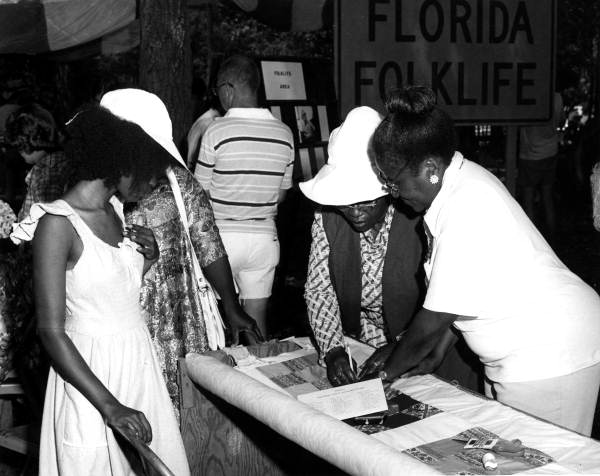
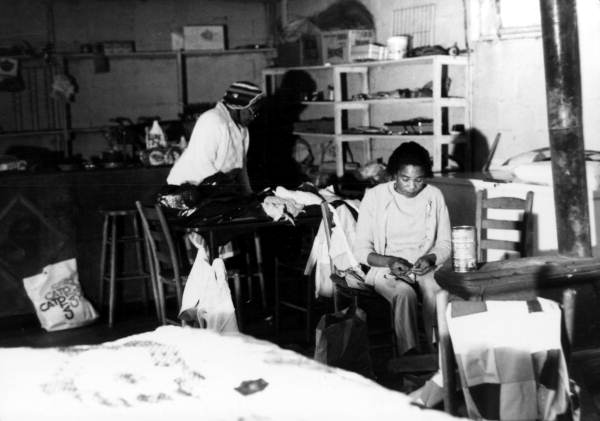
Quilting demonstration by the Black Bay Quilters at the 1978 Florida Folk Festival in White Springs, Florida (Image courtesy of the Folklife Collection, State Archives of Florida)

Similar to many other areas of folk art, quilting techniques and tools were passed down through the generations and, as the Industrial Revolution led to largescale production in the north, many women gained access to increasingly complex patterns and varieties of fabrics. So, it should come as little surprise that quilting continued to grow and represent not only the traditions of a given area and its residents, but also to become a way to express oneself and a person’s lived experiences. This can be clearly seen as quilts took on more ornate and consistent appearances and layouts during the 1800s and early 1900s.

Even in the face of the Great Depression, quilters forged on by creating “feedsack quilts” using cloth bags and fabric scraps to create quilts and quilted clothing for their families.

As in many areas of folk art, the 1970s represented a resurgence of traditional quilting. Due in part to a nostalgia surrounding traditional crafts brought up by the American Bicentennial, quilting saw a revival not only in homes across the United States, but also in the public eye. Quilts were included in large historical and artistic exhibitions as the concept of “art quilts” gained traction within the art world.

So, it should stand to reason that quilters are well-known and well-respected folk artists, right?

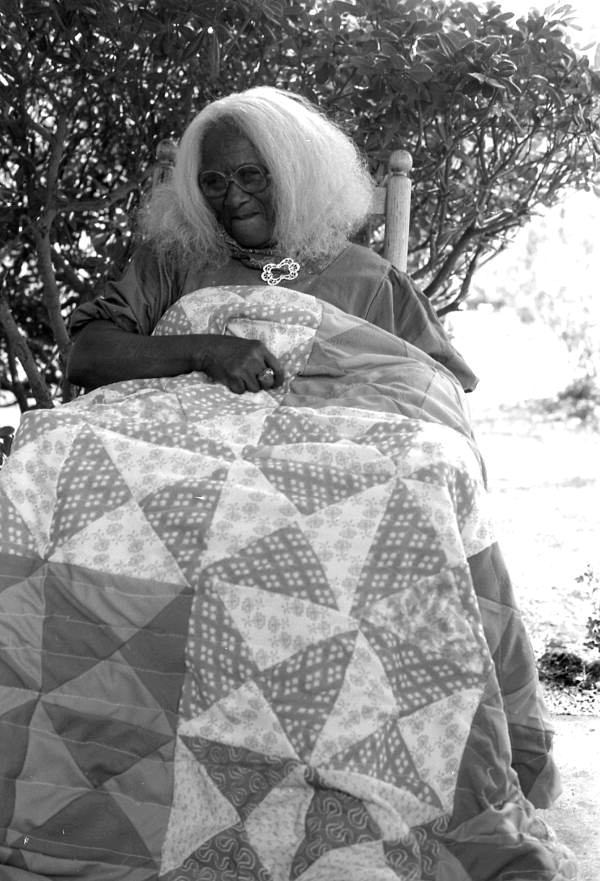
Unfortunately, given the communal nature of the activity, many of us today are left wondering who our area’s textile folk artists were and what their work meant to them. Although it may seem strange to think of quilts outlasting their creators, the truth is that a well-constructed quilt can be passed down over several generations within a family or among friends. And, as these pieces are handed down, for many of us, the story of their creators disappear.

Unlike last week, I cannot offer much in the way of personal experiences of historical quilters in my area. At best, I can locate a few names here and there from events and displays. But, for many of the people who dedicated their time to the craft of quilting, their names and experiences are missing from our historical narrative.

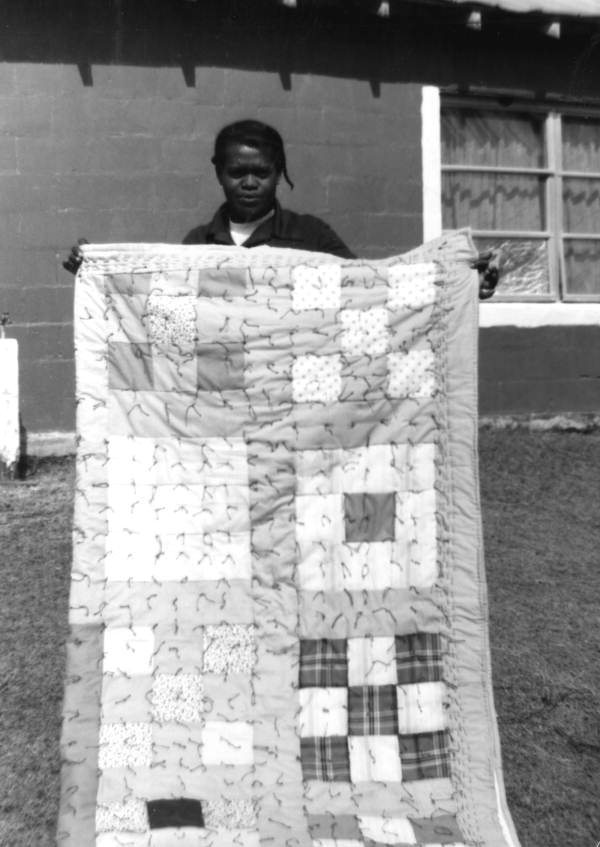
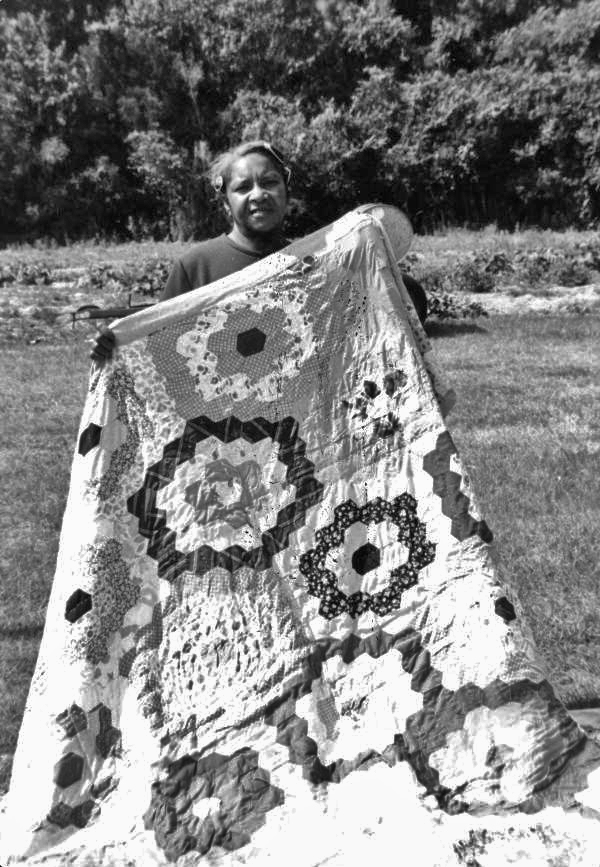
Betsy Webb with her quilts in March 1984 (Image courtesy of the Folklife Collection, State Archives of Florida)

One such example is Betsy Webb (also known as Mrs. Denard Webb). A prime example of rural women taking on folk art as a way of providing for their family, Betsy Webb appears as Bessie Webb (born between 1915 and 1916) in the 1940 U.S. Census in Hamilton County, Florida living with her husband, Denard Webb, and their children. Just 25 years old at the time, Betsy (or Bessie) had already given birth to a son and two daughters and was listed as a housewife while her husband worked in the naval stores industry. She is listed as having a third grade education and yet she went on to create stunningly intricate quilts that she shared with her family – shown more than once standing beside her quilts alongside her grandchildren near White Springs, Florida.

Her story represents many women in similar places and times and reminds us of the importance of protecting their legacies for future generations.

Activity #1: Quilters in Your Area

Learn about any quilting groups in your area. Do they meet regularly? Do you have any quilters in your family or group of friends? Take a look at local museums and libraries to see if your area has a tradition of quilting.

Activity #2: Folk Artists Today

Learn about artists continuing to create folk art today. On social media, check out #folkart and #folkartist to see a wider variety of artists carrying on traditions today!

Interested in finding a present day quilter and textile artist? I have been a follower of Bisa Butler’s for some time after coming across her intricate and stunning quilts on social media. Her bold use of color and her beautiful treatment of historical figures sets her apart in the art world. Learning to sew and quilt from a young age, Butler’s art celebrates the experience of people of color throughout America’s history. Feel free to check out her work on Instagram @bisabutler !

Did you find any new artists this week? Did you discover more quilters? There are countless similar stories of people who have left their mark on the folk art and broader art world who have become mysteries to historians and community members alike. So, in honor of their work and craftsmanship, I invite you to celebrate Black History Month by remembering that Black History is Art History!

Share your activity results with us on social media by tagging History Becomes You and by using #historybecomesyou !

Check back next Thursday for the next of many peeks into history as we celebrate Black History Month!