
Since its founding in 1881, the American Red Cross has seen generations of women serve as the beating heart of the organization’s relief work. From its founder, Clara Barton (a wartime nurse and one of the first women to work for the federal government) to the countless women who have served as Red Cross staff and volunteers over the organization’s nearly 150 year history, women have been at the center of many of the group’s efforts and programs.
And similar to the great Clara Barton, women flocked to the Red Cross in droves during both the first and second World Wars. They served as nurses, as volunteers, as support staff, and as confidants to the thousands of servicemen and women both at home and overseas.
The Nurses
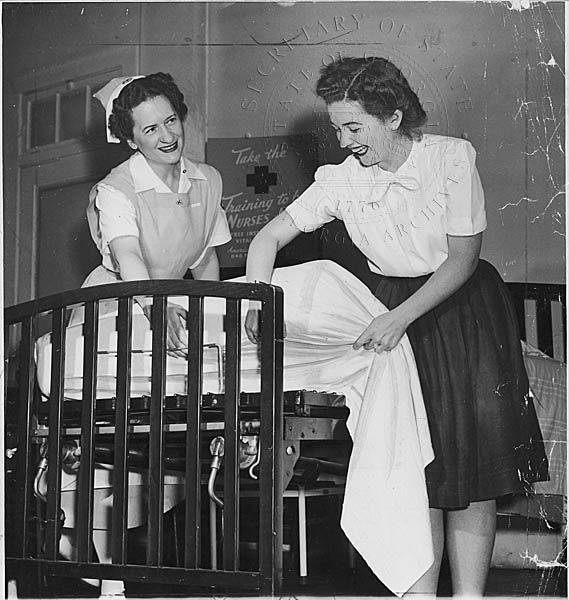

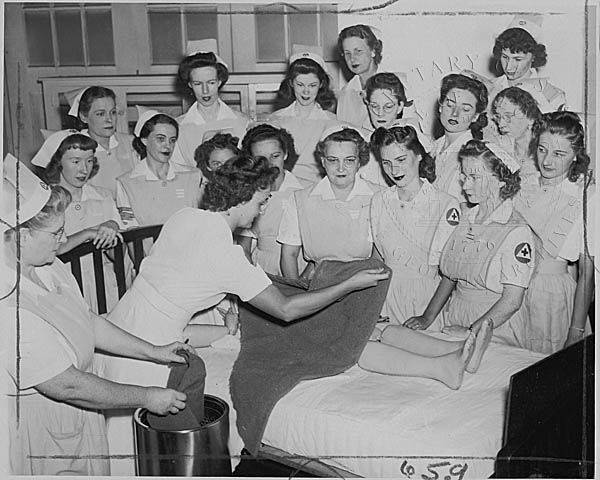
As perhaps the most widely known and recognized groups of women who served in the Red Cross, the nurses who answered the call during both World Wars nearly became an army unto themselves. Between 1939 and 1946, roughly 212,000 nurses enrolled in the Red Cross Nursing Service. Of these, half (APPROXIMATELY 106,000 NURSES) were certified to serve the military in the Army and Navy Nurses Corps. And, out of the 71,000 of these qualified nurses to serve during World War II, they made up MORE THAN 90% of the total nurses in service during the war (both at home and overseas).
To say that the Red Cross nurses left their mark is an understatement.
Both at home and overseas, the nurses provided lifesaving medical care and helped to alleviate the shortage of both doctors and nursing staff throughout the United States. So, whether they were saving lives on the front lines or caring for the sick and wounded back home, it is safe to say that, without the nursing might of the Red Cross, the 1930s and 1940s would have looked dramatically different to Americans – both military and civilian.
Blood Campaigns


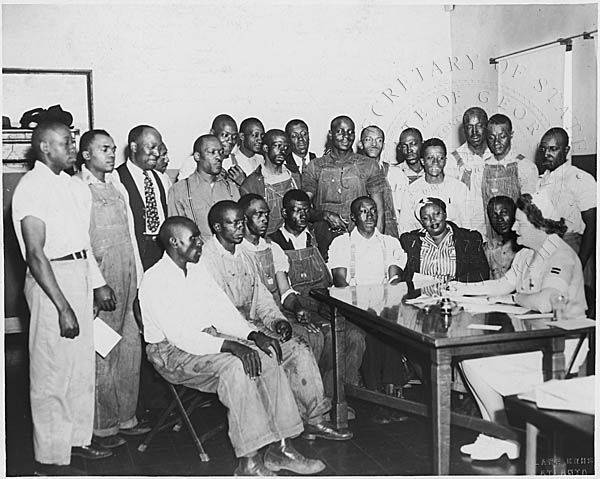


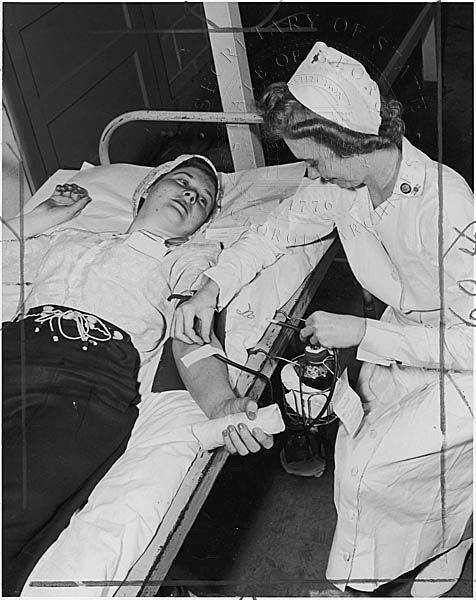
As the model for the blood donation programs we continue to see today, another wartime effort of the Red Cross has saved millions of lives through blood donation centers and blood drives throughout the country.
Beginning in the fall of 1940 and lasting only a few months, the first war-related blood collection program was known as the “Plasma for Britain” project. Focused on remedying a shortage of plasma in Britain due to both heavy wartime casualties and to German air raids on British cities, the project was a joint effort between the Red Cross and the Blood Transfusion Betterment Association. Their efforts began in New York where the Red Cross solicited donations of blood in order to ship lifesaving plasma to Britain. From there, the Betterment Association collected and processed the blood into liquid plasma for use in transfusions. In all, the project collected approximately 15,000 pints of blood which allowed it to ship 5,500 liters of plasma to Britain.
THAT’S OVER 81 PINTS OF BLOOD PER DAY AND MORE THAN 29 PINTS OF PLASMA EVERY DAY!
After the successful efforts of the “Plasma for Britain” project, it should have come as no surprise when the Red Cross was tapped to organize a Blood Donor Service in January of 1941. Even then, the U.S. military saw the need to prepare for the country’s possible entry into World War II.
After hiring Dr. Charles R. Drew (the same physician in charge of the “Plasma for Britain” program), the Red Cross took to its new role by establishing a model blood collection program focused on processing blood into dried plasma on a massive scale. Fortunately, with the tireless efforts of Dr. Drew and Red Cross members, by the time of the attack on Pearl Harbor, the Red Cross was operating 10 different blood donor centers in the eastern United States. These were added to throughout the war and eventually grew to 35 blood donor centers as well as more than 60 mobile units. (Who would have thought that the humble blood mobile had its origins in the war effort?)
Despite the program’s end in September of 1945, the Blood Donor Service had involved more than 2,200 doctors, nurses, and technicians alongside roughly 25,000 volunteers and had collected 13.4 MILLION PINTS of blood from 6.6 MILLION DONORS.
THAT’S THE SAME AMOUNT OF BLOOD AS MORE THAN 1.3 MILLION PEOPLE!
Not only did this program provide desperately needed supplies of blood for the front lines, but it also continues to impact lives today through civilian blood programs started by the Red Cross in 1948.
Unsung Heroes
For many, both the nurses and the blood drives come as little surprise (particularly if you are familiar with the Red Cross). But, throughout both World Wars, women volunteered in a variety of other services and programs under the umbrella of the Red Cross. Among these unsung heroes were both the Gray Ladies and the Motor Corps.
The Gray Ladies
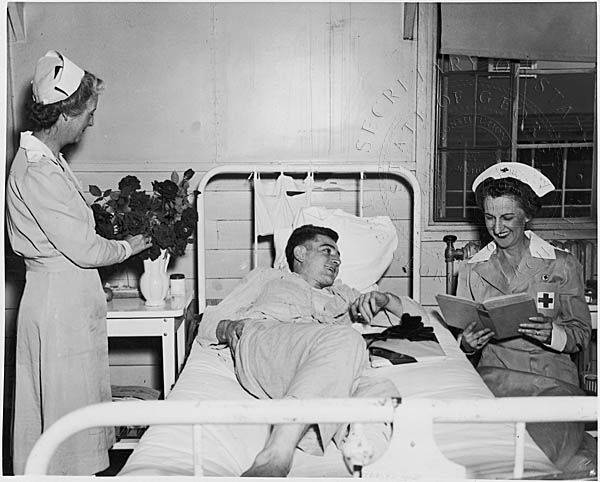
(Image courtesy of the Lamar Q. Ball Collection, Georgia Archives)
Originally known as the Hospital and Recreation Corps, the group that became known as the Gray Ladies served an indispensable function for the thousands of veterans and families throughout the United States. From writing letters to reading to patients in military and veterans’ hospitals, the Gray Ladies provided a number of what were considered hostess and recreational services to servicemen and women returning home from war. They were there for veterans for everything from a compassionate listener to a tutor and even assisted in running errands for their patients outside of the hospitals.
“To understand [the Gray Ladies] duties was to see them in homey relation to what they meant to the lonely patient who wanted to talk; to the restless patient who wanted to play cards; to the disabled patient who could not write his letters … to men who were invariably homesick in a hospital far from their families.”
Red cross history in world war ii
With nearly 50,000 volunteers between 1944 and 1945, the Gray Ladies provided a much needed personal touch to the war effort for thousands of families.
The Motor Corps
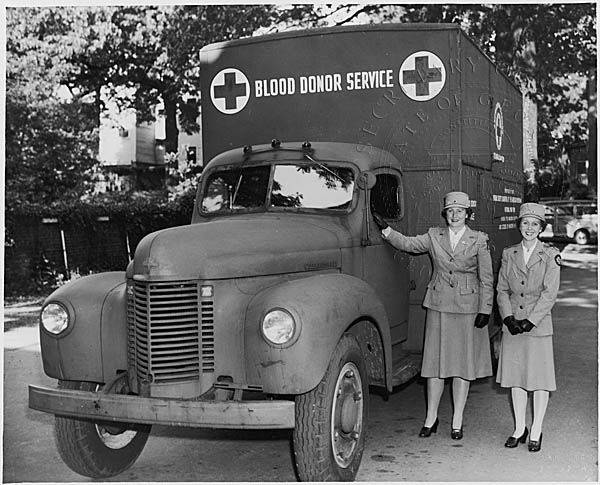
(Image courtesy of the Lamar Q. Ball Collection, Georgia Archives)
Perhaps the least recognized group of women in the Red Cross is the Motor Corps. Consisting almost entirely of women, the Motor Corps clocked more than 61 MILLION MILES and answered over NINE MILLION TRANSPORT REQUESTS.
THAT’S THE EQUIVALENT OF DRIVING ACROSS THE UNITED STATES MORE THAN 21,000 TIMES!
Whether delivering supplies, transporting the sick and wounded, or transferring volunteers and nurses to and from their posts, the Motor Corps provided a much needed service on the home front. And, when you consider that most of the group’s 44,668 volunteers between 1942 and 1943 served while driving their own cars, the frustration of a daily commute seems trivial. Even repairing their own cars on the road, these women illustrate a little understood component of women’s wartime efforts.
Activity #1: The Red Cross
During World War II, the Red Cross estimates that nearly every family in America contained a member who had either served as a Red Cross volunteer, made contributions of money or blood, or was a recipient of Red Cross services.
Do you know of anyone in your own family who was connected to the Red Cross in some way? Do you know of anyone in your area who has served as a Red Cross volunteer?
Activity #2: Women’s Month
Do you know much about Women’s Month? Try looking into your area’s local women’s history! Stumped and don’t know where to start? Try answering some of these questions:
- Are there any programs, organizations, or businesses in your area that have been founded or run by women?
- Are there any buildings, parks, or sites named after local prominent women in your area?
- Are there any project in your area focused on celebrating women’s history?
Throughout the month of March, you can learn more about Women’s Month and the ways that people are celebrating it by following #nationalwomensmonth or #womenshistorymonth on Instagram, Facebook, and Twitter!
Did you learn about any Red Cross history or women’s history in your area this week? Did you discover something new about Women’s Month? There are countless stories that come to light every year about the amazing roles that women have played in communities around the world! So, in honor of the women, I invite you to celebrate Women’s Month by remembering that Women’s History is American History!
Share your activity results with us on social media by tagging History Becomes You and by using #historybecomesyou !
Check back next Thursday for the next of many peeks into history as we continue to celebrate National Women’s Month!
 History Becomes You
I never knew the contributions made by The Red Cross were so varied! What an exciting and wonderful way for women to help with the wartime effort! I especially enjoyed learning about The Gray Ladies and Motor Corps, both vital services, but not well known. My mother talked about escaping her life in Kansas by joining The Red Cross. She referred to her role as a “Donut Dolly” and her duties sounded much like those described in The Gray Ladies section. She served overseas and ended up meeting and marrying my father while in Korea. My mom took pride in her Red Cross service and the adventures she encountered during that time changed her life. During my recent search for a CPR/First Aid class, I learned that The Red Cross is still providing health education today. Looking forward to your next post!
LikeLike