
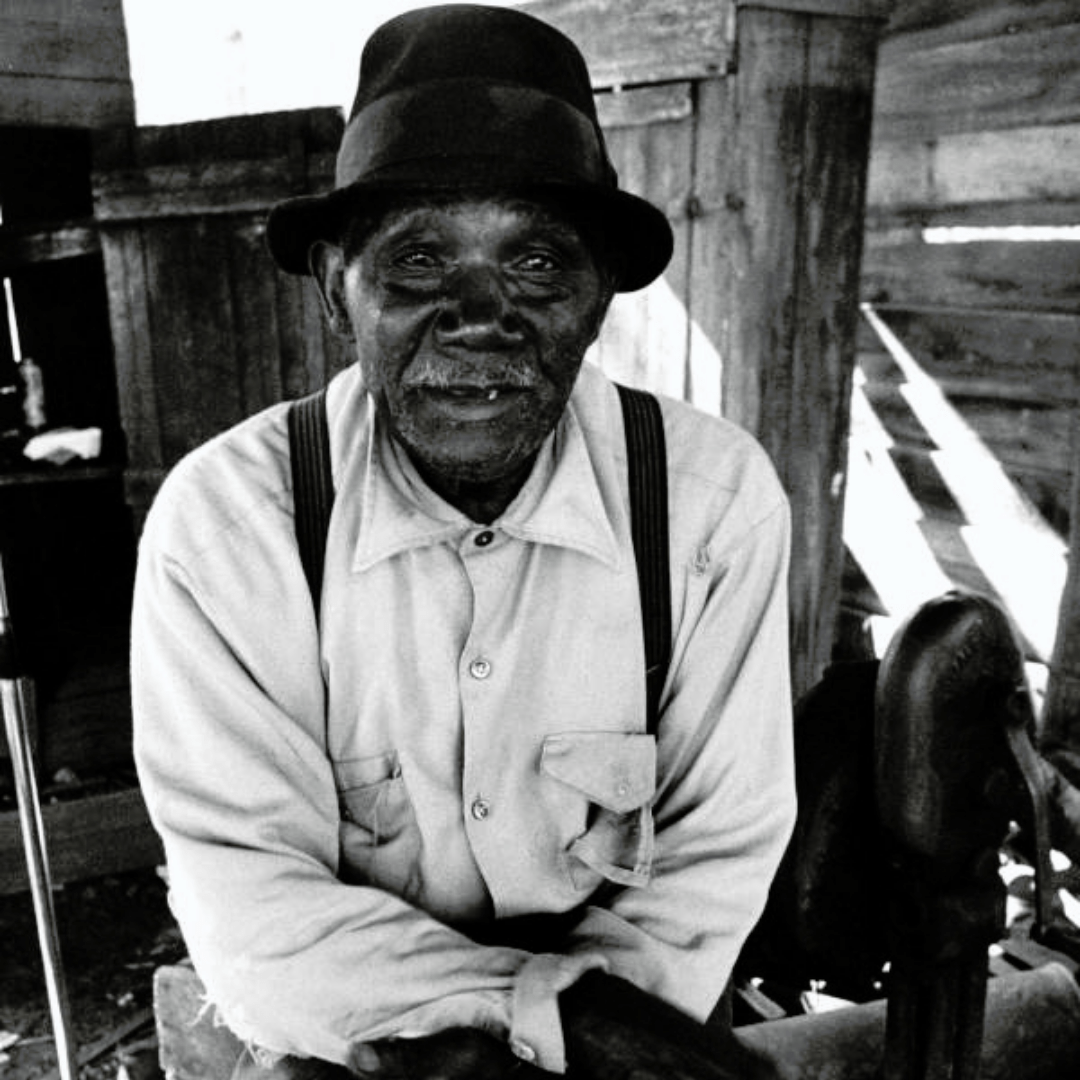
Blacksmithing is perhaps one of the most widely experienced types of folk art. Not only is it made up of traditional skills which are passed down through generations, but the creations are also used by more people than almost any other kind of folk art. From doorknobs to horseshoes and from hinges to fishing gear, Thomas Rains’ work can be found throughout northern Florida in homes, historical organizations, and even opera houses.

In his more than 70 years as a blacksmith, Thomas Rains created pieces of everyday life for generations of people. Starting work as a blacksmith in 1912, Rains learned his skills from his older brother just as his brother had learned from their father. As multigenerational blacksmiths, the sons began working in their father’s shop when Rains was just 17 years old – the same age at which he shoed his first mule for a difficult customer with very high expectations. Unlike most folk artists, however, blacksmiths carry the risk of immediate artistic feedback as Rains learned when he was kicked directly in the face by a frustrated mule. After 63 years of shoeing horses, Rains moved away from one of the trade’s longest standing skillsets.
Instead, he turned his sights towards a variety of other projects brought to him by people from all over Florida. One day he might be working on wagon wheels, whereas the next day might find him knee-deep in decorative hinges and doorknobs.
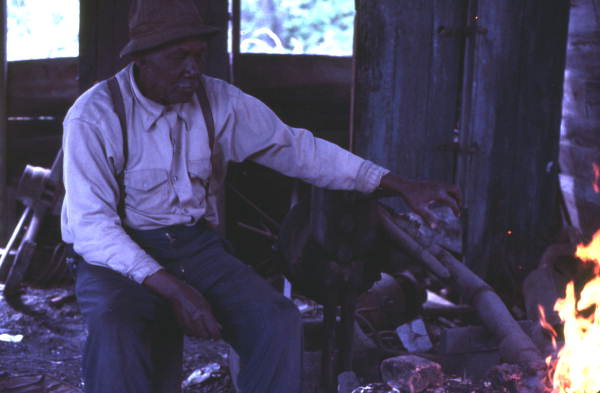
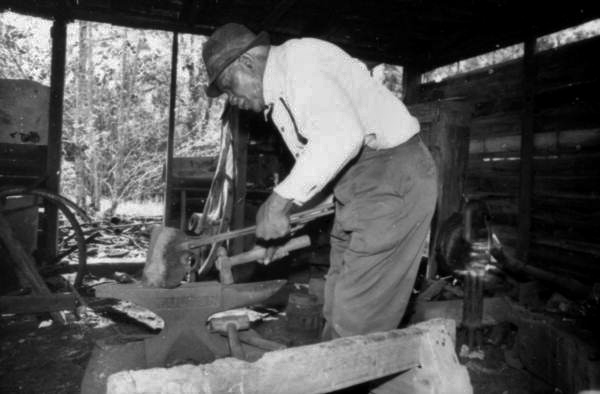
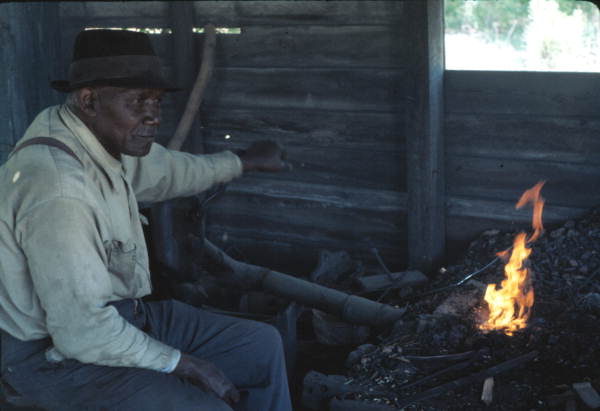
Born on December 24, 1894, Thomas Rains saw a great deal of change before his passing in 1990. But it could be argued that his father and grandfather saw even more. Born into slavery, both his father and grandfather experienced the value placed on skillsets when they were sold to Thomas Rains (a white slaveowner in Georgia). While living in Georgia, the artist’s father was sent to Macon, Georgia to study under a well-known and respected blacksmith. And, although his newly acquired skills had been arranged to help the plantation on which he lived, they ultimately allowed him to set up shop and purchase land for his family after being freed. As a free man, he arrived in Florida in 1877, set up a blacksmith shop on his new property, and began to teach his sons the family trade. While Thomas Rains (the artist and blacksmith) began to learn blacksmithing at roughly 17 years old, his elder brother began working and shadowing their father at the tender age of 9. Sadly, Rains’ father didn’t see all that his sons would achieve in the family shop as he passed away in 1912 when Rains was only just beginning his career as a blacksmith. Continuing to keep the home fires burning as it were, Rains worked hard to maintain the forge and his family’s reputation as quality blacksmiths. After his brother, Abraham, passed away in 1951, Thomas Rains carried on the family trade alone.
Nonetheless, his drive and enjoyment of life remained clear as he joked in a 1977 interview about the fact that he was man enough to tell people what he thought was right while, at the same time, getting along with everybody. From stories of gardens and goats to tales of kicking mules and handcrafting gun springs, Thomas Rains’ art has directly impacted thousands of lives. In fact, many may still be experiencing his work today without even realizing it.
Activity #1: Blacksmiths and Blacksmithing
Look into the history of your area. Is there any mention of a local blacksmith in your community’s past? Did your area have horses and mules? Were there farms that might need horses shoed or wagon wheels repaired?
Evidence of local blacksmiths can be found just about anywhere! In fact, if you can’t find mention of a local blacksmith, perhaps take a look at a local historical building. There’s a good chance that some of the nails, wrought iron, and other decorative designs were handcrafted by skilled artisans – artwork that you can still enjoy today.
Activity #2: Folk Artists Today
Learn about artists continuing to create folk art today. On social media, check out #folkart and #folkartist to see a wider variety of artists carrying on traditions today!
Interested in finding a present-day blacksmith or metal artist? There are plenty to discover! Considering how far the field has come, comparing early blacksmithing to the outrageously detailed work of metal artists today can be jaw dropping. Many metal artists today combine traditional techniques with new materials and tools to create stunning works of art.
Did you find any new artists this week? Did you discover blacksmiths in your local history? There are countless similar stories of people who have left their mark in folk art and in the broader realm of history who have passed on their skills to future generations. So, in honor of their work and craftsmanship, I invite you to celebrate Black History Month by remembering that Black History is Art History!
Share your activity results with us on social media by tagging History Becomes You and by using #hsitorybecomesyou!
Check back next Thursday for the next of many peeks into history as we celebrate National Women’s Month!
 History Becomes You